Key points
- KuCoin is framing its Australian expansion as an “evolution,” with its November 2025 AUSTRAC registration and a Mastercard-linked debit card anchoring the local strategy.
- KuCard, built with Immersve, lets users spend USDC anywhere Mastercard is accepted, with Apple Pay and Google Pay support and 37 trading pairs available at launch.
- The push lands as AUSTRAC opens supervisory campaigns into 63 Australian crypto firms ahead of the country’s Travel Rule taking effect on July 1.
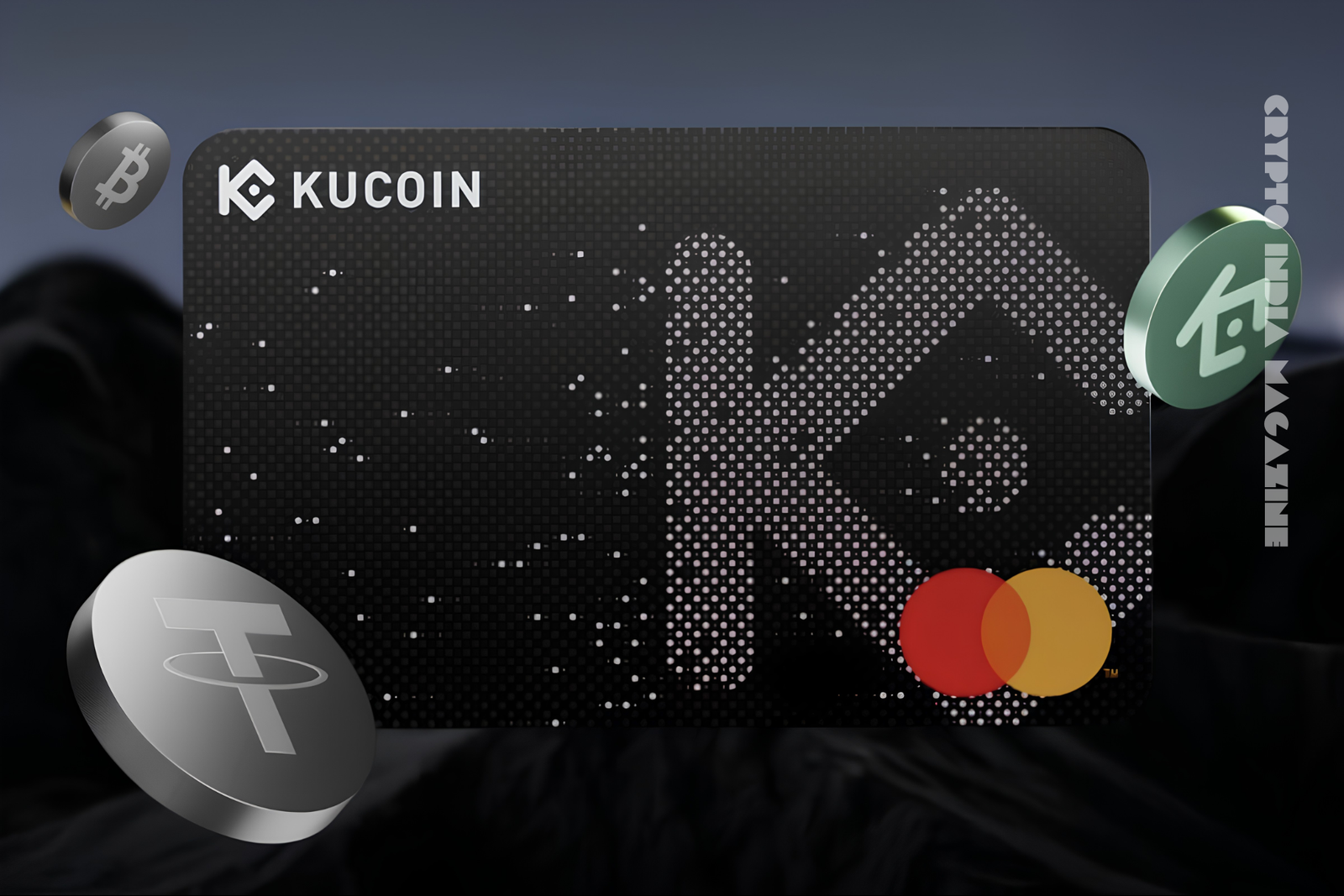
KuCoin is framing its Australian expansion as an “evolution,” with the Seychelles-based exchange detailing this week how its November 2025 AUSTRAC registration and a new Mastercard-linked debit card anchor its local strategy.
James Pinch, KuCoin’s Australian managing director, told the Australian Crypto Convention that the country is an “exciting place to be at the moment,” citing a tightening regulatory framework and steady retail demand. KuCoin has paired the registration with a new office in Sydney’s central business district and the rollout of KuCard, a virtual debit product built with Immersve, a principal member of the Mastercard network.
“You need to be nimble and adapt and make sure that your products are complying in whatever jurisdiction or set of regulation that they apply to,” Pinch said.
Compliance Pitch Follows a Tougher Year
The compliance message follows a difficult stretch for the exchange. KuCoin operator Peken Global Limited pleaded guilty in January 2025 to operating an unlicensed money transmitting business in the United States and agreed to pay more than $297 million in penalties and forfeitures, resolving a criminal case brought by the U.S. Attorney for the Southern District of New York. Securing AUSTRAC oversight, which gives KuCoin access to a market of more than 20 million adult Australians, has since been positioned as central to its global compliance pitch.
“As a global platform built on trust, securing AUSTRAC registration is a key milestone in strengthening KuCoin’s global compliance architecture,” KuCoin chief executive BC Wong said.
KuCard, which began rolling out on April 24, lets eligible Australian users spend USDC at any Mastercard merchant, with conversion to local currency handled in real time at the point of sale. The card extends to Apple Pay and Google Pay, and 37 USDC trading pairs are supported at launch, KuCoin said. The exchange cited internal research showing 22% of Australians now hold digital assets, with more than half funding their accounts through bank transfers.
Mastercard’s Stablecoin Strategy Accelerates
Mastercard executives framed the integration as part of a broader stablecoin push that has accelerated this year. In March, the network agreed to acquire London-based stablecoin infrastructure firm BVNK for up to $1.8 billion, and unveiled an 85-partner Crypto Partner Program spanning issuers, exchanges, and infrastructure providers, including Immersve. The strategy parallels recent stablecoin licensing moves elsewhere in Asia, including Hong Kong’s first stablecoin licenses granted to HSBC and Standard Chartered.
“By enabling the spending of digital assets at scale in a safe, secure, and compliant way, we’re helping digital assets become truly usable in everyday life,” Christian Rau, Mastercard’s senior vice president of digital commercialization, said.
KuCoin’s timing aligns with a tightening regulatory perimeter across the Australian market. AUSTRAC has launched two supervisory campaigns covering 36 over-the-counter cash-to-crypto operators and 27 local exchanges, while the Travel Rule takes effect on July 1. Parliament passed the Corporations Amendment (Digital Assets Framework) Bill on April 1, requiring digital asset platforms and tokenized custody platforms to hold an Australian Financial Services Licence. The convergence of regulated payment rails and digital assets was also a central theme at Money 20/20 Asia 2026 in Bangkok, where stablecoins and tokenization dominated the agenda.
Pinch said KuCard marks “continued progress” in a broader local product ecosystem, and “lays the groundwork for more regulated products to be introduced in the market.”
Editorial Note: Reported and edited by the Crypto India Magazine editorial team. We use AI tools to assist with research and drafting; every article is reviewed and fact-checked by our editors.
Interested in advertising with CIM? Talk to us!

Binance to Shut Down Binance Pool and Related Mining Services on November 10
Binance is closing Binance Pool and related mining services on November 10, 2026, at 07:00 UTC. The shutdown ends Cloud Mining, Pool Savings, the Transaction Accelerator, hashrate alerts, and the pool API. Miners must switch pools, redeem Pool Savings, and verify accounts before the cutoff.
“Your Computer Is Hacked”: CBI Busts India-Based Bitcoin ATM Scam Targeting US Seniors
India’s CBI has arrested four people over an alleged India-based Bitcoin ATM scam that impersonated Microsoft and pushed elderly US citizens into crypto payments. A Florida victim lost about $440,000 and a New Jersey victim about $130,000, as India tightens rules on crypto-enabled crime.

Vitalik Buterin Warns AI Could Weaken Crypto Security in Two Years
Ethereum co-founder Vitalik Buterin warns AI-accelerated math research has a "good chance" of seriously weakening lattice-based cryptography within two years. He also flagged added ECDSA risk and said Ethereum's Lean roadmap is shifting toward hash-based signatures.

Bitget Loses $351.6 Million in Hack, CEO Points to North Korea
Crypto exchange Bitget lost roughly $351.6 million after attackers spoofed transfers from its hot and warm wallets. CEO Gracy Chen ties the breach to a North Korea linked group, suspends withdrawals, and says the User Protection Fund covers the loss.