

Money 20/20 Asia took place from April 21 to 23, 2026, in the Thai capital. This year’s edition was primarily focused on the convergence of TradFi and DeFi.
Three themes dominated during the whole week: major asset tokenization, regulators favoring partnerships, and self-custodial finance quietly redefining what a bank account is. From opening remarks by Thailand’s Ministry of Finance and the Bank of Thailand to sessions on cross-border “payment passports” and stablecoin-powered money movement, the core narratives were speed, interoperability, and trust at scale.

The cultural shift of DeFi vs. TradFi narrative: J.P Morgan’s perspective
One moment at the J.P. Morgan session summed up just how far blockchain has actually worked its way into mainstream finance. Akshika Gupta, Global Head of Client Solutions for Kinexys Digital Payments at Kinexys by J.P. Morgan, used the Bangkok stage to bluntly separate the signal from the noise around DeFi.
When asked what clients truly want, she put it simply:
“Despite all the hype around this technology, what our clients are actually asking for is real utility, not just alignment with the ‘DeFi’ label. Kinexys, J.P. Morgan’s blockchain arm, was processing roughly 5,000 to 10,000 transactions per month 5 years ago. Today, it is close to $5 billion daily, with a network that has grown into the hundreds.”
What stood out even more was the cultural shift she hinted at. For years, “TradFi vs. DeFi” has mostly been a catchy talking point.
“What’s striking is the diversity of that network: corporates, financial institutions, asset managers, payment service providers, and e-commerce players—all with a shared need for speed and settlement finality. And this is really where the intersection of TradFi and DeFi becomes tangible: capabilities like 24/7 settlement are no longer aspirational. The shift isn’t about labels anymore; it’s about delivering infrastructure that actually works at scale.”
From unbanked to self-banked: a new era of financial rail
On day two of Money 20/20 Asia, EMURGO, the co-founding entity of the Cardano blockchain, officially unveiled SecondFi, a self-custodial, multi-chain, neo-financial platform designed to combine spending, trading, earning, and saving into a single mobile experience, with the user holding the keys throughout. The launch follows EMURGO’s earlier rollout of the Cardano Card with Wirex and marks the company’s transition from a single payments product to a full-service consumer financial platform.
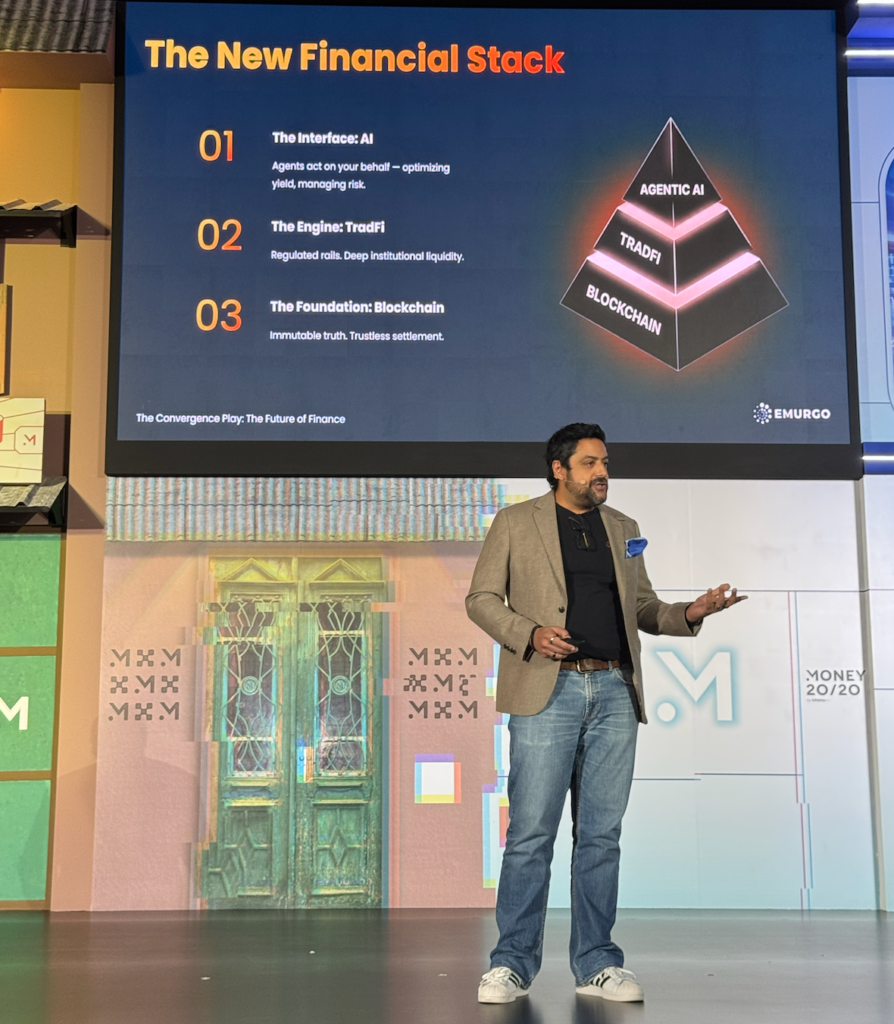
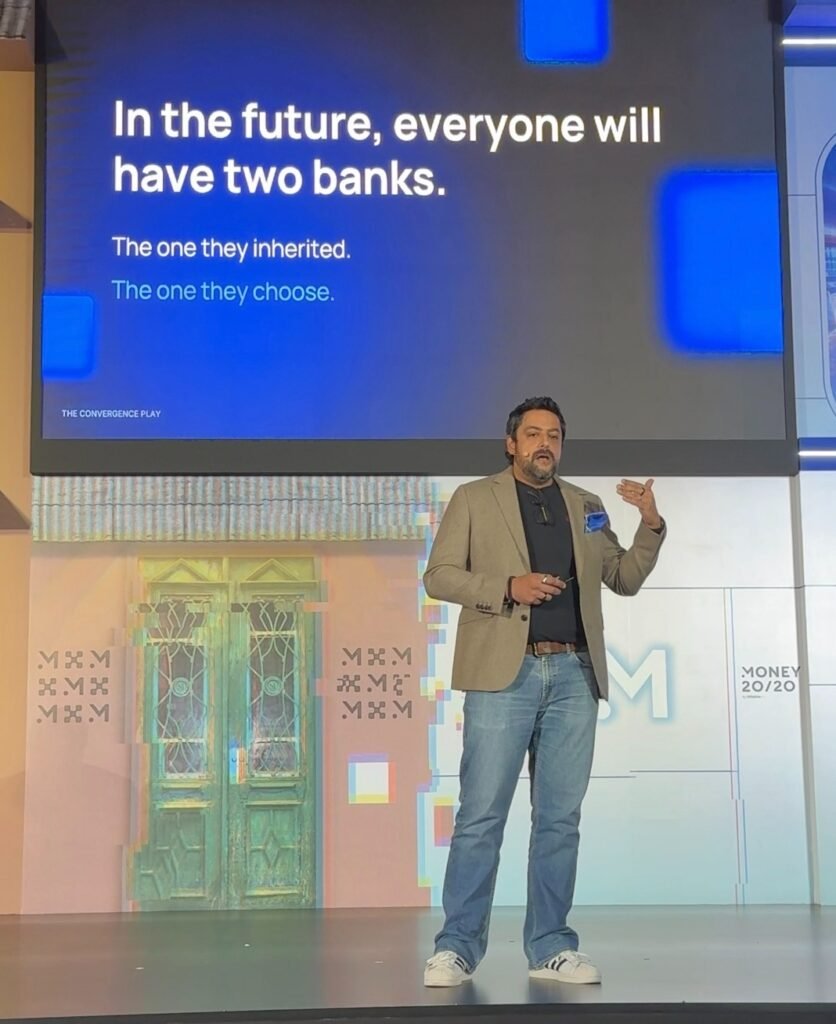
Nikhil Joshi, COO of EMURGO, delivered one of the sharpest keynotes of the week:
“It’s time to stop choosing between traditional stability and digital sovereignty and start demanding both. Today, 1.4 billion people remain unbanked, entirely outside the global financial system. It’s one of the biggest infrastructure failures of our time. For these 1.4 billion people, this exclusion isn’t a minor hurdle, it’s a fundamental barrier to living a normal economic life. The unbanked need something much simpler: the ability to make micropayments, to off-ramp at a fair market price, and to do so instantly. The only architecture that can deliver this is absolute self-custody.”
For years, the broader crypto sector was waved off as a speculative corner of the internet. But today it is being mentioned alongside one of the major payment rails in the U.S. Just this month, about $7.5 trillion moved through the ACH system, and stablecoins processed approximately the same amount. It’s a sign that the shift is already happening, even if not everyone sees it yet.
Instead of debating whether crypto will replace banks, Joshi’s “two banks” idea truly inspired me: in the future, people will have one bank they got when they were born with and one they choose, built around global access and used for sending money across borders, paying for online transactions, or accessing stable-value assets. Overall, a lightweight financial app that blends traditional finance, decentralized networks, and AI tools will be more preferable than another digital bank.
Convergence, not competition
Across the stages and workshops, intelligent banking infrastructure, data‑driven financial inclusion, digital identity, and “invisible” payments powering borderless commerce remained predominant topics, while startups pitched solutions for SME finance, AI in fintech, and tokenized assets.
Tokenized commodities are no longer an experiment tucked away in a lab. The institutions that once reinforced the walls between TradFi and DeFi are now quietly taking them down, and the builders who used to define themselves in opposition to banks are sketching out what the next version of those banks might look like.
Convergence is real: governments, banks, fintechs, and digital asset players are now building this future together across Asia.
Editorial Note: This article has been written by a contributor to Crypto India Magazine (CIM). The CIM editorial team has not made any changes to the content. The views and insights expressed remain entirely those of the author.

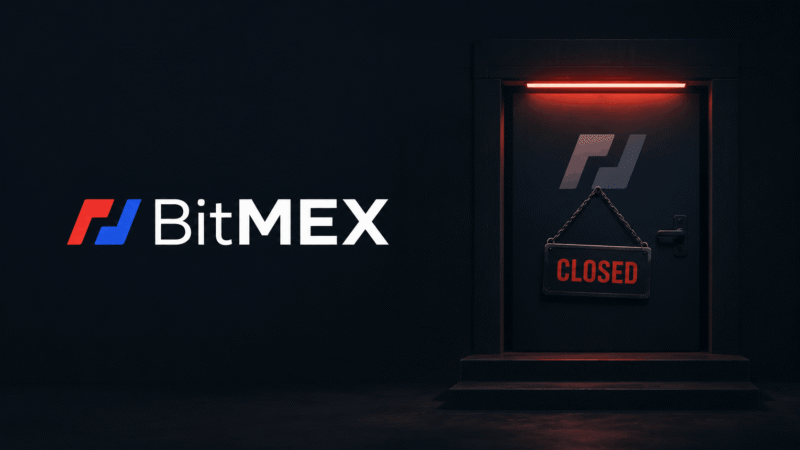
BitMEX to Shut Down Exchange Operations on September 23 After Strategic Review
Crypto derivatives exchange BitMEX will shut down on September 23, 2026, following a strategic review by parent company HDR Global Trading. Users have been asked to close open positions and withdraw their assets ahead of the closure as the platform begins an orderly wind down.
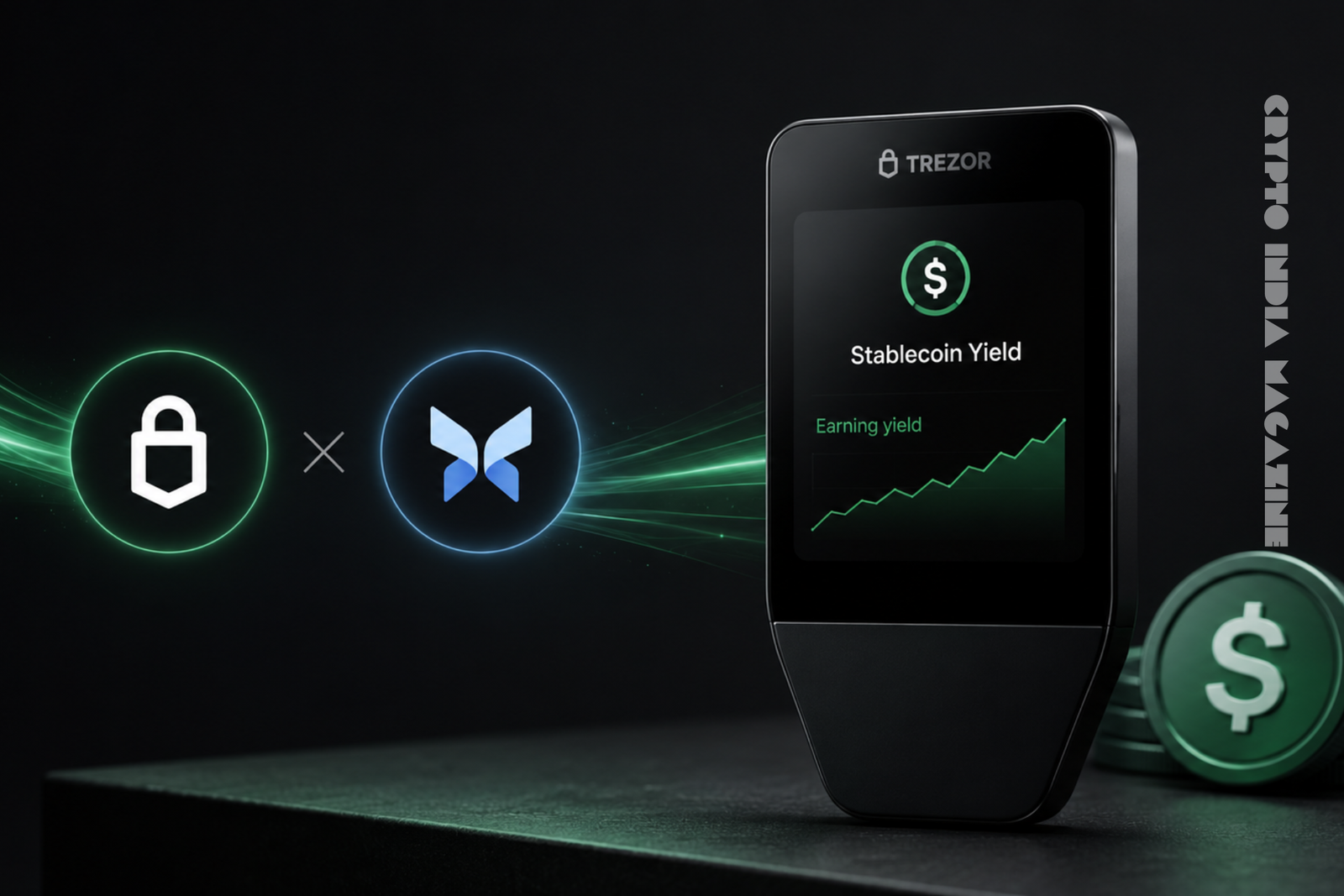
Trezor Launches Stablecoin Yield in Trezor Suite via Morpho
Trezor has launched native stablecoin yield inside Trezor Suite through a Morpho integration, letting users earn on USDC and USDT on Ethereum. Every deposit and withdrawal is signed on-device, with no lockups and instant exits.
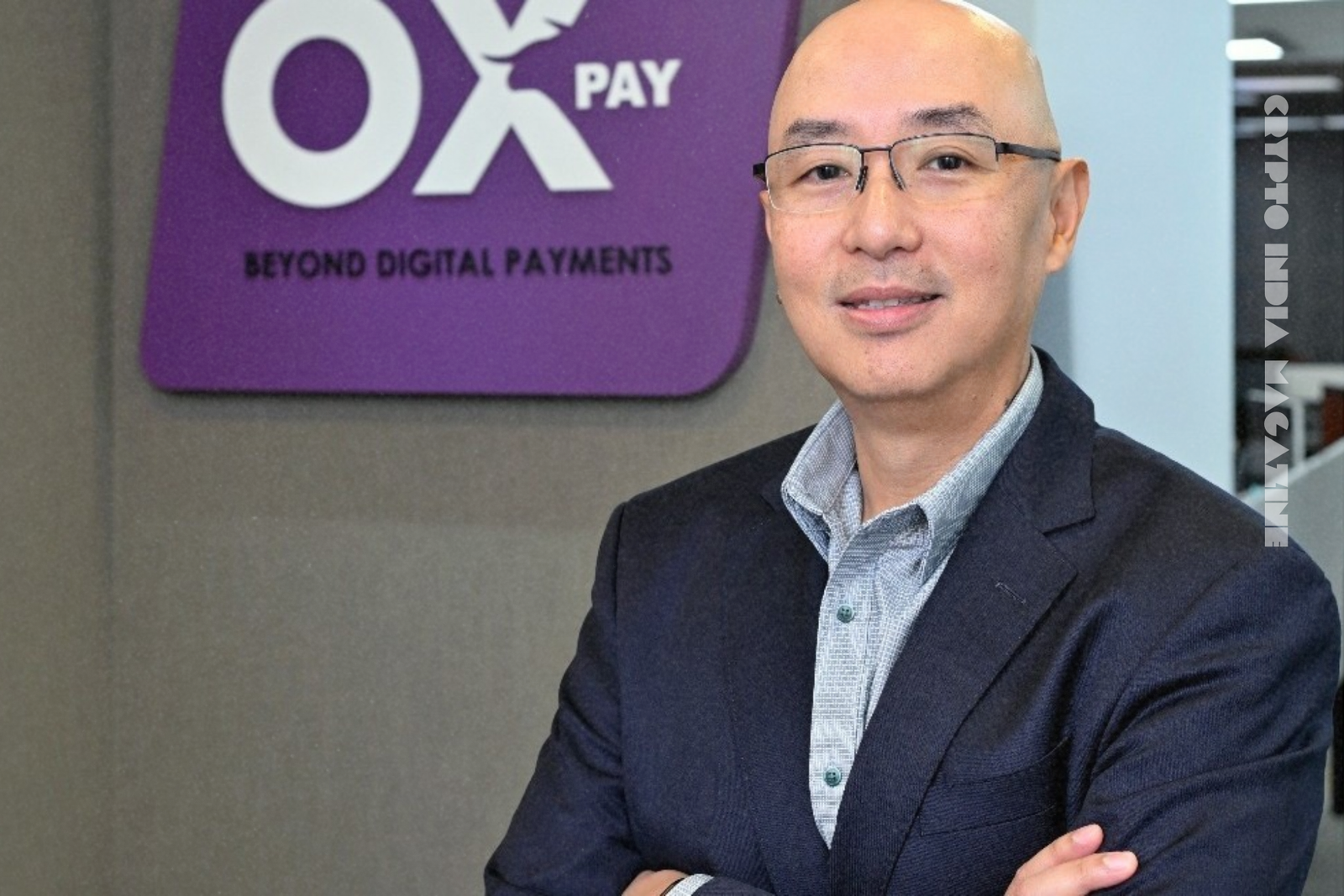
Oxygen7 Secures Full Payment Licence in Bhutan’s Gelephu Mindfulness City
OxPay Financial's subsidiary Oxygen7 received a full Financial Services Licence from Bhutan's Gelephu Financial Services Office on April 29, 2026, clearing the way for a regulated crypto payments and stablecoin remittance platform targeting GMC's tourism and B2B sectors.

KelpDAO rsETH Exploit Triggers $9 Billion Aave Bank Run as DeFi TVL Drops $13 Billion in 48 Hours
KelpDAO's 1-of-1 bridge verifier was exploited for $292M on April 18. Aave lost $9B in 48 hours. $5B in USDT/USDC locked. $13B DeFi TVL gone. Justin Sun-linked wallet exited $274M in 21 minutes.