

The first two weeks of May produced a busy stretch for Web3 capital this year. Public-market token presales, a $600 million stablecoin payments acquisition, a billion-dollar prediction-market round, a $120 million bet on blockchain compliance, and a fresh national bank charter all landed in the same window. Capital flowed toward stablecoin infrastructure, prediction markets, compliance plumbing, and institutional-grade rails.
The following are the 10 deals, ordered by deal size, largest at the top. The cutoff is funding announced between May 1 and May 14, 2026. It includes both primary equity rounds and large strategic acquisitions. M&A deals are flagged where relevant.
Kalshi: $1 Billion Series F At A $22 Billion Valuation
Prediction-market exchange Kalshi confirmed a $1 billion Series F on May 7, doubling its valuation to $22 billion from December’s $11 billion mark. Coatue Management led the round, with Sequoia Capital, Andreessen Horowitz, IVP, Paradigm, Morgan Stanley, and ARK Invest joining.
Kalshi said institutional trading volume jumped 800% over six months, while annualized trading volume more than tripled to $178 billion. The company is CFTC-regulated and not crypto-native, but the round drew heavy crypto-VC participation, and its growth runs parallel to Polymarket’s. State-level scrutiny remains the open risk. CIM has tracked the Nevada ban and related state actions in its earlier Kalshi prediction-market funding story.
Payward Acquires Reap Technologies For $600 Million (M&A)
Payward, the parent of crypto exchange Kraken, agreed on May 7 to acquire Hong Kong-based stablecoin payments firm Reap Technologies in a cash-and-stock deal worth up to $600 million. The transaction values Payward at $20 billion and marks Kraken’s first infrastructure acquisition in Asia, as Payward co-CEO Arjun Sethi told Bloomberg.
Reap, founded by former Stripe Asia-Pacific lead Daren Guo and former investment banker Kevin Kang, provides cross-border business payment infrastructure tied to stablecoin settlement. Sethi told Bloomberg the deal is Payward’s third-largest to date. The acquisition follows Payward’s up-to-$550 million purchase of derivatives platform Bitnomial in April. Closing is expected in the second half of 2026, subject to regulatory approvals.
Circle Closes $222 Million ARC Token Presale At A $3 Billion Valuation
On May 11, Circle Internet Group raised $222 million in a token presale for Arc, its new institutional blockchain, at a $3 billion fully diluted valuation. a16z crypto led with a $75 million commitment, per CNBC’s interview with CEO Jeremy Allaire.
BlackRock, Apollo Funds, Intercontinental Exchange, SBI Group, Janus Henderson, Standard Chartered Ventures, General Catalyst, Marshall Wace, ARK Invest, IDG Capital, Haun Ventures, and Bullish all joined.
The raise made Circle the first publicly listed company to conduct a token presale in a compliant structure. Arc is an EVM-compatible Layer 1 designed for institutional finance, using USDC as its native gas token.
a16z partners Ali Yahya and Noah Levine framed the bet in a16z crypto’s investment memo, arguing that stablecoins processed roughly $9 trillion over the past year and now need infrastructure built for institutions rather than retail.
Elliptic Raises $120 Million Series D At A $670 Million Valuation
London-based blockchain analytics firm Elliptic closed a $120 million Series D on May 12, valuing the company at $670 million. One Peak led the round, with Nasdaq Ventures, Deutsche Bank, and the British Business Bank participating, alongside returning investors JPMorgan, Evolution Equity Partners, and AlbionVC, according to Elliptic’s announcement.
The fundraise comes after stablecoins processed $33 trillion in transactions in 2025, and as nearly $3 billion in crypto assets have been stolen since the start of 2025. Elliptic now screens more than 1 billion transactions a week for over 700 customers across 30 countries, covering 65 blockchains.
CEO Simone Maini said proceeds will accelerate the company’s agentic-AI compliance product roadmap. The Nasdaq-Deutsche Bank-JPMorgan combination on a single cap table is the cleanest signal yet of TradFi conviction in on-chain compliance infrastructure.
MoonPay Acquires DFlow For $100 Million (M&A)
MoonPay said on May 5 that it had acquired DFlow, the Solana trading infrastructure platform, in an all-stock deal valued at $100 million. DFlow’s router processes about $12 billion in quarterly volume and powers trades for Coinbase, Phantom, Solflare, and Kamino.
The deal is MoonPay’s sixth acquisition since the start of 2025 and pushes the payments company deeper into the trade-execution layer. DFlow built the first aggregator to re-optimize trade routes during onchain execution itself, per MoonPay’s announcement.
DFlow also provides the API that tokenizes Kalshi prediction markets as native Solana tokens. The acquisition signals consolidation in the routing and execution tier of crypto trading, where margins are thin and scale matters.The same consolidation is playing out among asset managers building institutional infrastructure, as in Bitwise’s Attestant acquisition, which brought Ethereum staking in-house and pushed its assets toward $10 billion.
Augustus: $40 Million And A Conditional OCC Bank Charter
Augustus, formerly known as Ivy, disclosed on May 11 that it has raised a total of $40 million and received conditional approval from the U.S. Office of the Comptroller of the Currency to charter a national bank. Investors include Peter Thiel’s Valar Ventures, Creandum, and the founders of Ramp, Deel, and Circle.
Co-founder Ferdinand Dabitz, 25, would become the youngest CEO of a federally chartered U.S. bank in over a century if the conditional approval converts. The $40 million figure covers cumulative funding to date and was disclosed alongside the charter news, rather than as part of a fresh round that closed this month. Augustus processes payments for Kraken and positions Augustus Bank as a clearing bank built on a stablecoin and AI-native core.
Capital B Raises €15.2 Million To Accumulate More Bitcoin
Paris-listed Capital B, formerly The Blockchain Group, raised €15.2 million (about $17.8 million) through a private placement on May 11. Blockstream CEO Adam Back and French asset manager TOBAM were the named strategic investors, according to the company’s filing.
Net proceeds of roughly €14.4 million will fund the purchase of up to 182 additional BTC, lifting holdings to 3,125 from 2,943. The placement uses an ABSA structure, where each share carries four attached subscription warrants priced between €0.86 and €1.46. Full warrant exercise would deliver an additional €99.1 million in capital. Earlier in May, Back separately subscribed to 10 million warrants worth €1.1 million.
OpenTrade Closes $17 Million Strategic Round For Stablecoin Yield Infrastructure
London-based OpenTrade announced on May 6 a $17 million strategic round that takes its total funding past $30 million. Mercury Fund and Notion Capital co-led, with a16z crypto, AlbionVC, and CMCC Global participating.
The company runs a B2B2C “yield-as-a-service” stack for fintechs, neobanks, exchanges, and treasuries that want to embed stablecoin yields backed by tokenized U.S. Treasuries. OpenTrade said TVL has surpassed $200 million, that transaction volume topped $250 million in 2025, and that the first quarter of 2026 already delivered $300 million. Proceeds will fund the expansion of the company’s Curation+ vault framework and its permissionless infrastructure.
Antier Solutions Raises $3 Million Led By GVFL For Enterprise Blockchain
Mohali-based Antier Solutions secured a $3 million round led by Ahmedabad-headquartered venture firm GVFL on May 12, the company’s first institutional capital after more than a decade of bootstrapped growth, as CIM reported. Founder Vikram R. Singh said the financing supports the company’s shift from a bootstrapped organization toward institutional-scale enterprise blockchain deployments.
Antier employs over 600 specialists and has delivered more than 1,000 projects across enterprises, startups, and government clients. Its flagship platform, EduBlock Pro, is a blockchain-based examination management system deployed in Punjab State AIDS Control Society recruitment exams. The company also operates a Programmable Money Infrastructure platform covering tokenization, digital asset management, and institutional workflows.
GVFL Managing Director Mihir Joshi said enterprise blockchain adoption is moving into real-world use cases across governance and financial infrastructure. Proceeds will fund expansion across the United States, MENA, and Asia-Pacific.
Saturn Credit Raises $2 Million Seed for STRC Application Layer
Saturn Credit announced a $2 million seed round on May 7. The Spartan Group led, with Anchorage Digital, Susquehanna Crypto, and others participating. The protocol is building an application layer on Bitcoin powered by Strategy’s STRC preferred-stock instrument.
Saturn operates a dual-token system: USDat, a non-yielding stablecoin pegged 1:1 to USDC and backed by tokenized U.S. Treasuries through M tokens, and sUSDat, an ERC-4626 vault that accrues STRC dividends on a 3-to-7 day exit queue. The protocol claims more than $125 million in TVL at launch, with integrations across Morpho, Pendle, Strata Markets, and the Stacks network. Strategy founder Michael Saylor named Saturn among STRC’s anchor DeFi holders in the company’s Q1 release.
Honorable Mentions: Crypto VC Funds Got Bigger
Two large fund closes also landed in early May. Andreessen Horowitz’s crypto arm closed Crypto Fund 5 at $2.2 billion on May 6, bringing the total a16z crypto raised since 2018 to $9.8 billion. Haun Ventures closed Fund II at over $1 billion on May 4, expanding its remit into agentic-AI financial infrastructure alongside core crypto. Both signal deep dry powder for follow-on Web3 deployment over the next two to three years. The fundraising wave isn’t confined to crypto-native firms either; applied-AI investors have been raising alongside them in the last couple of years, as with Blue Bear Capital’s $160M fund for energy, infrastructure, and climate startups.
What May Says About The Cycle
Fourteen days delivered one $1 billion equity round, one $600 million acquisition, a $222 million tokenized presale by a public company, a $120 million bet on on-chain compliance from Wall Street incumbents, a fresh national bank charter for a stablecoin firm, and a first-ever institutional check for an Indian enterprise-blockchain veteran. For scale, that two-week haul stands against roughly $2.7B raised across crypto startups in all of Q2 2024, a measure of how much larger individual checks have become.
Editorial Note: Reported and edited by the Crypto India Magazine editorial team. We use AI tools to assist with research and drafting; every article is reviewed and fact-checked by our editors.
Interested in advertising with CIM? Talk to us!

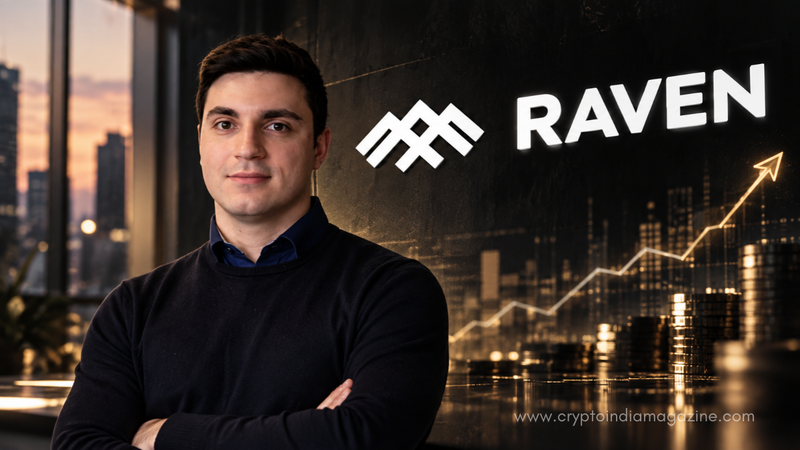
Raven Raises Funding Round at $90 Million Valuation, Backed by Coinbase Ventures
Coinbase Ventures and CMCC Global closed a strategic round with Raven, a crypto trading firm, at a $90 million valuation. The size of the raise was undisclosed. Raven provides market making liquidity for prediction markets like Kalshi and Polymarket as the sector draws heavy capital.

Canadia Impact Fund Invests in Cambodian AI Startup Newwave in Seed Round
Canadia Impact Fund has invested in the seed round of Newwave, a Cambodian AI and software firm with most of its clients overseas. The deal is the Canadia Group venture arm's second, following Jalat Logistics in 2025.

Fundly.ai Raises $4M to Expand India Pharma Supply-Chain Platform
Fundly.ai raised $4 million in an early-stage round led by existing backers Accel and Multiply, with former RBL Bank executive Rajeev Ahuja and angels joining, plus $0.9 million in venture debt. The Mumbai startup is scaling B2B commerce, payments, and embedded credit in pharma distribution.
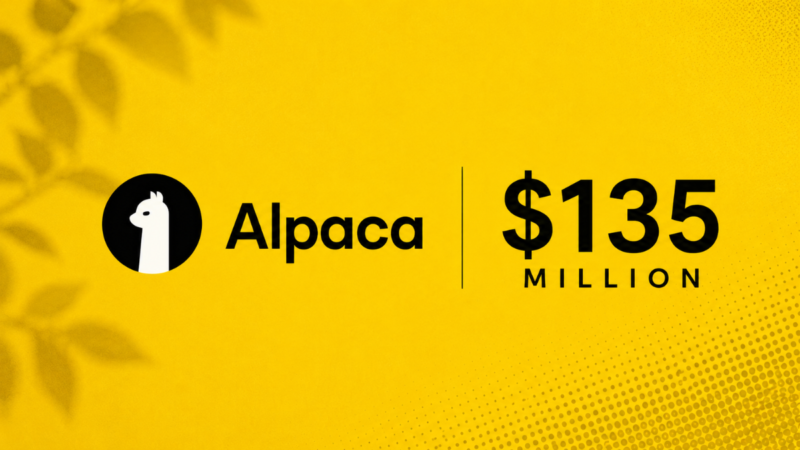
Alpaca Raises $135 Million Led by Peak XV to Scale Tokenized Markets Infrastructure
Alpaca has raised $135 million led by Peak XV, with participation from Elefund, Opera Tech Ventures, and Unbound. Total new financing hits $435 million with debt from Kraken parent Payward and BMO, as the broker scales infrastructure for tokenized markets and AI-native finance.