Now Reading: How Shardeum Is Building Blockchain Infrastructure for India at Scale
-
01
How Shardeum Is Building Blockchain Infrastructure for India at Scale


India is often cited as the next frontier for Web3 adoption, but scale alone does not guarantee utility. Payments move at massive volume through UPI, yet most blockchain infrastructure serving Indian users is built for very different economic realities. This gap is where Shardeum begins.
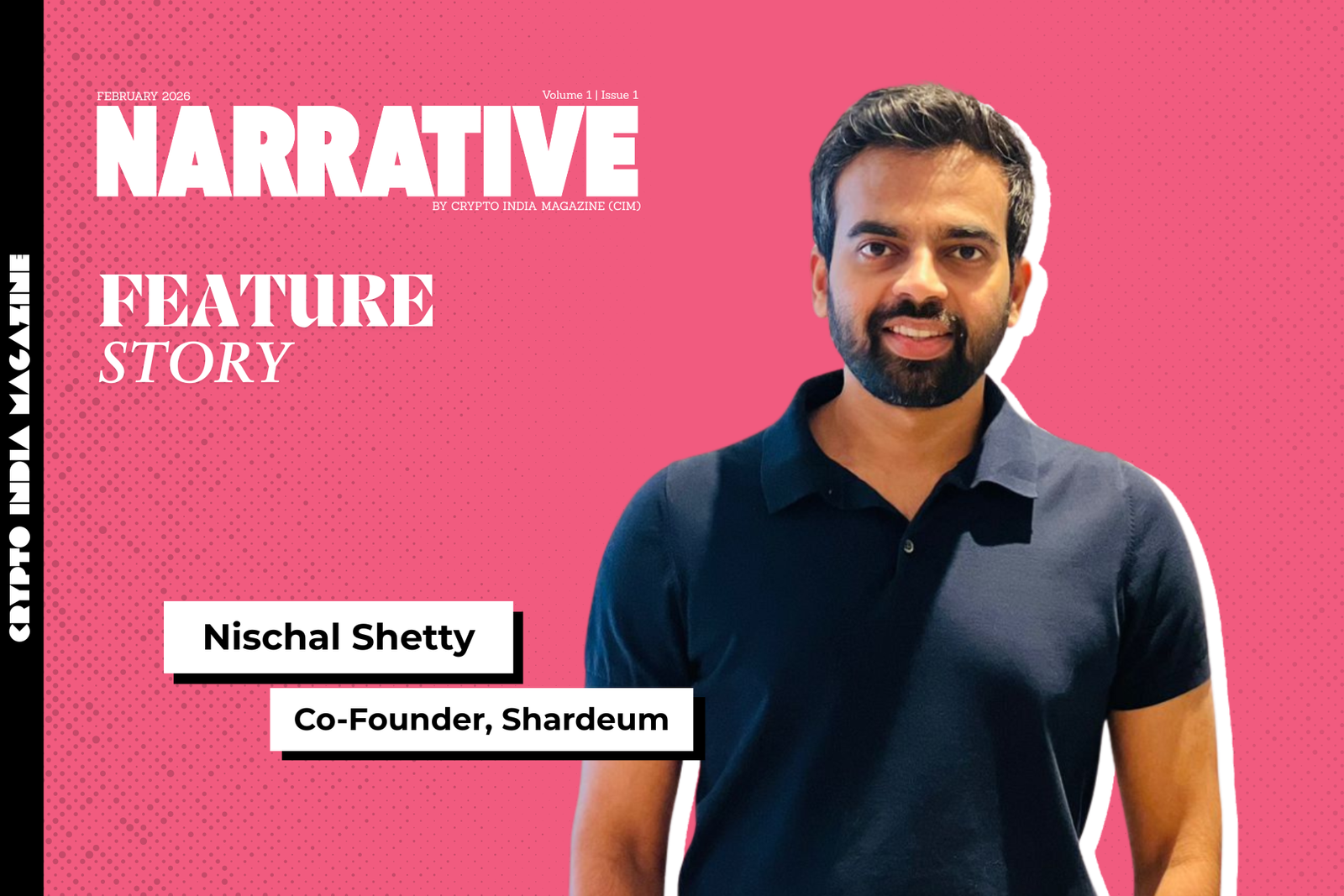
Co-founded by Nischal Shetty, Shardeum was conceived with a simple question. What does on-chain infrastructure need to look like if it is meant for everyday users, not just early adopters? Rather than chasing abstract throughput benchmarks, the project has focused on building an ecosystem that can grow patiently, with low costs, familiar developer tooling, and a community that participates as operators and builders.
We spoke to Shetty about why India became the proving ground for Shardeum, how community functions as network infrastructure, and what meaningful adoption looks like in the next phase of Web3.
Building the City Before the Highway
The standard playbook for a new Layer-1 blockchain is to launch with the most complex architecture possible, often at the expense of immediate usability. However, Shetty is doing the opposite.
While Shardeum’s namesake feature, sharding, is designed for infinite scaling, the project has made a tactical shift to launch a non-sharded EVM first.
It is a calculation based on market maturity. In India, the gap between having a massive developer population and having a thriving on-chain economy is still wide. Launching a high-performance engine into a vacuum serves little purpose. By prioritizing a stable, familiar environment first, Shetty is focused on building the density of applications before turning on the network’s full power.
“The onchain ecosystem in India is very nascent and before we bring sharded EVM, what we need is an ecosystem that is large enough for such a technology,” Shetty explains. “Shardeum’s on a mission to help build the onchain ecosystem in India currently.”
This strategy shifts the focus from abstract benchmarks to the intimidation factor that still plagues Web3. For the millions of users currently transacting via UPI and mobile wallets, the jump to blockchain remains too steep.
Shardeum’s current priority is not just increasing throughput, but simplifying the stack, streamlining wallet design and developer tooling to ensure the underlying technology is essentially invisible. In this view, the real technical challenge isn’t how fast a network can go, but how easily a user can join it.
When Community Becomes Infrastructure
If simplifying the technology is the first step toward adoption, distributing responsibility is the second. For Shardeum, usability alone is not enough. A network meant to support everyday economic activity also needs people who actively operate, maintain, and grow it.
This is where Shetty’s idea of being community-driven becomes concrete. Rather than treating the community as an audience to be acquired, Shardeum treats it as part of the system itself.
“For us, community is not marketing, it’s the network,” Shetty says. “People run validators, test upgrades, build tools, and onboard others.”
The distinction shapes how the network evolves. Over time, this has created a feedback loop where adoption and infrastructure grow together, particularly across India’s grassroots Web3 communities.
Shetty further emphasizes that this structure is intentional.
“Being community-driven means transparency, open participation, and shared ownership. Decisions and direction are shaped by the people building and using Shardeum, not just by a core team.”
That sense of shared ownership also informs how Shardeum thinks about incentives. The SHM token is designed to reinforce contribution rather than speculation, aligning economic rewards with actual participation across the network.
“SHM is built to reward participation, not just early speculation,” Shetty explains. “Validators secure the network, developers create real-world applications, and users experience fast, affordable onchain interaction.”
The idea is simple but demanding. Value should emerge from usage, not narrative momentum. “The model is designed so that value grows with usage not hype,” he adds.
This emphasis naturally shapes the applications Shardeum prioritizes. High volume, low cost use cases like merchant payments, gig worker settlements, gaming economies, loyalty systems, creator monetization, and micro commerce all depend on networks that feel accessible and dependable.
From India to Everywhere
Shardeum’s India-first approach is often mistaken for geographic limitation. In reality, India is the network’s toughest proving ground, where scale, cost sensitivity, and accessibility are baseline requirements. If infrastructure works here, global relevance follows naturally.
Shetty views India less as a market and more as a stress test. The country combines massive user potential with real constraints around affordability, onboarding, and usability. Building for these realities forces discipline into both design and execution.
“India is one of the biggest onchain adoption opportunities globally. If we build infrastructure and applications that work at India scale, they will naturally scale to the world.”
That philosophy shapes how Shardeum positions itself globally. Anchored in India but open by design, the network supports builders everywhere, while insights from real users facing constraints of cost and access inform broader architectural decisions.
Looking ahead, the next phase for Shardeum is defined less by roadmap announcements and more by activity. The focus is on live applications, expanding validator participation, and improving EVM tooling so developers can move faster with fewer barriers. Momentum, in this context, is measured through usage rather than releases. As Shetty puts it, success for Shardeum is not about technical milestones alone, but usage. When people transact, build, earn, and interact daily onchain without friction, that is when the ecosystem reaches its true potential.