

Bitcoin Thailand Conference 2026: Inspiring the Next Generation of Bitcoin Vanguards
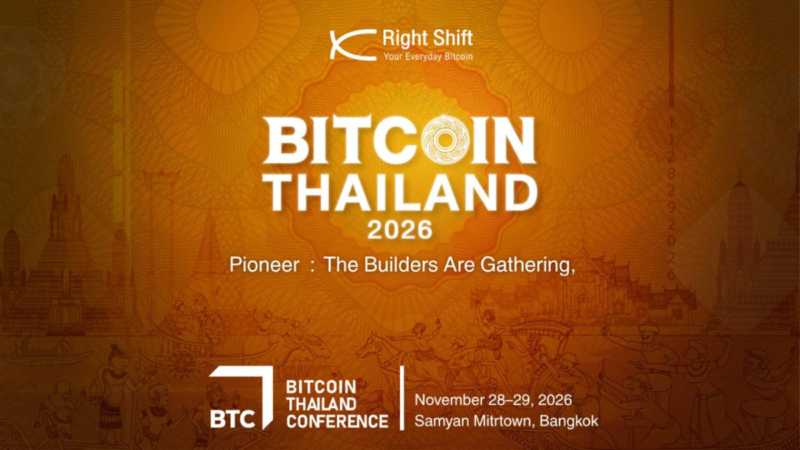
The Bitcoin Thailand Conference 2026 comes to Bangkok's Samyan Mitrtown on November 28-29, spotlighting Lightning payments, privacy and financial sovereignty.
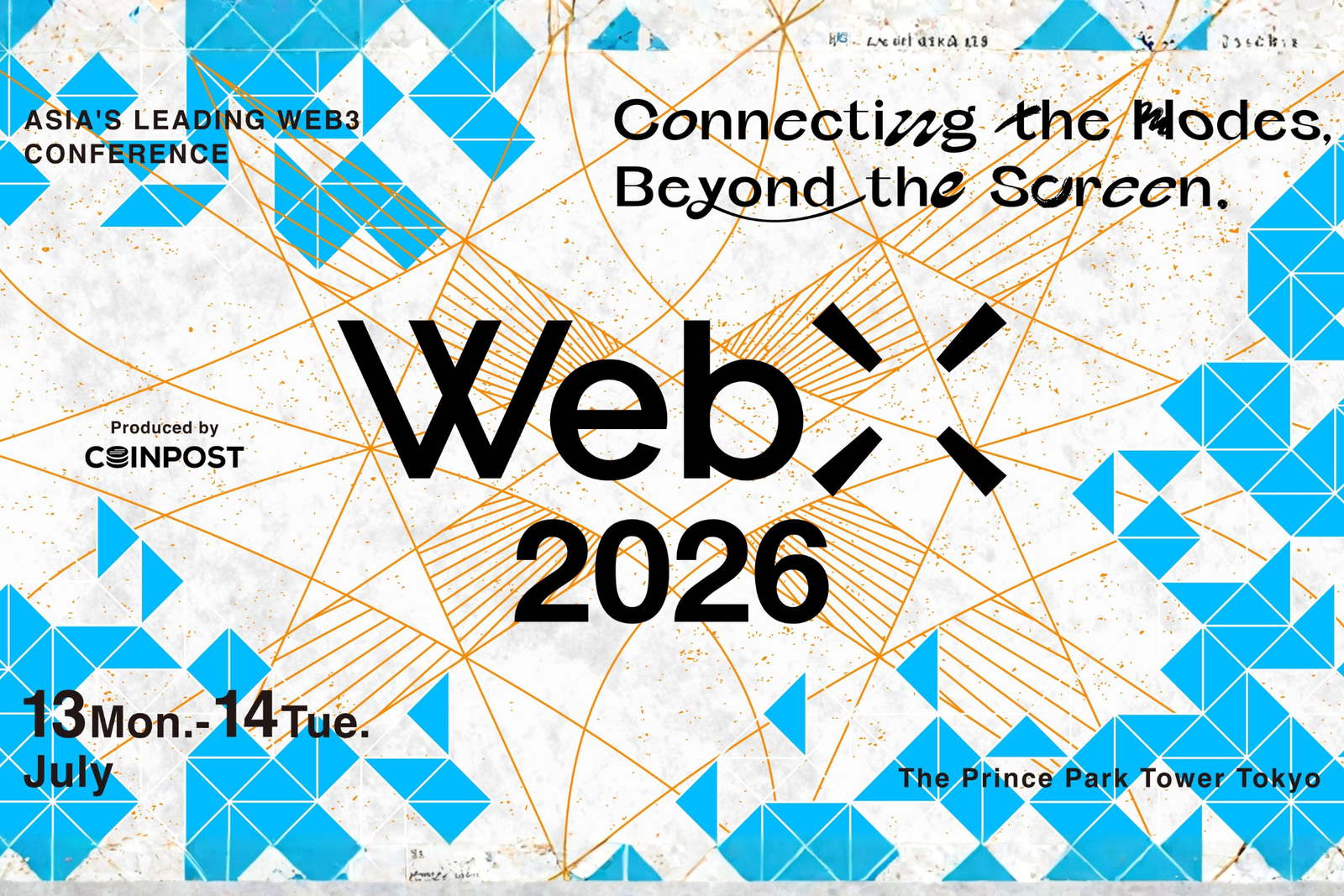
Newly confirmed speakers from leading financial institutions, digital asset firms and global payment networks join discussions on stablecoins, AI, regulation and the future of digital finance in Tokyo.
WebX 2026 returns to Tokyo as Japan enters a new phase of regulated digital asset growth and institutional participation. The conference is expected to draw more than 15000 attendees and feature speakers from leading global organizations across finance, technology, and government.
PBW 2026 reflects the country’s transition from understanding blockchain to actively implementing it. What was once experimental is now being deployed—with growing relevance in transparency, accountability, and economic participation.
Antier’s first institutional capital after over a decade of bootstrapped growth. It comes at a time when blockchain is increasingly being evaluated as a foundational layer for digital trust, verification, and financial infrastructure, particularly across public sector and BFSI use cases.
Humanity Protocol ($H) trades 64% below its ATH — but a Mastercard partnership, $50M in institutional backing, and a 2026 governance launch could reshape the decentralized identity narrative. Here's our full $H price prediction from 2026 to 2031.
As of March 2, 2026, ADA trades at approximately $0.29, down from highs above $1.00 reached in early 2025. The current market capitalization stands at roughly $10.77 billion, with a circulating supply of approximately 36.07 billion ADA.
Beyond market cycles, blockchain’s real promise lies in tokenizing real world assets. By bringing bonds, real estate, and commodities on chain, developers are building a bridge between DeFi and the traditional economy, shifting the focus from speculation to utility and measurable economic impact.
Loyaltization proposes tokenizing loyalty to drive real Web3 adoption in India. With stablecoins lowering costs, inter brand reward ecosystems expanding, and brands chasing measurable engagement, tokenized loyalty could turn points into programmable assets and reshape how users interact with rewards, privacy, and value.
RWA tokenization is connecting traditional finance with DeFi by turning assets like real estate, bonds, and commodities into programmable blockchain tokens. As institutions enter the space and regulations evolve, tokenized assets are emerging as a scalable bridge between global capital and on chain markets.
Web3 disputes cannot be resolved by code alone. As protocols grow complex and cross border, legal frameworks are evolving to address risk, intent, and accountability. A layered approach combining on chain governance, mediation, and legal contracts is emerging as essential to protect users and sustain decentralized systems.
Quranium is building a quantum secure Layer 1 for a longer horizon, embedding post quantum cryptography at the protocol level to protect data, assets, and identity against future threats. CEO Kapil Dhiman frames quantum security not as hype, but as responsibility for infrastructure meant to last decades.
Zer0th Protocol targets Web3’s hackathon graveyard, where promising projects vanish after demo day. By turning builder output into on chain proof of build and tracking real progress over time, it aims to surface consistent execution, improve discovery, and help investors back work that compounds rather than disappears.
Tanisha Katara did not enter Web3 as a believer. She entered as a skeptic. Today, she is redesigning governance systems across major protocols, challenging token driven templates, exposing power concentration, and pushing for models where incentives, decentralization, and accountability actually work in practice.
Laura Estefania views Web3 through the lens of public opinion, narrative, and responsibility. At Conquista PR, she focuses on shaping perception, guiding founders through communication and policy, and building leadership grounded in clarity, resilience, and long term trust rather than hype.
Mona Shaikh did not enter Web3 with a whitepaper. She entered with a punchline. Through “Web3 Is a Joke,” she roasts crypto culture, industry egos, and hype cycles, turning satire into a surprising bridge between mainstream audiences and an ecosystem often accused of taking itself too seriously.
Shardeum is building blockchain infrastructure around India’s real constraints, cost, accessibility, and scale. By prioritizing usability, community run validation, and gradual scaling over raw throughput, the network aims to create an ecosystem where everyday users can transact onchain without friction.
In a market constrained by taxes and regulation, Pi42 is building India’s first INR margined crypto futures exchange to bring trading onshore. CEO Avinash Shekhar bets that compliance, local currency design, and institutional discipline can rebuild trust and reshape India’s role in global digital asset markets.
At its Bengaluru summit, ConvoZen unveiled an end to end conversational AI stack and two indigenous speech models, Akshara and Ragini, built for India’s multilingual, voice first ecosystem. Backed by enterprise adoption, the platform positions itself as sovereign AI infrastructure for large scale customer operations.
CULTD challenges Web3’s obsession with vanity growth, arguing that followers and hype mean little without real economic activity. By linking attention directly to liquidity and user behaviour, the platform reframes growth as measurable performance, aiming to replace noise driven marketing with accountable, outcome based infrastructure.
In Web3, security failures rarely begin at launch. SecureDApp focuses on what happens after deployment, using real time monitoring, anomaly detection, and automated response to catch threats before damage occurs, reframing security as a continuous operational layer rather than a one time checkpoint.
Algorand was built for moments when systems cannot fail. Under Staci Warden, the Layer 1 has doubled down on instant finality, zero downtime, and decentralization in practice, positioning itself as infrastructure meant for real economic activity rather than market cycles.
The partnership marks a significant milestone for Al-Futtaim Technologies as it supports ConvoZen’s first expansion beyond India and into international markets, leveraging Al-Futtaim Technologies’ deep regional presence, enterprise relationships, and technology expertise to bring advanced CX intelligence capabilities to organizations across UAE, KSA, and Qatar.
HONG KONG – Feb 13, 2026 – Consensus Hong Kong 2026, held from February 10–12 at the Hong Kong Convention and…