Now Reading: Bengaluru Leads India’s Ethereum Surge, Tier-2 Cities & Women Lead India’s New Crypto Boom
-
01
Bengaluru Leads India’s Ethereum Surge, Tier-2 Cities & Women Lead India’s New Crypto Boom

Bengaluru Leads India’s Ethereum Surge, Tier-2 Cities & Women Lead India’s New Crypto Boom

- CoinDCX’s annual report shows investors now hold an average of five tokens, signalling deeper research and diversified allocation.
- Nearly 40% of India’s crypto users now come from Tier-2 and Tier-3 cities, with Lucknow, Pune, and Jaipur showing exceptional growth.
- Female participation doubled nationwide, led by Kolkata, as women adopt a wider basket of crypto assets.
- Bengaluru became India’s Ethereum hub with a 6.6x jump in ETH volumes, while Mumbai traded more ETH than Bitcoin for the first time.
- Bitcoin dominance fell sharply as Ethereum, Solana, Sui, and thematic investing reshaped market behaviour heading into 2026.
India’s crypto investor base is undergoing a structural shift, with Tier-2 cities and women investors emerging as the strongest new contributors to market growth, according to new findings from CoinDCX’s annual report. The data shows a market that no longer centers on metros nor relies solely on Bitcoin speculation to drive it. Instead, participation is widening across demographics, regions, and asset types.
One of the most notable trends is the broadening scope of investor portfolios. The average Indian investor now holds five tokens instead of the two or three common in 2022.
Ethereum, Solana, and Sui collectively make up more than 43% of portfolio volumes, while Bitcoin accounts for roughly 26%. The report attributes this dispersion to rising awareness of real-world utility in networks powering decentralised finance, tokenisation, and AI-enabled applications.
Changing investor demographics also reflect this higher-quality participation. CoinDCX reports that the average investor age has risen from 25 to 32. And it is an indicator of greater financial stability and longer-term decision-making. These trends align with findings in the company’s annual document, which highlights how “mature user behaviour” and the search for multi-utility assets reshaped participation in 2025.
At the same time, India’s smaller cities are beginning to reshape the country’s crypto map. Nearly 40% of users now come from Tier-2 and Tier-3 hubs, driven by improved financial literacy, vernacular content, and low-friction trading interfaces. Lucknow posted a fivefold spike in Ethereum volumes and emerged as one of the country’s most active Sui markets. Pune recorded a tenfold increase in overall trading volumes, with Solana demand rising sharply, while Jaipur saw Ethereum overtake Bitcoin for the first time. Cities such as Indore, Guwahati, Ludhiana, Bhopal, and Chandigarh all entered the top trading clusters.
Another significant shift is the rise of women investors. Female participation doubled over the year, with Kolkata leading the country, followed by Delhi and Mumbai. Notably, adoption is accelerating fastest in non-metros such as Bhubaneswar, Kochi, and Vadodara. Women investors displayed broad diversification, spanning Bitcoin, Ethereum, Solana, XRP, Polygon, Cardano, and Avalanche. This signals that high-volatility assets do not confine the demographic.
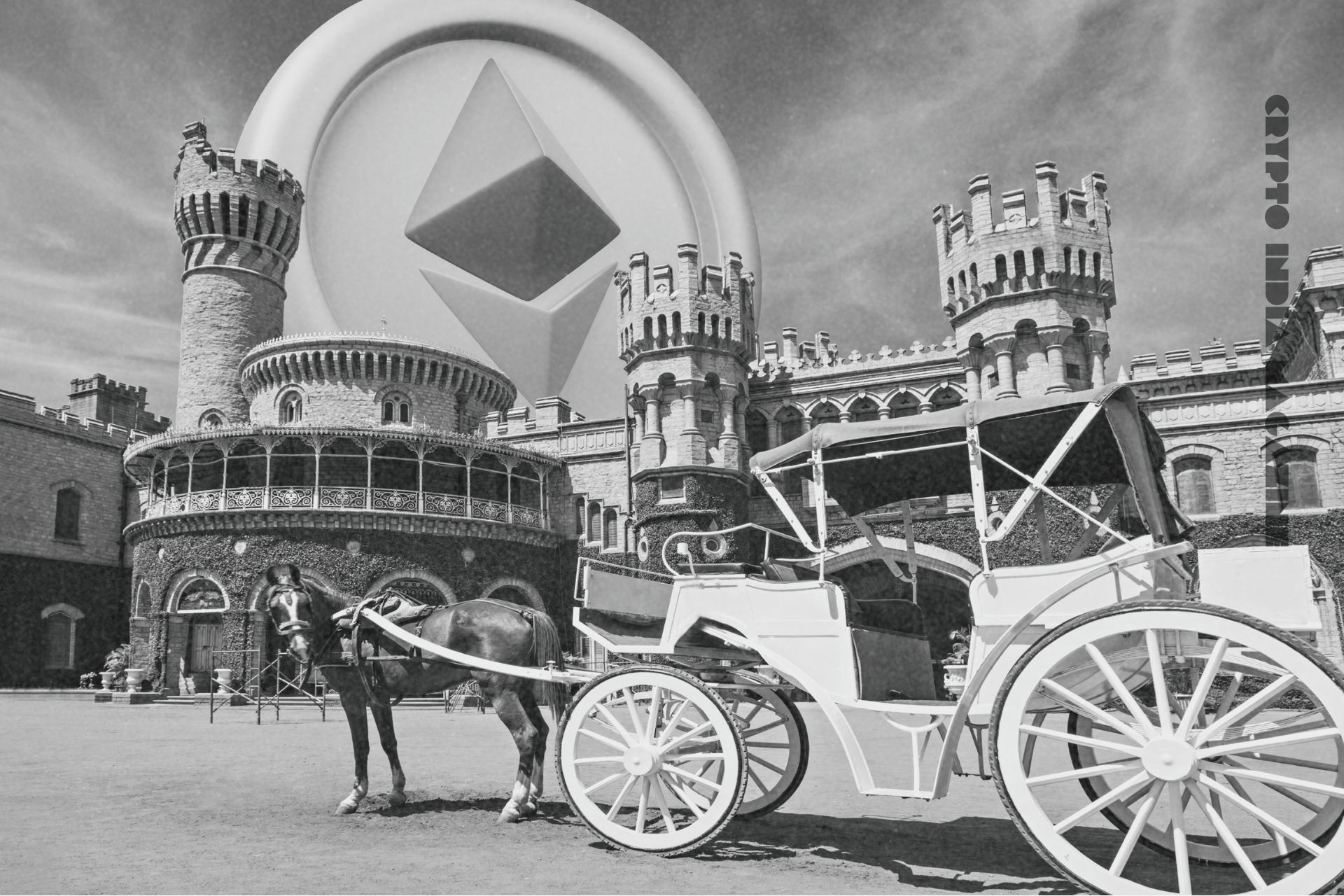
Bengaluru, meanwhile, has become the “Ethereum capital of India,” with ETH trading volumes rising 6.6 times between 2022 and 2025. Mumbai also recorded higher Ethereum trading than Bitcoin — a first for the city. According to CoinDCX, Bitcoin’s dominance fell from 133 million to 76 million units traded. On the other hand, ETH volumes surged from 39 million to 184 million, reshaping national liquidity patterns.
CoinDCX co-founder Sumit Gupta said the shift reflects the deeper institutionalisation of the Indian crypto market. Investors, he noted, are increasingly recognising that “if you are still watching price charts, you are missing the revolution happening beneath the surface.” He expects research-driven participation and institutional allocation to shape 2026 more than the traditional Bitcoin halving cycle.
India’s broader investment culture also contributes to this transition. With more than 20 crore demat accounts nationwide, India’s comfort with financial market participation is now extending to a global, borderless asset class that operates round-the-clock. As highlighted in the CoinDCX report, a unified regulatory framework would further streamline oversight and reduce ambiguity for retail and institutional participants alike.
Editorial Note: This news article has been written with assistance from AI. Edited & fact-checked by the Editorial Team.
Interested in advertising with CIM? Talk to us!