
India has topped the global crypto-adoption charts for the second year running, a headline that sounds almost surreal when you zoom in on the ground reality. Yes, the country now accounts for more on-chain activity than the United States and the U.K. combined.
Still, the day-to-day crypto conversation here feels strangely muted. The Union Budget left the 30 percent flat tax on digital-asset gains and the 1 percent TDS at source untouched—policies widely criticised for throttling liquidity.
Meanwhile, ask an average shopkeeper or a student what a stablecoin is, and you’ll likely get a polite shrug.
So what, exactly, does “adoption” really mean in this context? Is it simply a measure of the millions of retail traders chasing quick flips on weekend pumps, or is it supposed to signal a deeper shift—one where digital assets become as mundane as swiping a UPI code at the local kirana?
I cover Web3 for a living, but that title only captures half the story. I’m a tech-curious observer first, someone who won’t consider crypto a true success until I can pay my rent in it without drawing a raised eyebrow from my landlord or from the tax department. Perhaps my yardstick is too narrow.
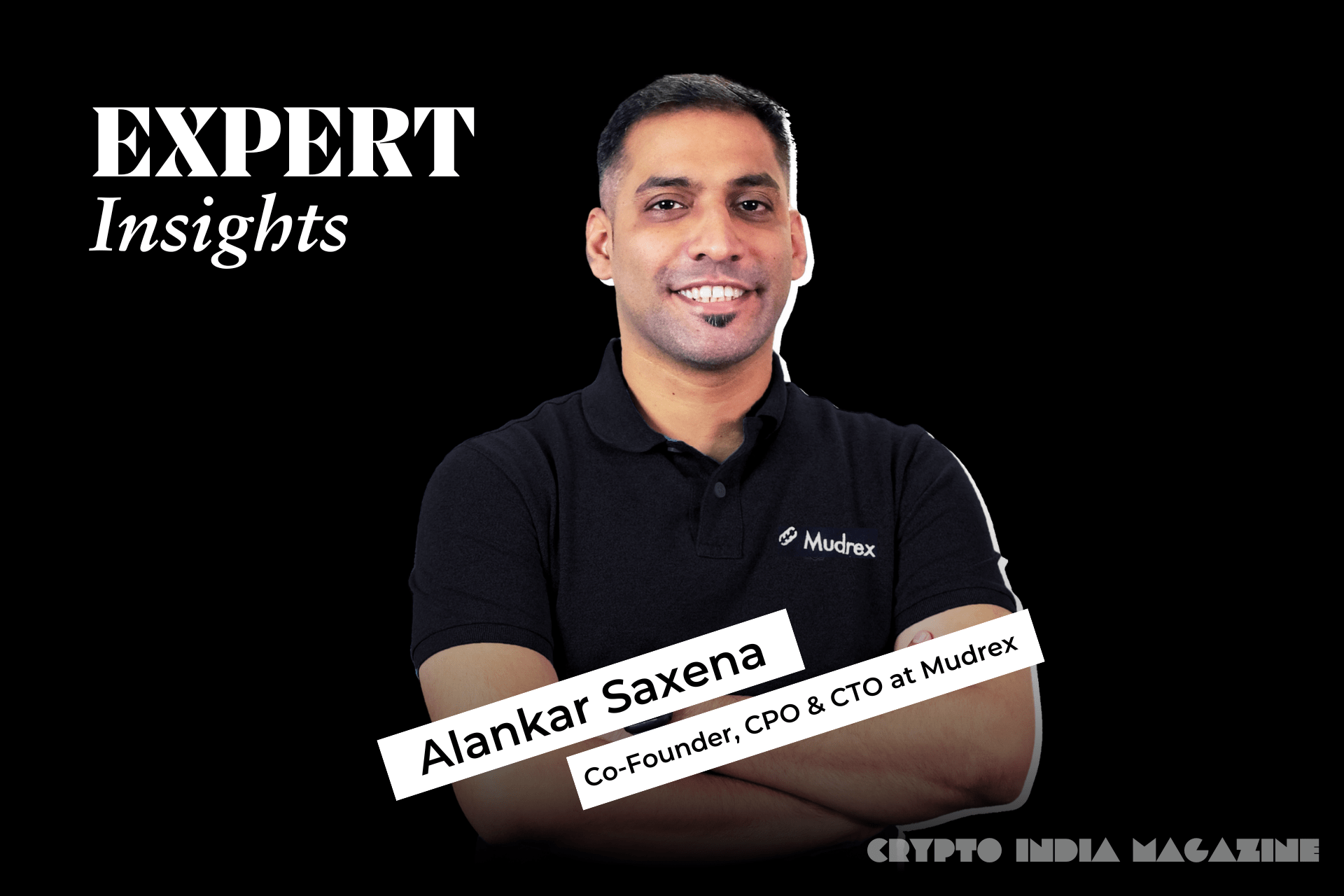
To find out, I interviewed Alankar Saxena, co-founder and chief product officer at Mudrex, a globally active crypto platform that helps everyday investors build long-term, risk-adjusted portfolios. For this Expert Insight article, our conversation peeled back the layers on education gaps, regulatory knots, and the quiet but steady shift from trading to real-world utility. His answers might just recalibrate how we read those glowing adoption stats.
From Quick Trades to Five-Year Holds
Saxena sees India’s crypto story moving well beyond the weekend-trading crowd. “The mindset shift is already underway,” he tells me, pointing to India’s broader transition from a savings-first culture to an investing-first one. Retail investors who once limited themselves to equities are beginning to treat digital assets as a serious slice of their long-term portfolios.
Mudrex recently asked its users how long they planned to hold their coins. Roughly 65% of respondents said they plan to hold their crypto for more than five years. That figure may surprise anyone who still views the market as a casino, but Saxena argues it signals a growing conviction in crypto as a durable asset class.
Additionally, he is quick to add that the appeal isn’t just price appreciation. “Crypto is a technological revolution,” he says, citing decentralised finance rails, stablecoins that move value across borders in seconds, and smart contracts that automate trust without middlemen.
In his view, these building blocks give digital assets a utility that gold—India’s traditional store of value—can’t match.
The missing puzzle pieces are regulatory clarity and better digital infrastructure. Saxena believes that as those fall into place, Indians will see crypto less as a speculative token and more as a utility asset embedded in everyday economic life; whether that’s remitting money home, locking up collateral for a decentralised loan, or simply parking wealth for the long haul.
In short, if the data Mudrex is seeing holds true, the average Indian crypto user is already thinking years, not minutes, ahead.
Education and Regulation: India’s Twin Hurdles
Ask Saxena why crypto hasn’t seeped into India’s mainstream, and he doesn’t hesitate.
“The lack of education and a clear regulatory framework are the major barriers,” he says.
For many first-time investors, the jargon of decentralisation and digital assets lands like a foreign language, fuelling hesitation and myths. Mudrex is trying to close that gap with programs such as LearnWithMudrex and Crypto ki Paathshala, bite-sized courses that translate blockchain concepts into everyday Hindi and English.
“We’re breaking down complex topics into simple, digestible content,” Saxena notes.
He also added that the firm now partners with educators to ensure newcomers grasp basics before moving a single rupee on-chain.
Policy clarity is the other sticking point. The 2022 tax regime proved New Delhi is willing to police the sector, but rules on asset classification, service-provider licensing, and cross-border compliance remain hazy. Even so, Saxena spots momentum in India’s active role at G20 working groups.
“It signalled intent to bring the sector within a formal regulatory structure,” he says.
Additionally, he argued that predictable rules would give both banks and consumers the confidence to treat crypto like any other financial asset.
Beyond investing, Saxena sees payments, especially remittances, as crypto’s foot in the door. India logged more than $124 billion in inflows last year, with migrants paying up to seven percent in fees.
“Stablecoins can reduce this drastically, enabling instant, low-cost international transfers,” he explains.
The catch, again, is regulation. If the Reserve Bank folds stablecoins into its Payment Aggregator–Cross Border (PACB) framework, he believes the remittance corridor could be “quietly reinvented” within months.
A cheaper, faster remittance channel would not only save families money; it would also familiarise millions with using digital tokens for everyday value transfer, clearing a runway for broader retail adoption down the line.
Real Applications, Evolving Oversight, and Beginner Advice
The following is an excerpt from the interview.
CIM: What are some real-world use cases of crypto in India that go beyond trading and investment?
Saxena: Beyond remittances, there are many technology-led use cases for everyday crypto adoption. Decentralized identity (DID) solutions can help users verify themselves securely without sharing sensitive data, a major step forward in increasing digital privacy. Smart contracts can automate loan agreements, insurance claims, and rental contracts, reducing paperwork and delays.
In supply chain management, blockchain can ensure end-to-end traceability, helping industries like agriculture and pharma reduce fraud and improve efficiency. In the digital economy, crypto also enables tokenized rewards, creator monetization, and freelance payouts across borders without currency conversion issues.
CIM: How do you see the role of regulatory bodies like SEBI and the RBI evolving as crypto moves toward mainstream adoption?
Saxena: The role of a regulator is to ensure that the consumers are safe while creating an ecosystem that is innovation-friendly and has no room for mishaps. In this case, regulating crypto is more complex than traditional assets like equities or gold because of its decentralized nature and global reach.
Even leading economies like the US and EU are still figuring out how to effectively regulate this space. That said, India has made commendable progress. The Finance Ministry took a strong first step by introducing a tax framework and tracking investor activity through TDS collections. This not only brought visibility but also showed the government’s intent to bring crypto within a formal system.
With the Financial Intelligence Unit (FIU) now overseeing compliance and reporting, we expect clearer guidelines to follow. As regulations evolve, trust will grow, and crypto adoption could scale further. If the regulator is able to strike the right balance between innovation and consumer protection, India has a huge potential both in terms of talent utilisation and solving real-world problems going forward.
CIM: What advice would you give to everyday Indians who are curious about crypto but hesitant to take the first step?
Saxena: My advice to everyday investors is simple – start small, stay consistent, and stay curious. Enter the crypto market with small, manageable amounts to understand how it works and to experience its potential firsthand. Like any new asset class, crypto comes with its share of volatility, but a systematic investment approach with a long-term mindset can go a long way in building wealth.
More than just an investment opportunity, crypto represents a shift in how we interact with money and technology. The more you explore and educate yourself, the more confident you’ll feel in navigating this space. As crypto becomes an integral part of tomorrow’s financial systems, early learning today could become your biggest advantage in the future.
Editorial Note: This article is based on an interview with Alankar Saxena. Certain sections have been adapted into a narrative format for improved readability and clarity, but no insights have been altered.
Interested in advertising with CIM? Talk to us!


Can You Trust AI With Your Crypto? Francesco Andreoli Thinks You Can, With Limits
MetaMask opened Agent Wallet to all users on August 6, 2026, giving AI agents a scoped wallet across 22 EVM chains and Hyperliquid. Francesco Andreoli, Head of Developer Relations at Consensys, walks through the policy engine, the $10,000 Transaction Protection, and where users get it wrong.

Interview with Charlie Hu, Co-Founder of COCO AI: AI Agents, Enterprise Adoption, and Future of Work
COCO AI co-founder Charlie Hu runs a 15-person team alongside about 60 AI agents, serving 500-plus businesses in e-commerce, gaming, and digital marketing. He breaks down the shift from Copilot to Autopilot, why physical AI is the next frontier, and how to stay valuable.

Interview with Adam Budínský: Trezor’s Head of Hardware on the Safe 7, Open Security, and Self-Custody
The Trezor Safe 7 just won a 2026 Red Dot Award for Product Design. Head of Hardware Adam Budínský talks to CIM about the device's open, auditable, secure element, the push to end blind signing on Ethereum, the touchscreen threat model, and why self-custody adoption still lags in India.
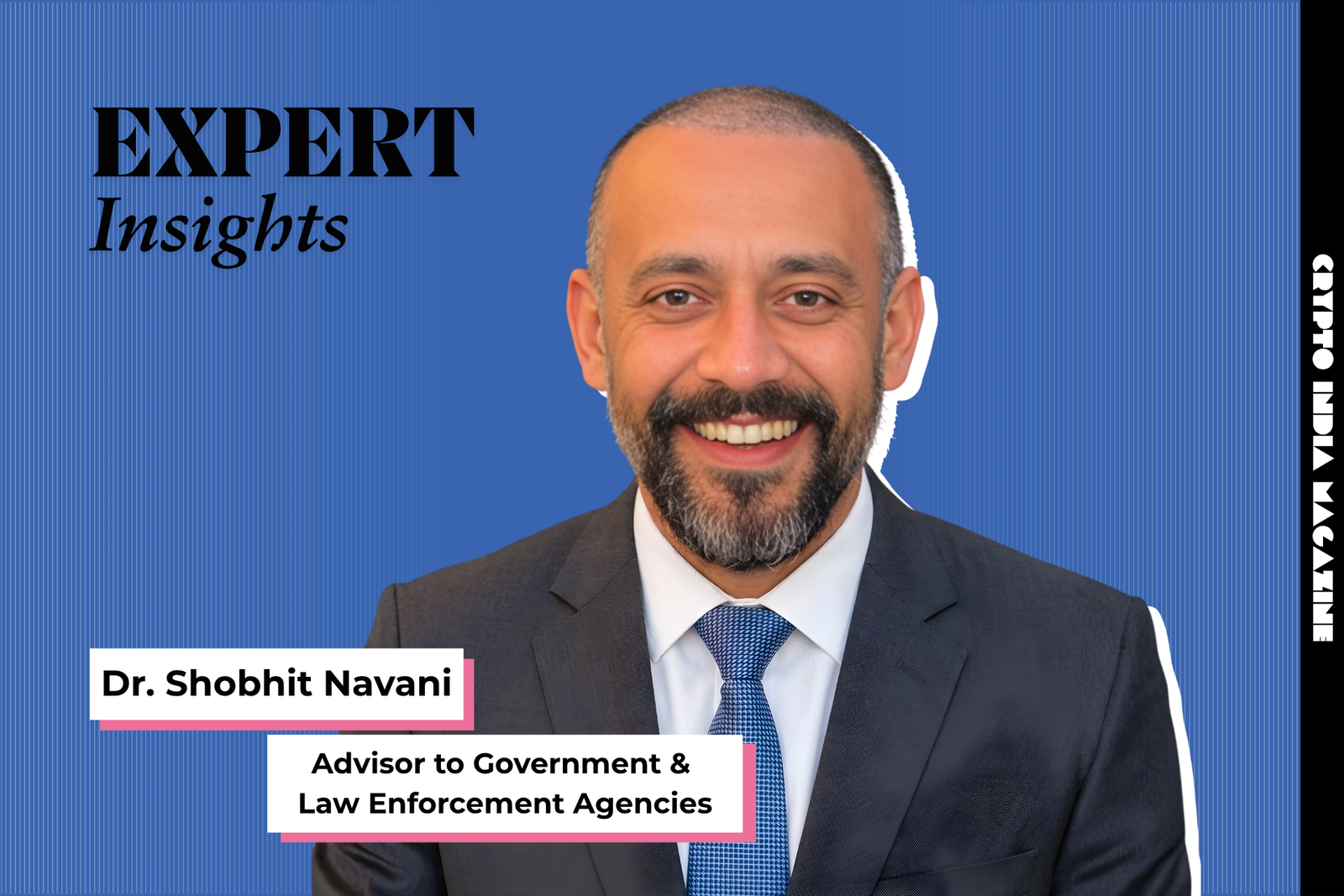
Dr. Shobhit Navani on Crypto’s Dark Side, Regulatory Gaps, and Institutional Shift
The crypto industry is not ignorant of its darker dimensions. Money laundering, terrorism financing, cybercrime, the limits of sovereign regulation,…