Now Reading: SecureDApp Is Setting a New Standard for Post-Deployment Security in Web3
-
01
SecureDApp Is Setting a New Standard for Post-Deployment Security in Web3


A specific silence falls over a project immediately after an exploit. You spend months building, weeks auditing, and capital on marketing. Then, a subtle mathematical error or a compromised signing key brings the entire structure down in seconds.
The past few years have made this fragility impossible to ignore. Billions of dollars have been lost, often by protocols that followed every compliance requirement on paper. The issue wasn’t that these teams failed to audit their code; it was that they treated security as a finish line rather than an ongoing operation.
This has forced a necessary pivot in how the Web3 industry, and increasingly all digital infrastructure, manages cyber risks. It is no longer enough to be secure on day one; the challenge is staying secure on day two, day ten, and day one hundred.
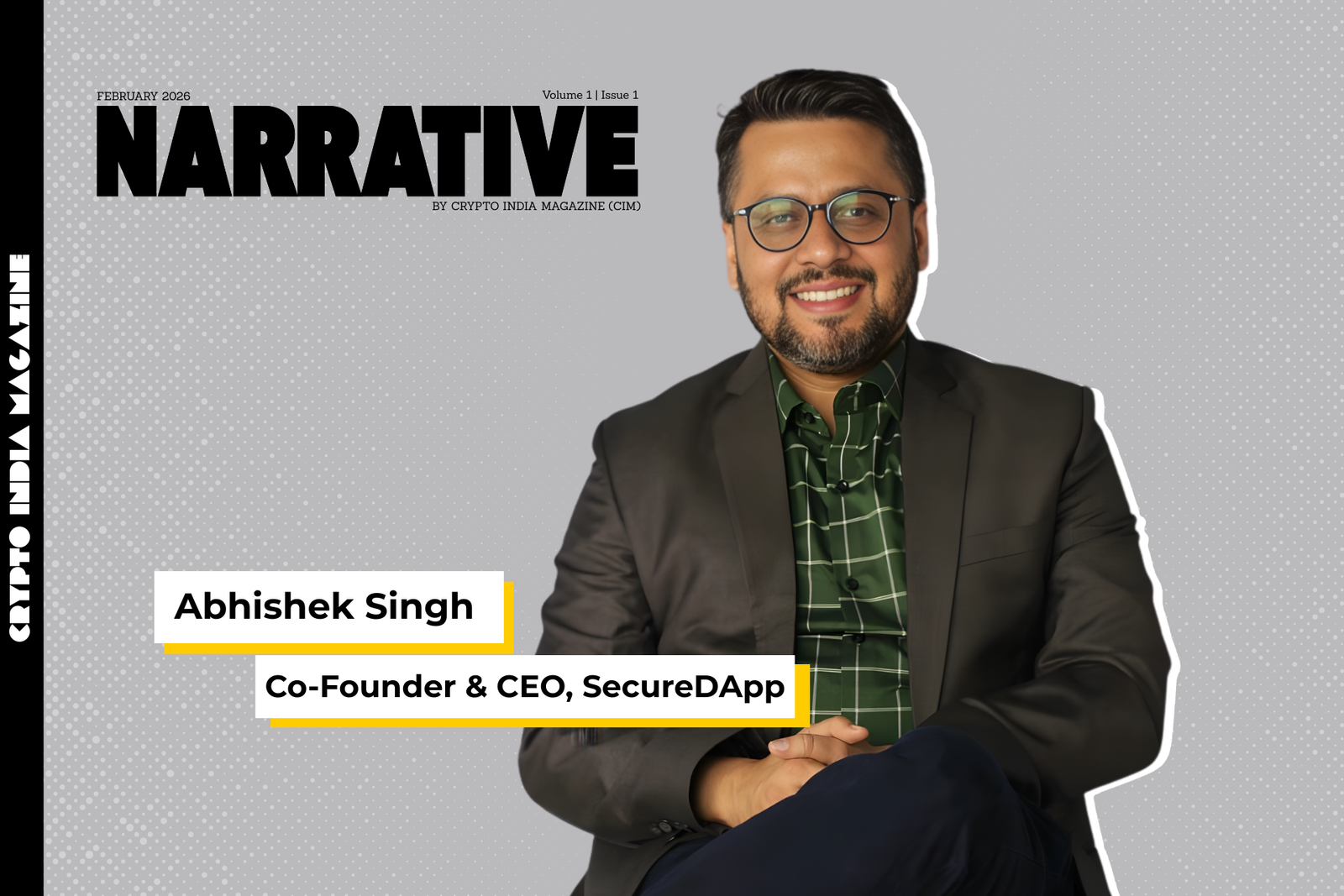
This shift from passive defense to active survival is the core thesis behind SecureDApp. We spoke with CEO Abhishek Singh about why the era of “audit and pray” is over, and what needs to take its place.
The Idea That Became SecureDApp
For Singh and co-founder Himanshu Gautam, the motivation to build SecureDApp didn’t stem from a single catastrophic event, but from a recurring, painful loop. Coming from backgrounds in traditional enterprise infrastructure, the duo noticed a glaring misalignment in the blockchain space. Innovative protocols were launched with brilliance, only to be dismantled by preventable exploits weeks later.
“What really stuck with us was the aftermath… the erosion of trust,” Singh explains. “Users who believed in decentralization suddenly felt more vulnerable than they did in Web2.”
This shared observation exposed the fatal flaw in the “audit once and ship” model. In a standard software environment, a breach can be patched, or a database rolled back. But on the blockchain, code is immutable. Once an exploit executes, the history is written, and the funds are gone.
“In Web3, after something breaks often means it is already too late,” Singh explains. Attacks can drain liquidity in seconds. Wallets can be compromised while teams are offline. Effective defence requires security to move at the same speed as the threats.
So instead of building tools that only operate before launch, the team prioritised systems that remain active while contracts are live. Real-time threat detection became central to this approach because on chain risk unfolds continuously.
Building Security for What Happens After Deployment
Once teams accept that real-time monitoring matters, a harder question follows. If audits are still essential, what exactly are they missing once a contract goes live?
According to Singh, the problem starts with how teams define risk. Most audits evaluate smart contract code in isolation. But in the hyper-connected architecture of Web3, a contract is only as strong as the ecosystem it inhabits.
In production, code interacts with oracles, bridges, and lending protocols. A single compromised price feed can force a perfectly written contract to liquidate millions in user funds.
“They’re underestimating the attack surface around the smart contract, not just within it,” Singh points out.
Composability increases the stakes further. Protocols depend on other protocols. When one part of the stack breaks, the effects often cascade. Add to this the role of time, where attackers observe live behavior and wait for profitable conditions, and it becomes clear why security failures frequently appear long after deployment.
SecureWatch is a patented blockchain threat detection technology granted by the Government of India. It is designed specifically for post deployment environments, where contracts face continuous interaction, evolving attack techniques, and shifting market behavior.
SecureWatch fundamentally reframes the objective from asking “Is our code safe?” to “Are we continuously safe?” It replaces the finish line mentality of audits with a system of ongoing vigilance. By monitoring real-time behavior, the platform identifies anomalies, such as unauthorized parameter changes or irregular call sequences, that often precede a hack.
Additionally, features like Auto-Pause allow the system to intervene, freezing suspicious transactions before they can escalate into a draining event. For builders, this shifts security from a source of anxiety to a source of confidence. They know that if the environment changes or an integration fails, they will have the visibility and the control to act instantly.
Trust as a Design Principle
At SecureDApp, trust is treated as a hard design constraint rather than an abstract value. This philosophy dictates that the team would rather be honest about uncertainty than confidently wrong.
This is a concept that is evident in the alerting mechanism of SecureWatch. Rather than the typical pass or fail notifications, there are severity levels and information that provide context for why something is being alerted on. This is more about being transparent and honest rather than claiming to know it all. What SecureWatch identifies is unauthorized access attempts, unexpected role changes, weird transaction behavior, and parameter updates that are under the radar. These are issues that come up long after the rollout.
Automation assists in identifying these patterns quickly and at a large scale. The AI models of SecureDApp monitor the flow of transactions on multiple chains, identify groups of anomalies, and assess risks in real-time. Human review, however, remains essential. Alerts of high severity are reviewed by security researchers, who assess the intention, economic effect, and exploitability of the problem before escalation.
“We are not trying to replace human judgment,” Singh explains. “We are trying to give security teams better information so they can make faster and more accurate decisions.”
This responsibility extends beyond stopping hacks; it includes protecting the user’s right to privacy. This ethos drove the development of SecureX-DID, a decentralized identity solution built on zero-knowledge proofs. It ensures that meeting compliance standards doesn’t require users to sacrifice control over their personal data.
Ultimately, the goal is to make this high-level protection accessible without dumbing it down. Through their Level-Up Academy, the company has trained over 5,000 developers, bridging the gap between elite security concepts and everyday building.
“We start by respecting our users’ intelligence,” says Singh. “They don’t need security concepts dumbed down, they need them explained clearly.”
Designing for the Next Phase of Web3
Culture is treated as part of the security stack inside SecureDApp. Even hiring focuses on intellectual honesty, curiosity, and responsibility, traits Singh sees as essential in a field where mistakes carry real financial consequences.
That mindset also shapes the company’s market position as a Web3 native security platform spanning real-time monitoring, on-chain forensics, decentralised identity, and compliance infrastructure. Its patented technology, multi-chain integrations across ecosystems like Polygon, BNB Chain, Arbitrum, and XDC Network, and more than $2 billion in secured on-chain value reflect a strategy built around depth, not surface coverage.
Backed by IIT Kanpur and supported by strategic investors and advisors with experience in security, enterprise adoption, and regulation, SecureDApp is positioning itself for long term infrastructure relevance.
“Security will determine whether there is a next phase of Web3.”
Looking ahead, Singh wants SecureDApp to become the invisible safety net of the decentralised web, an infrastructure layer that operates quietly in the background. “Like how you do not think about the SSL certificate when you browse a secure website, but you are safer because it is there,” he says.
For SecureDApp, the win condition is not when everyone talks about its security tools, but when those tools work so seamlessly that users no longer have to think about security at all.