
Key points
- The ED searched three Bengaluru premises tied to CoinDCX and Delta Exchange on November 4 and 5 over alleged FEMA violations, with cross-border trades the agency valued at thousands of crores of rupees.
- Investigators say CoinDCX converted rupee deposits into USDT and routed trades through an account held by a Costa Rica “paper entity” onto Binance, KuCoin, Gate.io, and Bybit, executing them via its own APIs.
- Delta Exchange India denied any cross-border transfer of virtual digital assets; CoinDCX had not issued a formal statement, and the investigation remains open.
India’s Enforcement Directorate (ED) searched three Bengaluru premises linked to crypto exchanges CoinDCX and Delta Exchange on November 4 and 5, opening a Foreign Exchange Management Act probe into cross-border trades the agency valued at thousands of crores of rupees.
The searches targeted Neblio Technologies Private Limited, which operates CoinDCX, and Excelium Technologies Private Limited, which runs Delta Exchange India, under Section 37 of FEMA, 1999. The agency said it acted after receiving information about large-scale unauthorized cross-border transactions involving crypto token derivatives and real-world asset tokens. Both platforms offered spot trading, futures and options, and trading in tokenized shares of foreign companies through cryptocurrencies, allegedly without authorization. CoinDCX, whose users traded ₹14,664 crore in the first half of 2026, advertised these products openly, and one CoinDCX advertisement promoted trading in US stock futures from as little as ₹100.
At the center of the case sits an account held in the name of a Costa Rica-based group entity, which the ED described as a “paper entity.” According to the agency, CoinDCX converted customer rupee deposits into the stablecoin USDT and moved the funds to overseas exchanges including Binance, KuCoin, Gate.io, and Bybit through that account. The ED alleged the spot trades were executed directly through CoinDCX’s application programming interfaces, bypassing rules on cross-border transfers.
The agency described a similar structure for derivatives: when a user opened a futures or options position on CoinDCX, the platform allegedly opened a matching one-to-one position on a foreign exchange through the Costa Rica account, settling overseas once the position closed. The ED said tokenized-stock trades ran through Hyperliquid, an overseas decentralized platform, again funded by converting rupees into USDT.
The ED also alleged that CoinDCX paid hundreds of crores of rupees in transaction fees to foreign platforms in stablecoins and held crypto assets in enterprise accounts abroad in breach of FEMA. For Delta Exchange India, the agency said much of its derivatives and tokenized-stock activity was routed through CoinDCX for overseas execution, and that the exchange moved hundreds of crores of rupees to overseas associate entities now under scrutiny.
Delta Exchange India said it is not involved in “any cross-border transfer of VDAs in any form or manner,” and that it cooperated fully with officials and furnished the information they sought. CoinDCX had not issued a formal statement on the searches as of November 7. The exchange has previously called for clearer crypto regulation in India.
The raids widen an ED campaign against forex violations on crypto platforms; days earlier, the agency probed Mudrex, Saber.money, and the DeFi protocol Instadapp over alleged transfers exceeding ₹4,940 crore, and in June it searched six premises tied to Transak, Carret, Xpat, Onramp.money, and Onmeta. The ED said the two exchanges’ products appear to have prima facie contravened the Securities Contracts (Regulation) Act, the SEBI Act, and the Reserve Bank of India Act, with the investigation ongoing as the Reserve Bank of India holds a hard line against legalizing crypto.
Editorial Note: Reported and edited by the Crypto India Magazine editorial team. We use AI tools to assist with research and drafting; every article is reviewed and fact-checked by our editors.
Interested in advertising with CIM? Talk to us!


Why Crypto SIPs Are Finding a Place in Indian Portfolios
Indian investors are applying a familiar discipline, regular and systematic SIPs, to crypto’s volatile swings. Crypto SIPs change the timing of each purchase and reduce reliance on market timing. They do not lower risk or replace the harder decision: how much crypto belongs in a portfolio.

Binance Hack Explained: How $6.3 Billion Vanished in 20 Minutes
An attacker drained about $6.3 billion from Binance hot wallets in roughly 20 minutes on October 29, 2026, the largest crypto theft on record. Inside the EIP-7702 mechanism, the TraderTraitor attribution, Richard Teng’s response, expert guidance for retail users, and the Lazarus Group’s trail.
Zcash Co-Founder Sean Bowe Proposes Ending ZCG Grants Funding
Zcash co-founder Sean Bowe has published a draft proposal to end the Zcash grants funding stream, arguing the Zcash Community Grants treasury of about $125 million can run for years without fresh inflows. The redirected 8% share would move to the Network Sustainability Mechanism.
HSBC Launches RedCoin Stablecoin, Plans HK$100 Tokenized Funds
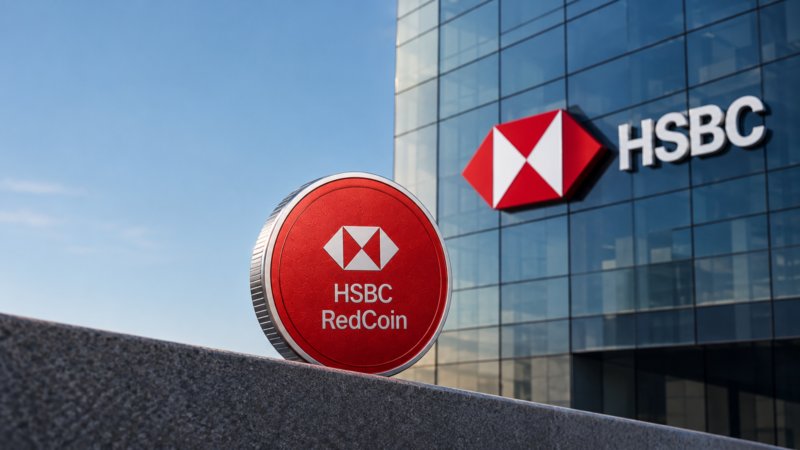
HSBC has begun a phased rollout of HSBC RedCoin, its Hong Kong dollar-backed stablecoin, to more than 3.3 million PayMe users and about 100,000 merchants. The bank plans to add tokenized money market fund subscriptions from HK$100 to its mobile banking app before the end of 2026.