
Self-custody means holding your own crypto keys instead of relying on an exchange or custodian to manage them. Its growing adoption has followed repeated failures across the crypto industry. Platforms trusted by millions have collapsed, frozen withdrawals, or lost funds to hacks. For users who kept their assets on these platforms, these failures exposed a fundamental risk: an account balance is only a promise when someone else controls the keys. The lesson is captured in a familiar crypto saying: not your keys, not your coins.
However, once you hold your own keys, you also carry the full burden of protecting them. A seed phrase can get lost during a house move, a forgotten password can lock someone out of their wallet, and a backup card can disappear without a trace. Such incidents can leave users permanently locked out of their crypto. For years, the standard recovery method has relied on twelve or twenty four words that users must store securely.
Hashwallet, a card-format cold wallet developed by Spanish security firm eSignus, takes a different approach to crypto security and recovery. In this article, we look at Hashwallet’s features, security, usability, and limitations.
Table of Contents
What Is Hashwallet?
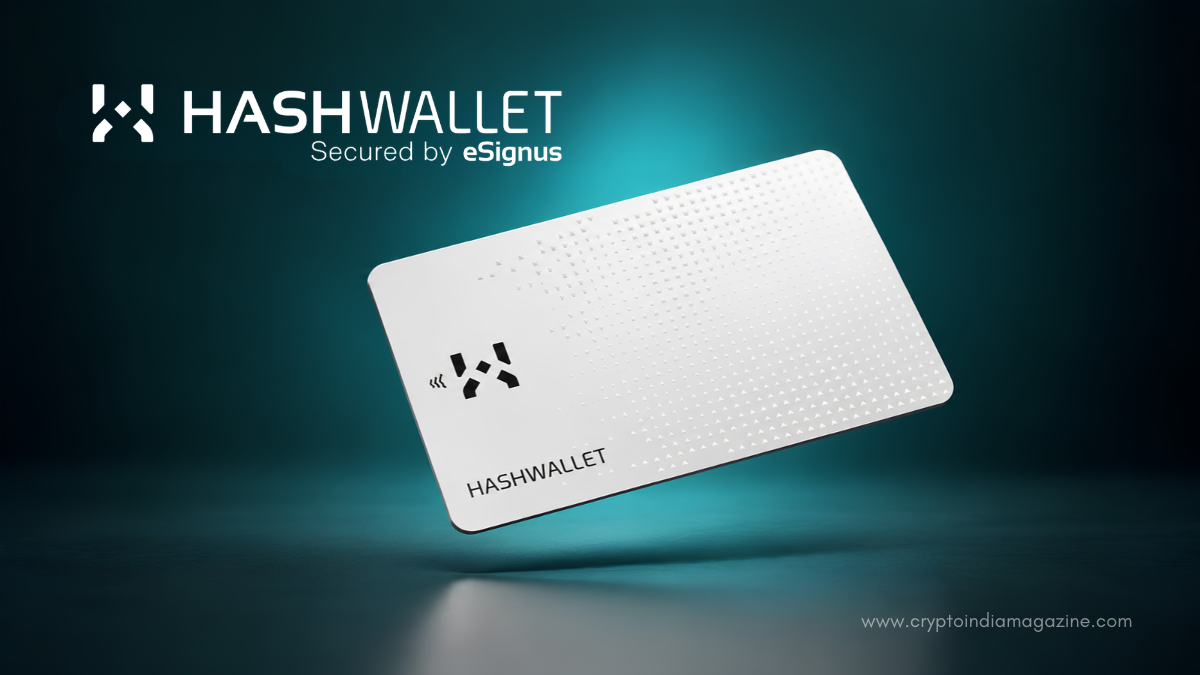
Hashwallet is a self-custody cold wallet that stores your private keys offline inside a card the size of a standard payment card. It is made by Spanish cybersecurity company eSignus. The current model, the Hashwallet All in One, costs €149 and supports more than 11,000 cryptocurrencies across major networks, Qubic and Kaspa included.
The card measures 86 x 54 mm and holds an EAL6+ certified secure chip, the highest security certification available for this class of hardware. It has no battery, no buttons, no ports, and no screen. It draws power and communicates through NFC when you tap it to your phone, so there is nothing to charge and no cable to connect. The card is rated IP68 for water resistance and works from 14°F to 131°F, surviving everyday wear alongside your bank cards.
The product works as three components rather than one device. The card generates, stores, and uses private keys within its chip. The mobile app, on iOS and Android, is where you set up wallets, check balances, prepare transactions, and manage assets. The Backup Center provides a secure vault for recovery. According to eSignus, these work together so that no single component holds a complete private key, transactions are signed inside the card before being broadcast through the app, and the company can neither access your keys nor authorize transactions on its own.
The Company Behind Hashwallet
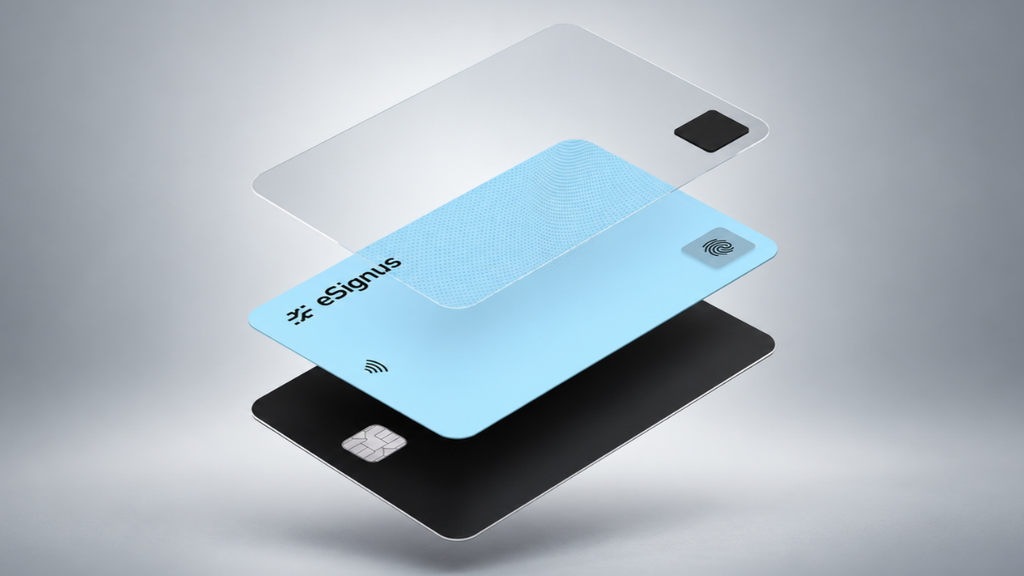
A cold wallet is only as trustworthy as the people who engineer it, and in crypto that trust is earned through a security track record rather than a marketing budget. Hashwallet comes from eSignus, a cybersecurity company based in Las Palmas de Gran Canaria, Spain. Its founders, Daniel Hernández and José Ramón Sendra, developed a payment security technology based on PKI cryptography in 2012 and later realised it could be used to create a cold wallet. A crowdfunding campaign in 2020 helped bring the first Hashwallet cards to market.
The team brings experience in both cybersecurity and secure hardware. CTO José Ramón Sendra is a professor of electronics at the University of Las Palmas de Gran Canaria. eSignus has also worked with Giesecke+Devrient, a major provider of payment and identity technology. Spain ranked fourth in the International Telecommunication Union’s global cybersecurity rankings, providing further context for the country’s cybersecurity sector.
Hashwallet has received several awards, including first prize in the 2020 Ciberemprende cybersecurity contest and CaixaBank’s 2021 EmprendedorXXI awards in the Canary Islands. It also placed second in INCIBE’s 2021 Cybersecurity Ventures program and was included in APTE’s Top 100 startups in 2024. The wallet uses an EAL6+ certified secure chip, its mobile app is protected by security provider Build38, and its technology has been audited by Kudelski Security.
Why Hashwallet Stands Out
Plenty of cold wallets keep keys offline and sign transactions on a secure chip. Hashwallet does that too, and then builds several layers on top that address the ways people actually lose their crypto. Four features carry most of that weight.
Anonymous, Decentralized Recovery
If your card is lost or damaged, Hashwallet lets you restore access by ordering a replacement and completing a recovery process built on two separate elements, neither of which is a private key.
The process involves four steps:
- Order a Backup Card: Request a replacement through the app and verify your email address and phone number using authentication codes. The card arrives uninitialized with the first recovery element already stored inside its chip. This element has no value on its own.
- Initialize the card: The second recovery element is retrieved from your Backup Center and processed inside the new card’s chip.
- Recover your keys: The two elements are combined inside the EAL6+ secure chip to reconstruct your private keys.
- Resume access: Your recovered keys are stored inside the replacement card, allowing you to access your crypto as before.
The first element is embedded in the card during manufacturing. The second is encrypted in your Backup Center, which eSignus describes as a zero knowledge vault built on HashiCorp Vault and reachable only with your credentials. Each card uses its own encryption scheme, limiting the impact of any single compromise. According to eSignus, keys are reconstructed inside the chip and never exposed outside it.
Ordering a replacement needs only app credentials and verification codes, with no identity document, and recovery requires a physical card delivered by post, a step an attacker would have to clear even with your email and phone. eSignus also states it cannot recover your keys on its own.
Seedless Key Generation
Hashwallet can generate keys directly inside its secure chip, with no word list to write down or store. The keys stay in the chip, away from the phone and the company. You can also import existing BIP39 phrases, which remain compatible with other devices that support the standard, and keep both generated and imported wallets on the same card under the same recovery process. eSignus notes that an encrypted cryptographic element held in the app is also required to sign, adding another layer to the system.
Multiseed And HD Privacy
Hashwallet supports multiple independent seeds on a single card. Users can create or import separate wallets for long term holdings, everyday transactions, or interactions with decentralized applications. Each seed remains isolated from the others, allowing users to replace a compromised wallet without replacing the entire card.
The system also supports hierarchical deterministic (HD) wallets, which can generate multiple addresses from a single seed. On Bitcoin, users can generate new addresses for different transactions. On account based networks such as Ethereum, the app helps users manage separate wallets and addresses.
Inheritance Without Sharing Your Keys
Passing on crypto usually forces a bad choice between handing over a seed phrase while you are alive or risking that your heirs never reach the funds. Hashwallet offers a cleaner path. You request a Backup Card through the app and hand it to your heir uninitialized, then record the account email and phone number in your will.
An uninitialized card holds no value and exposes nothing on its own. When the time comes, your heir signs in with that email address and the phone verification code, initializes the card, and the keys are rebuilt inside their own chip. They can then change the email and phone to their own. At no point does anyone share a private key.
The Security Architecture
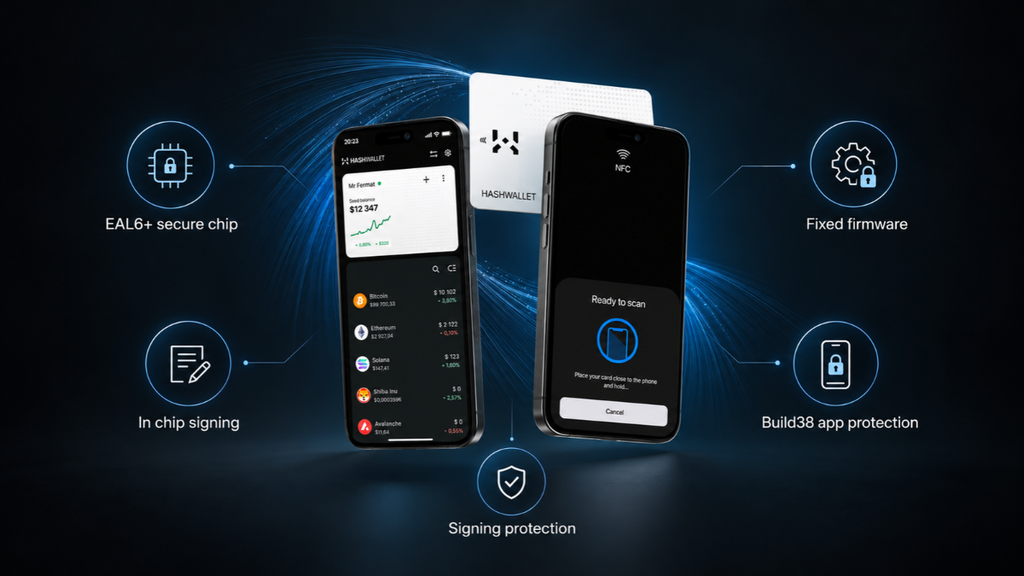
Hashwallet combines hardware security, app protection, and multiple authentication requirements to protect users’ funds. Its security model relies on keeping private keys inside the card and separating the components required to authorize transactions.
- EAL6+ secure chip: Private keys are generated or imported and stored inside a Common Criteria EAL6+ certified secure element. According to eSignus, the chip does not provide commands for exporting private keys.
- In chip signing: Transactions are signed inside the secure element. Private keys are never exposed to the phone or transmitted over the internet.
- Additional signing protection: The card alone is insufficient to authorize transactions. A cryptographic element stored in the app is also required, so access to either component alone does not provide everything needed to move funds.
- Fixed firmware: The card’s firmware cannot be updated after manufacture, reducing the risk of malicious firmware updates. New features and network support are delivered through app updates.
- Build38 app protection: Hashwallet uses Build38 to protect its mobile app against threats such as rooted devices, app manipulation, and overlay attacks. The app can also use the phone’s biometric authentication.
How Hashwallet Stays Secure Without a Screen
A wallet screen exists to confirm a transaction away from the phone, but a small screen cannot tell whether the phone itself has been compromised. Hashwallet addresses that threat at the environment level instead. You review the destination, amount, and network in the app, and the Build38 layer continuously checks for rooted devices, manipulated apps, and overlay attacks, stopping if the environment is unsafe. Authentication is also spread across the account email, verification codes, and the physical card, so no single compromised element is enough to move funds.
Supported Assets And What You Can Do
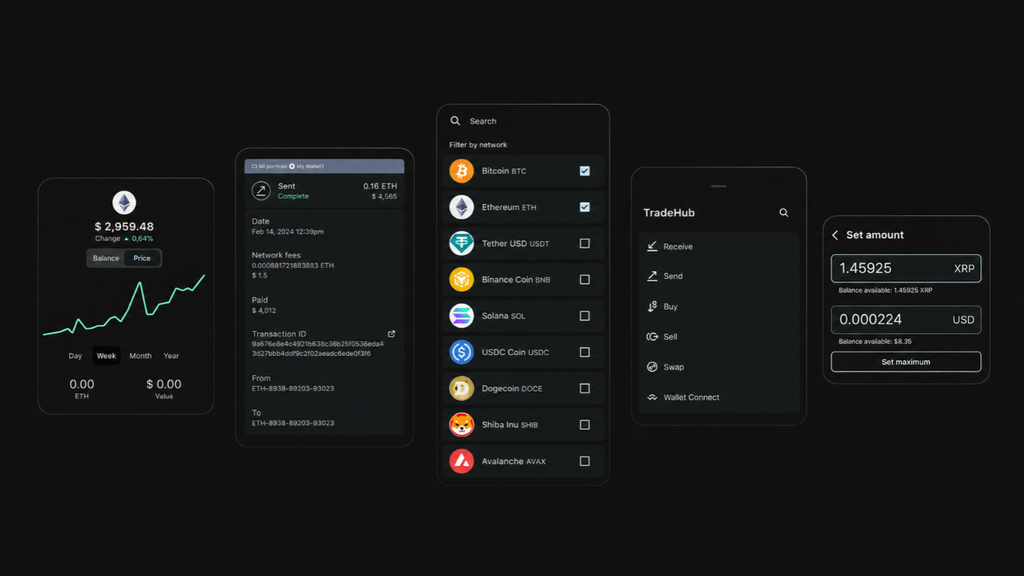
Hashwallet supports more than 11,000 cryptocurrencies and tokens across major blockchain networks, including Bitcoin, Ethereum, Solana, XRP, and Polygon. It also supports less commonly available networks such as Qubic and Kaspa. New network integrations are delivered through app updates, so expanding support does not require replacing the card.
Beyond storing crypto, Hashwallet supports several everyday activities:
- Buy crypto through an integrated on-ramp.
- Send and receive across every supported network.
- Swap assets through in-app provider routes.
- Stake supported assets to earn rewards, including Qubic staking and earn flows through established protocols.
- Connect to dApps through WalletConnect, which opens the door to the wider web3 ecosystem.
Transactions are signed inside the card’s secure chip, with the physical card required for authorization. When transferring assets available across multiple networks, check the selected network and token carefully. Sending funds through an incompatible network can result in lost assets.
Hashwallet Price, Setup and Daily Use
The Hashwallet All in One costs €149, a one-time price that covers the card, the app, and the recovery, inheritance, and multiseed features, with no subscription or per-wallet fees. Shipping is free worldwide for an estimated 10 to 20 business days, though customs and import taxes are the buyer’s responsibility, and paying via crypto.com adds a 2% rebate. Recovery has no recurring fee, but a replacement Backup Card is a separate in-app purchase. Orders can be cancelled within 24 hours and returned within 14 days of receipt, with return postage on the buyer.
Setup And Getting Started
Setup takes around six minutes from opening the app to a funded wallet:
- Install the Hashwallet app from the App Store or Google Play, and turn on NFC.
- Open the app, tap to activate the card, and register the email that will receive your verification code.
- Complete phone verification. Your email and phone become the access path from here on.
- Scan the card, then choose Generate Keys for new seedless keys or import a BIP39 phrase you already hold.
- Name the seed, tap the plus button, pick an asset, and scan again to create its wallet.
- Open the wallet, tap Receive, and send a small test transfer before moving larger amounts.
- Optionally turn on biometric unlock in the security settings.
Everyday Use
Daily use is a tap-to-sign loop. You open the app, prepare the transaction, hold the card to the back of your phone, and confirm. There is no cable to plug in, no PIN pad to press on the card, and no battery to charge, so the card lives in your wallet beside your bank cards and comes out only when a signature is needed. The app is where you organize everything: naming seeds, switching between them, creating asset wallets, and setting a display currency.
How Hashwallet Compares To Other Wallets
Most hardware wallets protect keys well. Where Hashwallet separates itself is recovery, seed management, and inheritance, the parts of self-custody that competitors tend to leave to the user. The table below maps the differences that matter day to day.
| Feature | Hashwallet | Tangem | Ledger / Trezor |
| One-step contactless signing | ✓ | ✓ | ✗ |
| Anonymous recovery, orderable anytime | ✓ | ✗ | ✗ |
| Unlimited independent seeds on one device | ✓ | ✗ | ✗ |
| Unlimited wallet creation, no storage limit | ✓ | ✗ | ✗ |
| Secure inheritance without sharing keys | ✓ | ✗ | ✗ |
| Non-updatable firmware, no update attack surface | ✓ | ✓ | ✗ |
| EAL6+ certified secure chip | ✓ | ✓ | Varies by model |
The sharpest contrast is in how each wallet handles a lost device.If you lose every Tangem card in a set, the copies are gone and so are the funds. Ledger Recover asks for identity verification, a paid subscription, and splits key fragments across third-party custodians. Hashwallet needs no identity document, no subscription, and keeps no key on the company’s side, rebuilding keys only inside a new card you order when needed. That anonymous, subscription-free, and company-independent recovery is the strongest reason to pick it over the alternatives.
Things To Know Before You Buy
Hashwallet makes certain design choices, and a few will matter more to some buyers than others. These are the practical points worth knowing before you order.
- The card has no screen: You confirm the destination, amount, and network in the app, then tap to sign. If verifying a transaction on a separate hardware display is a firm requirement for you, that is not how this device works.
- It is mobile only: The card runs through the app on an NFC phone (Android 4 or later, iOS 11 or later). There is no official desktop, browser, or computer signing app, so a desktop workflow is not supported.
- NFC is mandatory: The card is battery-free and draws power from the phone’s NFC field, so a phone without working NFC cannot use it.
- Recovery takes a purchase and some patience: The service has no separate fee, but restoring a lost card means ordering a Backup Card from the app and waiting for it to arrive by post, roughly 20 business days. Recovery is never instant or remote by design, which is a security feature, though it does mean planning.
- Access depends on your email and phone: Entry and recovery use verification codes sent to the linked email and phone. Keep both current in the app’s access settings so you are never locked out of your own account.
- Shipping is free, import costs are not: Delivery runs 10 to 20 business days, and Hashwallet ships to India, but any customs duties or import taxes there are paid by you.
- Returns have a window: Cancel within 24 hours of ordering, or return within 14 days of receipt, with return postage on you.
- dApp safety stays your job: WalletConnect keeps signing inside the chip, so keys stay offline, but it does not check what you approve. You remain responsible for reviewing token approvals and transaction requests, as with any wallet.
Who Hashwallet Is For
Hashwallet fits a specific kind of holder well, and it helps to match the device to how you actually use your crypto before buying.
- You manage crypto mainly on your phone. The card-and-app loop slots into a mobile-first habit while adding hardware-level security to it.
- You worry about losing a seed phrase. Generating keys inside the chip removes the word list entirely, which is the main reason to pick this over a traditional seed-based wallet.
- You are in it for the long term. The recovery process is insurance for the years ahead, when a lost card or a forgotten password becomes a real risk rather than a hypothetical one.
- You want to plan inheritance. The uninitialized Backup Card approach lets you pass crypto to family without ever writing a seed into a will.
- You value privacy and separation. Running multiple isolated seeds on one card lets you split savings, spending, and dApp activity so one exposed key never maps your whole portfolio.
The Verdict
Hashwallet solves the part of self-custody that trips people up most, which is not the chip but the human errors around it: a lost seed, a forgotten password, a card that goes missing. Keys are generated and kept inside an EAL6+ chip, and the anonymous, subscription-free recovery means losing your card no longer means losing your crypto. Add unlimited seeds, inheritance without sharing keys, and support for more than 11,000 assets, and the €149 All in One makes a strong case for mobile-first holders. If you need a screen on the device or a desktop workflow, look elsewhere. For everyone else, it is an easy card to recommend.
Frequently Asked Questions
Hashwallet is a non-custodial cold wallet. Keys are generated, stored, and used inside the card’s EAL6+ chip, and eSignus states it has no technical means to access, sign, or recover your funds, even under a legal request. Only you can use or recover your wallet.
It supports both approaches. You can generate seedless keys created inside the chip, with no word list to write down, or import an existing BIP39 recovery phrase. Both can sit on the same card, and both use the same recovery process.
A lost card cannot move funds on its own, because its keys are incomplete without an element held in the app. To restore access, you order a Backup Card through the app after email and phone verification, then initialize it when it arrives by post. Your keys are rebuilt inside the new chip.
The Hashwallet All in One costs €149 with free worldwide shipping, and India is a supported destination. Delivery is estimated at 10 to 20 business days, and any customs duties or import taxes are paid by the buyer.
No. Hashwallet runs only through its mobile app on an NFC-enabled phone, on Android 4 or later or iOS 11 or later. There is no official desktop, browser, or computer signing application.
Editorial Note: Reported and edited by the Crypto India Magazine editorial team. We use AI tools to assist with research and drafting; every article is reviewed and fact-checked by our editors.
Interested in advertising with CIM? Talk to us!


ED Raids CoinDCX, Delta Exchange; Flags Costa Rica Shell Entity
India’s Enforcement Directorate searched three Bengaluru offices tied to CoinDCX and Delta Exchange over alleged FEMA violations worth thousands of crores. The ED says rupee deposits became USDT routed through a Costa Rica “paper entity” to Binance, KuCoin, Gate.io, and Bybit. Delta denies wrongdoing.

Why Crypto SIPs Are Finding a Place in Indian Portfolios
Indian investors are applying a familiar discipline, regular and systematic SIPs, to crypto’s volatile swings. Crypto SIPs change the timing of each purchase and reduce reliance on market timing. They do not lower risk or replace the harder decision: how much crypto belongs in a portfolio.

Binance Hack Explained: How $6.3 Billion Vanished in 20 Minutes
An attacker drained about $6.3 billion from Binance hot wallets in roughly 20 minutes on October 29, 2026, the largest crypto theft on record. Inside the EIP-7702 mechanism, the TraderTraitor attribution, Richard Teng’s response, expert guidance for retail users, and the Lazarus Group’s trail.
Zcash Co-Founder Sean Bowe Proposes Ending ZCG Grants Funding
Zcash co-founder Sean Bowe has published a draft proposal to end the Zcash grants funding stream, arguing the Zcash Community Grants treasury of about $125 million can run for years without fresh inflows. The redirected 8% share would move to the Network Sustainability Mechanism.