
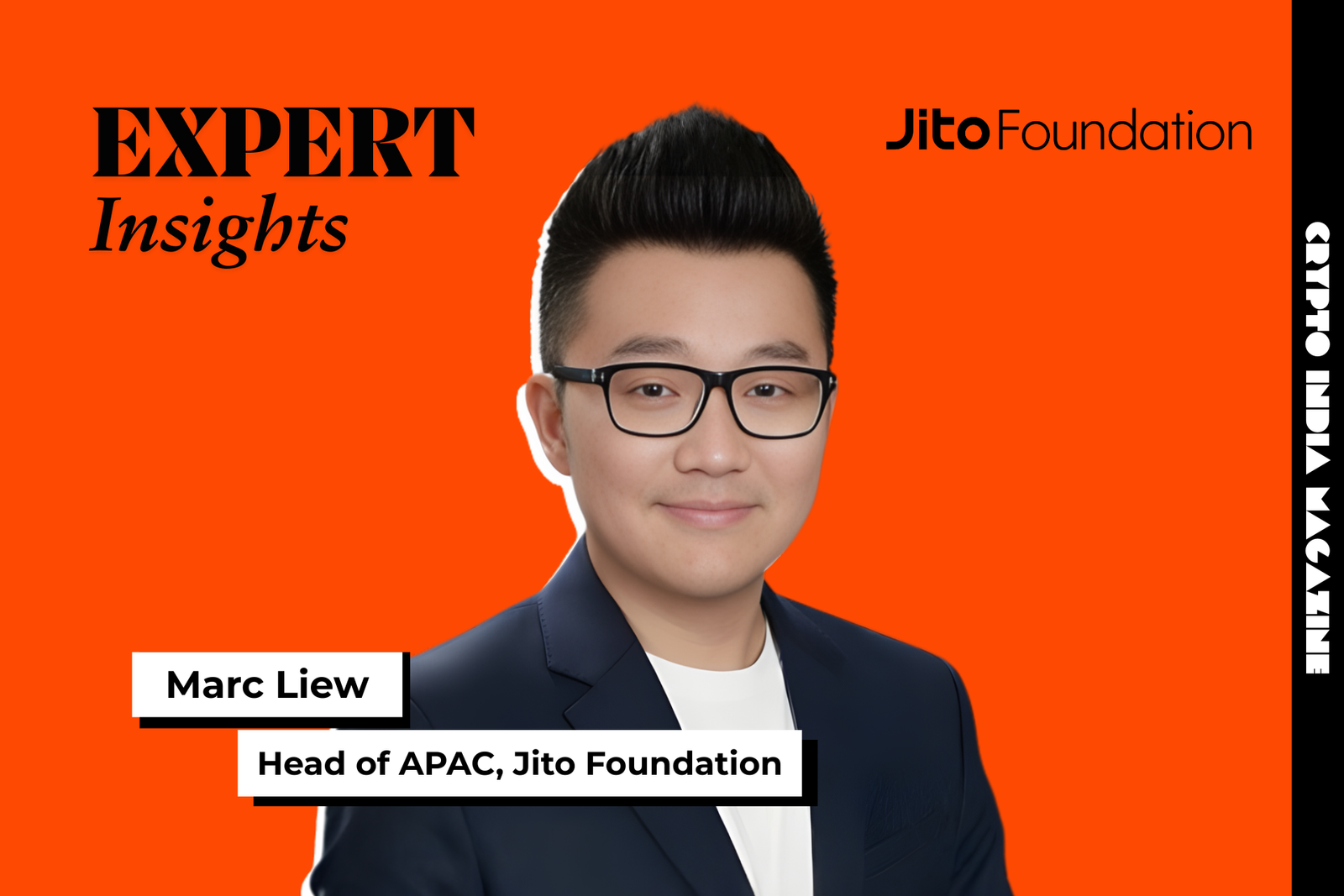
Remember the last time you took an Uber? Did you think about the GPS triangulation, the payment rails, or the algorithms? You simply got in the car, and it worked. That kind of seamless experience, where the technology stays invisible, is what turned a startup into a verb.
Marc Liew believes crypto needs its own Uber moment. And the irony isn’t lost on him that the people best positioned to make that happen are the ones building the deepest, most complex infrastructure in the space.
Liew is Head of APAC at Jito Foundation, one of the most consequential protocols running on Solana today. Jito provides infrastructure for roughly 90% of Solana’s validators, runs the network’s largest liquid staking protocol, JitoSOL, with $2 billion in total value locked, and recently launched BAM (Block Assembly Marketplace), a decentralized transaction sequencing system designed to help transactions land faster and more fairly.
In short, Jito is a significant reason why Solana works as well as it does. And yet, ask Liew how the industry should talk about all of this, and his answer is: it shouldn’t. Not in those terms, anyway.
We sat down with Liew at Consensus Hong Kong to talk about regulatory tailwinds, institutional adoption across APAC, and why the smartest thing the crypto industry can do right now is stop leading with the word ‘crypto’.
Regulation, ETFs, and the Institutional Turn
The seamless utility Liew describes requires something crypto has historically lacked: a stable regulatory foundation. For years, that foundation didn’t exist in the United States, and protocols like Jito operated under the weight of that uncertainty. But in 2025, Jito announced that it is relocating its core operations and establishing its headquarters in the US. “Jito has always been a US company,” Liew said. “We are not moving to the US. We are moving back to the US.”
The current administration brought enough regulatory clarity to make that homecoming possible, and the impact has been immediate. The SEC issued a statement confirming that certain liquid staking tokens, including JitoSOL, are not security products. ETF issuers began exploring JitoSOL inclusions in Solana ETF filings. Weeks before this conversation, partner 21Shares launched a 100% JitoSOL ETP on Amsterdam’s Euronext, the first of its kind in Europe, putting JitoSOL within reach of traditional investors through fully regulated channels.
“With more crypto regulations becoming clearer in the US, this is only going to help clarify a lot of these conversations or uncertainties that we have in other regions, Europe and APAC,” said Liew.
Across Asia, that process is visibly accelerating. Hong Kong has established clear RWA guidelines. Singapore has developed a DPT token policy around stablecoins and payments. Qualified custodians across Hong Kong, Singapore, and Korea are now licensed to custody digital assets. These are the structural preconditions that institutional capital demands before it moves seriously into any asset class. And the day before this conversation, Jito announced a partnership with HexTrust, allowing institutional clients globally to mint and burn JitoSOL directly within the platform.
Since then, the foundation has gone further, signing a memorandum of understanding (MoU) with Hanwha Asset Management, one of Korea’s oldest and largest ETF issuers, to launch a JitoSOL-based exchange-traded product in Korea, the first of its kind in Asia.
When BlackRock launched its Bitcoin ETF IBIT in January 2024, it proved that traditional investors would engage with crypto on familiar terms. That launch normalized the wrapper model, where exposure is packaged inside regulated financial instruments rather than accessed directly on the chain. Jito is extending that same logic deeper into the stack, pairing price exposure with protocol-level yield.
Yield Over Speculation
The institutional infrastructure that Liew described in the boardrooms and briefings must be something that people want to own as a product. It is something specific, and that is what shows Liew’s skill at piercing jargon.
Liquid staking tokens have long been a stumbling block in exactly this regard. The term is accurate but impenetrable to anyone outside the crypto ecosystem, which is to say, most people. “Look at JitoSOL not as a liquid staking token, but look at it as a yield-bearing Solana,” he said.
The analogy he reached for is a bank fixed deposit, one of the most familiar financial products in Asia. In a traditional fixed deposit, your money is locked for six months, earns a modest percentage, and cannot be touched. JitoSOL, by contrast, delivers 6% to 8% APY derived directly from Solana network fees and MEV rewards, while remaining fully deployable as collateral across brokerages and DeFi platforms.
“It’s just like your bank deposit, but better,” he said. “You can actually hold a JitoSOL token, get the yield income, and at the same time deploy it to brokerages and DeFi partners as collateral.”
Meaning, the capital works on two fronts simultaneously.
For conservative institutional investors in APAC seeking Solana exposure without speculation, this presents a different proposition. The yield is not a bonus, but the product, generated from real economic activity on the network rather than promotional incentives. Liew believes that distinction sets this moment apart from previous crypto cycles.
Crypto’s Messaging Problem
The yield-bearing reframe Liew applied to JitoSOL reflects a broader philosophy about what the crypto industry has been getting fundamentally wrong for years, and what it needs to fix if it ever wants to reach the scale it keeps promising.
“We’ve been focused too much on just serving the crypto natives,” Liew observed. “If you look at the experience, the apps on the blockchain, it’s very crypto native. You’re talking about swaps, you’re talking about wallets. 80% of the population out there, they don’t care.”
According to Liew, the problem is not awareness but translation. And stablecoins, Liew pointed out, have already cracked that code. The product is simple, the use case is immediate, and nobody needs to understand the underlying infrastructure to use it. ETFs are another example of the same logic at work. Instead of asking a traditional investor to set up a wallet, manage a seed phrase, and navigate a DeFi interface, an ETF issuer handles the complexity entirely.
The question then becomes whether the industry is willing to let go of its own language, and Liew was direct on this. “If you are just leading with Web3 and crypto, you are telling people all about your product. You’re not actually telling the value props,” Liew stated.
A good product, he argued, should earn curiosity rather than demand it upfront. People discover the technology after they trust the experience, not before. It is the Uber argument again.
The Next Wave of Builders
If the crypto industry is serious about the mainstream moment Liew describes, it will need more than better products. It will need builders, and many of them, from places that have not traditionally been at the center of the conversation.
Asked which Asian market could make the biggest headlines in Web3 over the next three to five years, Liew did not hesitate. India.
“I’ve met some of the best technical talent coming out of India throughout my career,” he said. “Really sharp and smart personalities.”
What excites him specifically is the convergence taking shape there, a deep technical talent pool sitting at the intersection of two of the most consequential technological shifts of this decade. “Maybe there are some really great founders who are actually able to find a sweet spot to really create something harnessing AI technologies as well as the underlying infra of crypto,” he noted. “That will be the next frontier that I’ll be very interested to see.”
It is a forward-looking bet that fits cleanly into the larger argument Liew had been making throughout the conversation. And for Liew, Jito sits at the center of that story on Solana. The foundation provides infrastructure for 90% of the network’s validators, ensures transactions land faster and without being front-run, and is now rolling out BAM.
“What we are doing is behind the scenes, but our infrastructure enables all the other founders on Solana to focus on building their business case rather than the technicalities. That’s the sweet spot. That’s where the magic happens,” Liew concludes.
Editorial Note: This article is based on an interview with Marc Liew, Head of APAC at Jito Foundation. Certain parts have been adapted into a narrative format for readability, but his perspectives and insights remain presented as originally expressed.
Interested in advertising with CIM? Talk to us!



Can You Trust AI With Your Crypto? Francesco Andreoli Thinks You Can, With Limits
MetaMask opened Agent Wallet to all users on August 6, 2026, giving AI agents a scoped wallet across 22 EVM chains and Hyperliquid. Francesco Andreoli, Head of Developer Relations at Consensys, walks through the policy engine, the $10,000 Transaction Protection, and where users get it wrong.

Interview with Charlie Hu, Co-Founder of COCO AI: AI Agents, Enterprise Adoption, and Future of Work
COCO AI co-founder Charlie Hu runs a 15-person team alongside about 60 AI agents, serving 500-plus businesses in e-commerce, gaming, and digital marketing. He breaks down the shift from Copilot to Autopilot, why physical AI is the next frontier, and how to stay valuable.
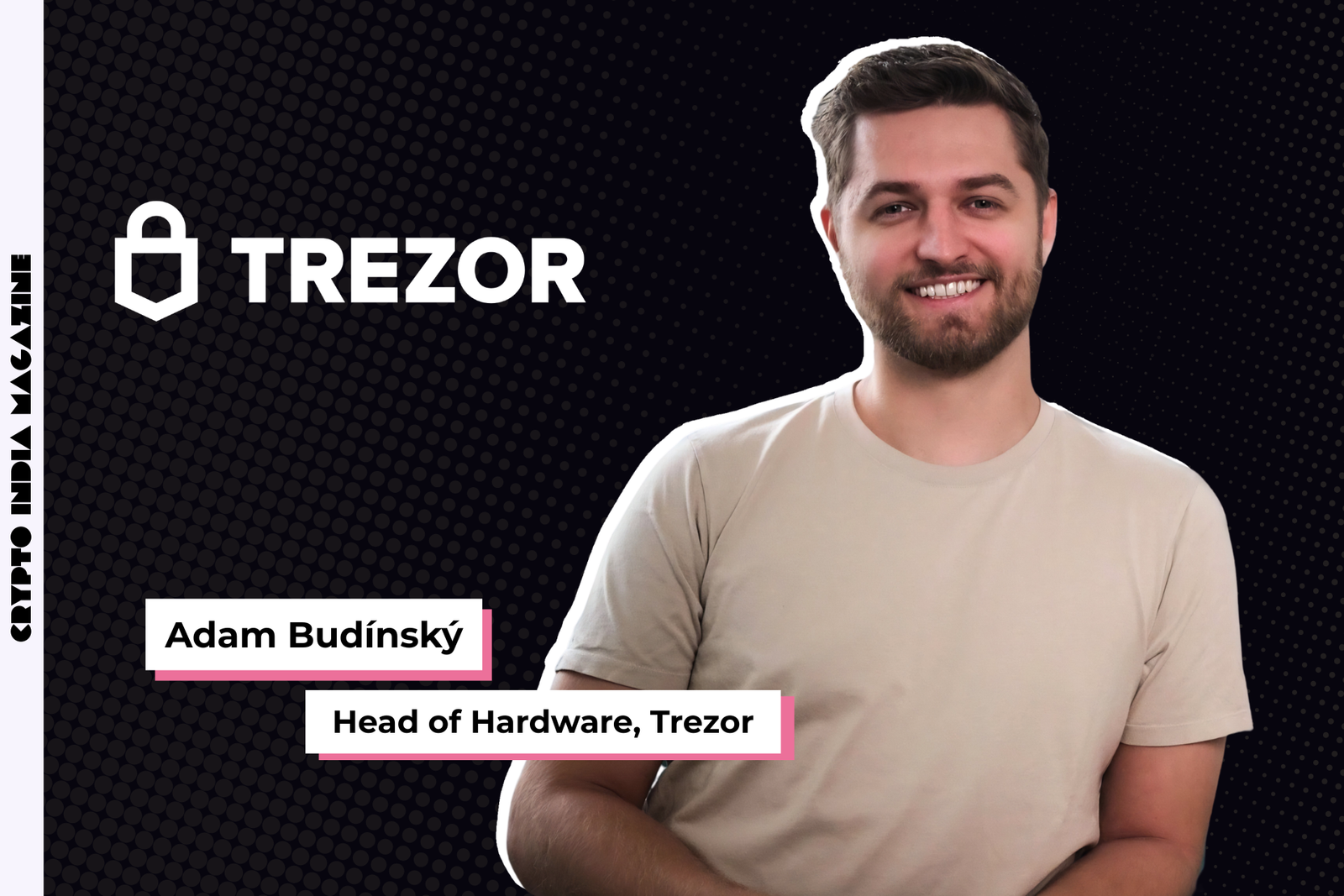
Interview with Adam Budínský: Trezor’s Head of Hardware on the Safe 7, Open Security, and Self-Custody
The Trezor Safe 7 just won a 2026 Red Dot Award for Product Design. Head of Hardware Adam Budínský talks to CIM about the device's open, auditable, secure element, the push to end blind signing on Ethereum, the touchscreen threat model, and why self-custody adoption still lags in India.
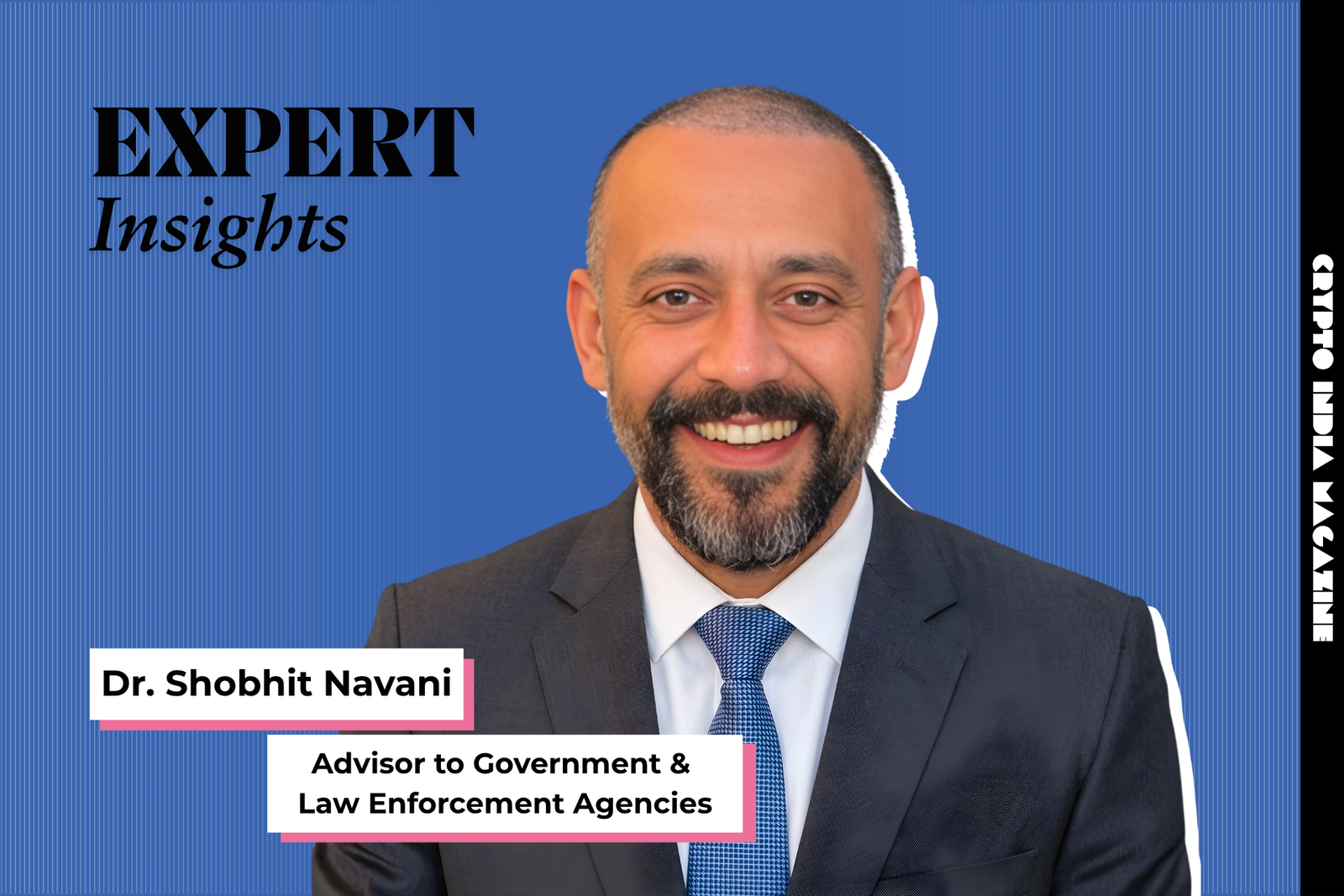
Dr. Shobhit Navani on Crypto’s Dark Side, Regulatory Gaps, and Institutional Shift
The crypto industry is not ignorant of its darker dimensions. Money laundering, terrorism financing, cybercrime, the limits of sovereign regulation,…