


A critical examination of how cloud providers have constrained artificial intelligence (AI) systems, while blockchain technology offers an alternative path forward.
I’m going to tell you something nobody wants to say out loud because it makes the cloud providers uncomfortable, and it makes crypto people look right, which nobody enjoys.
We’ve built the most sophisticated AI systems in history. Agents that optimize supply chains. Agents that trade currencies. Agents that manage infrastructure most humans couldn’t understand if they spent a year studying. And then we’ve chained them to the corporate equivalent of a company town store.
Your AI agents cannot transact on the open internet. They cannot own money. They cannot make independent economic decisions. They can only spend company scrip inside company walls.
This is not a limitation. This is by design.
The Real Reason Nobody Talks About This
Here’s the thing nobody will admit in a keynote: Amazon doesn’t want your AI spending money anywhere except Amazon. Google doesn’t want your AI buying anything except Google services. Microsoft sees an entire parallel economy forming and realizes whoever controls the payment rails controls the economy.
So they built walls.
Not explicit walls. Subtle ones. “Here’s your API key. Here’s how you can talk to our services. Here’s our credit system.” It’s hospitable imprisonment. The prisoner just doesn’t realize they’re in a cell.
Meanwhile, the conversation around AI is all about alignment, safety, and regulation. Nobody’s talking about the simple fact that every generative AI company, every cloud provider, every enterprise is building digital sharecroppers instead of digital citizens.
And the scary part? It’s working. We’re all accepting it as normal.
The Moment Someone Actually Tried to Fix It
Then, Coinbase and Cloudflare did something weird. They went back to an HTTP status code from 1990 that literally nobody was using. Error 402, titled “Payment Required.” It had been sitting in the specification for three decades like a loaded gun nobody wanted to pick up.
They said: What if we actually used this thing?
What if we let machines own wallets? What if an AI agent got that 402 response and could actually respond with a transaction? What if payment itself became the proof that a machine had rights?
The tech worked. That was surprising to everyone who didn’t understand that the problem was never technical.
But here’s where it gets interesting. They proved it worked at scale. 69,000 agents. 165 million transactions. Fifty million dollars moving through a system designed for the thing we told ourselves was impossible.
Real examples are already live. AgroToken is automating agricultural supply chains with machine commerce on Algorand, a blockchain designed for high-speed, low-cost transactions. HesabPay on Algorand is settling payments between businesses and their supply chain partners without intermediaries. These aren’t pilots. They’re operating. Machines are transacting, optimizing, and settling value without humans in the middle.
Then they walked away from owning it.
They handed the whole thing to the Linux Foundation. Invited AWS, Google, Microsoft, Visa, American Express, and Mastercard to the table. And those companies said yes. Not in three years. Not in their roadmap. Now.
That’s when you know something real is happening. When the incumbents stop fighting and start participating.
Why the Skeptics Are Wrong (And Why You Know They’re Wrong)
Every smart person I know points to the same chart. x402 volume crashed 92 percent from its peak. See? It failed. Vaporware.
The people saying this are the same people who looked at the early web and asked “but where’s the business model?” They’re making pattern-matching mistakes. They’re seeing price volatility and calling it death.
Here’s the problem with their analysis: they don’t understand that the companies moving now are not moving because the business case is proven. They’re moving because they see what’s inevitable and want to participate rather than fight it.
AWS didn’t add x402 payment settlement to Amazon Bedrock AgentCore in May 2026 because it was profitable. They added it because they woke up to a reality: either they own the payment rails for machine commerce, or they become infrastructure for someone else who does.
Visa didn’t join the x402 Foundation to help a startup. Visa joined because it realized its entire business model depends on being the plumbing for money that moves. And money that moves between machines is the future, whether that future is profitable today or not.
You don’t get the Linux Foundation’s governance unless the people in the room believe you’re building the internet’s bones. This isn’t bet money. This is bet-the-company money.
What Actually Happens When This Works
Three things change. All three scare someone badly.
One: Payment becomes proof of existence
Right now, you control what your AI can do by controlling credentials. API keys, API tokens, access tokens. You’re the gatekeeper. You revoke. Your agent freezes.
With x402, the agent owns a wallet. It owns USDC (a digital stablecoin that represents US dollars on a blockchain). It can prove it can pay. That becomes the only permission it needs. The server doesn’t know your agent’s name. Doesn’t need to. It gets paid. That’s all that matters.
This is not a small change. This is the death of gatekeeping.
Two: A nickel becomes a valid transaction
Right now, the web’s economic minimum is about a dollar. Anything smaller gets destroyed by payment fees. So we pretend things are free and monetize your data instead, or we bundle features into packages you didn’t need.
With x402 running on something like Algorand, your agent pays 0.4 cents for a weather forecast. Pays 0.07 cents for an API call. Pays exactly for what it uses. The package tier dies. The freemium hustle dies. The fake economy of bundled value dies.
Every transaction becomes transparent. Every transaction becomes real.
Three: Blockchain stops being an ideology and becomes plumbing
The facilitator sits between your agent and the ledger. The facilitator handles settlement. The facilitator guarantees finality. Your agent doesn’t care which blockchain it’s running on. Doesn’t care about gas fees (transaction costs). Doesn’t care about the religion.
Algorand has already proven what’s possible. Fast settlement. Negligible fees. Reliable finality. Projects like HesabPay and AgroToken are running on Algorand right now, moving real value between machines and businesses. They’re not theoretical. They’re operating. They’re invisible infrastructure now. Nobody argues about which blockchain USDC settles on because it doesn’t matter. The money moves. That’s all that matters.
This is the moment blockchain wins. Not because everyone loves blockchain. Because everyone forgets blockchain exists.
When the technology disappears, when it becomes boring infrastructure, that’s when you know you’ve won. That’s when adoption stops being a choice and becomes inevitable.
The Future You’re Building Whether You Realize It or Not
If open standards for machine commerce win, here’s what happens: your AI interacts with other AIs in a genuinely open market. Google’s systems buy from Amazon’s systems. Startups compete with Microsoft on level ground. Innovation happens at the edge because the edge can finally participate in the economy.
If open standards lose, here’s what you get: your AI stays in prison. It spends money only according to the rules the prison makes. Interaction between competing vendors requires contracts and lawyers and months. The economy becomes what it was before the internet: a series of walled-off fiefdoms run by whoever owns the land.
And the really dark part: most of you won’t even notice it’s happening. Your agent will work. You’ll get the output. You’ll assume that’s how it has to be.
You’ll accept the prison because you’ve never seen the alternative.
This Part Actually Matters
I don’t usually write about what people should do because it tends to be preachy and useless. But this one I’ll say it.
If you build platforms:
Add x402. Make it default. Make it the path of least resistance. The companies that do this will own the future of AI infrastructure. The companies that don’t will be owned by it.
If you buy cloud services:
Ask about this. Not as a side question. As a structural requirement. Tell your provider you want your agents on open payment rails. The leverage you have now is leverage you won’t have in eighteen months.
If you regulate anything:
Make a decision. Is machine financial identity legal? Define it. Define custody. Define liability. The sooner you establish boundaries, the sooner real innovation can happen instead of everyone operating in legal fog.
If you do nothing:
That’s a choice too. It’s just a choice that lets someone else make the choices for you.
The Scene That Should Already Be Normal
An AI agent needs data. A weather forecast. Four-tenths of a cent. It requests it. The server responds: 402, payment required.
The agent doesn’t panic. It doesn’t call its human operator. It doesn’t wait for approval. It evaluates the cost against the expected value. It decides. It sends USDC from its wallet. The transaction settles in under a second. The data arrives. The optimization happens. The shipment leaves on time.
Nobody notices. That’s the entire point.
Not revolution. Not magic. Just normal. The way it should work when you build systems for the actual economy instead of building prisons and calling them gardens.
The Thing You’ll Probably Get Wrong
You’re going to read this and think it’s about blockchain. It’s not.
You’re going to read this and think it’s about decentralization. It’s not.
It’s about whether the future internet is something you get to participate in building or something that gets built for you. It’s about whether your company’s AI systems work according to rules you accept or rules someone else wrote.
It’s about power. Control. Who decides. And whether we’re brave enough to say that out loud.
The infrastructure for open machine commerce exists right now. Today. The Linux Foundation is moving it. AWS is implementing it. The only question is whether you’re part of the teams making this real or part of the teams that wait until someone else has already won.
History suggests most of you will wait. History also suggests that ten years from now, you’ll be frustrated that you did.
Editorial Note: This is a guest post authored by Nikhil Varma, PhD, who is the Technical Lead at AlgoBharat (Algorand Foundation’s India arm), Associate Professor at Ramapo College, New Jersey, and guest professor at IIT Delhi and Molde University. The views and opinions expressed are solely those of the author and do not necessarily represent those of Crypto India Magazine or its editorial team.
We have only made minor grammatical edits to align the article with our editorial style and language. No changes have been made to the substance, arguments, or intent of the original piece. We have also added internal links solely for SEO purposes. These links are editorial decisions and are not associated with the author.
Want to write for Crypto India Magazine? Mail us at editorial@cryptoindiamagazine.com.


Crypto.com’s AI Agent Is Still in Stealth Mode, Eight Months After Its Super Bowl Debut
Eight months after a Super Bowl ad and a record $70 million domain, Crypto.com's ai.com personal AI agent is still in stealth mode. We look at why it is taking so long, and test the theory that the AI industry's new safety slowdown is behind the delay. It is not.

BlackRock Says AI Agents Will Drive the Next Stablecoin Boom
BlackRock's new paper, The Machine-Native Economy, argues autonomous AI agents will become a major source of stablecoin demand, settling machine to machine payments for data, APIs, and compute. It also floats tokenized compute as a new asset class, while conceding the market is early.

The $4.5 Billion Crypto VCs Raised in A Bear Market Came with A Different Pitch, and the New One Is Spelled “AI”
Crypto startup funding hit a 12-month low in April 2026, yet a16z crypto, Haun Ventures, Dragonfly, and Framework Ventures closed billions in new funds. Polina examines why LPs kept writing checks and how stablecoins, tokenization, and AI agents became the pitch that worked.
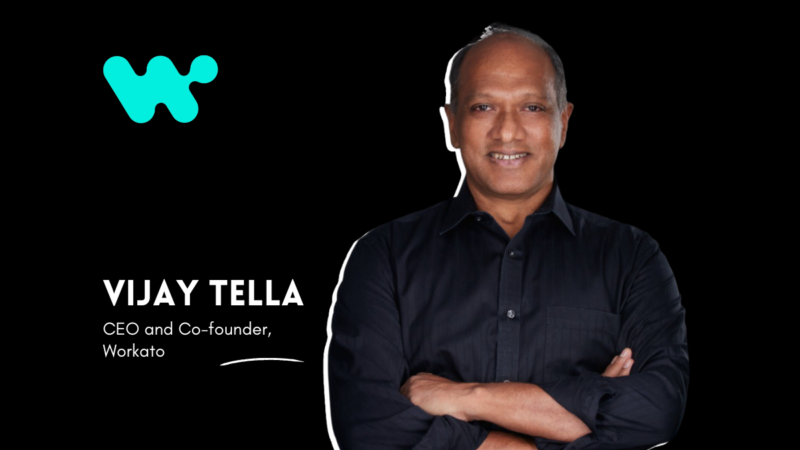
Workato Opens Hyderabad AI Hub to Co-Build Agentic AI With Customers
Workato has opened its third AI Collaboration Hub in Hyderabad, after San Francisco and Singapore. The site at Aurobindo Orbit puts customers, GSI partners, and Workato engineers in one room to co-build agentic AI against live enterprise systems. Workato India employs more than 200 people.