

June in Singapore will definitely remain one of the most remarkable months. The SuperAI conference took place in Marina Bay Sands last week and gathered researchers, founders, and AI experts to discuss some of the biggest questions facing the industry. Speakers and panelists offered a practical view of where the technology is moving and the people building the infrastructure that supports it. Crypto India Magazine selected some of the most memorable discussions from the event.

When the AI Boom Hits a Financial Ceiling
Day 1 of SuperAI started with Benedict Evans’s keynote on the financial realities driving the AI race. AI systems require enormous amounts of capital to build and scale, and show up on the balance sheets of the industry’s largest companies like Meta and OpenAI.
The strain is becoming visible in financial markets as well. Alphabet reported an $85 billion equity raise and suggested that Meta may pursue a similar path, while companies increasingly rely on SPVs and other financing structures to help fund the growing costs of AI infrastructure.
On the product side, Benedict Evans questioned the long-term dominance of chat as the primary AI interface. “Chat seems to be a really bad user interface,” he said. While it works well for some use cases, most people will prefer experiences that resemble traditional applications rather than open-ended conversations. He also highlighted the significance of headline user numbers, arguing that despite hundreds of millions of weekly active users, engagement remains “a mile wide and an inch deep.”The
AI boom is beginning to encounter real financial constraints, even among the world’s largest technology companies. At the same time, he suggested that today’s chat-based interfaces may be only a transitional stage rather than the final form of how people interact with AI.
Web Search, Built for AI Agents
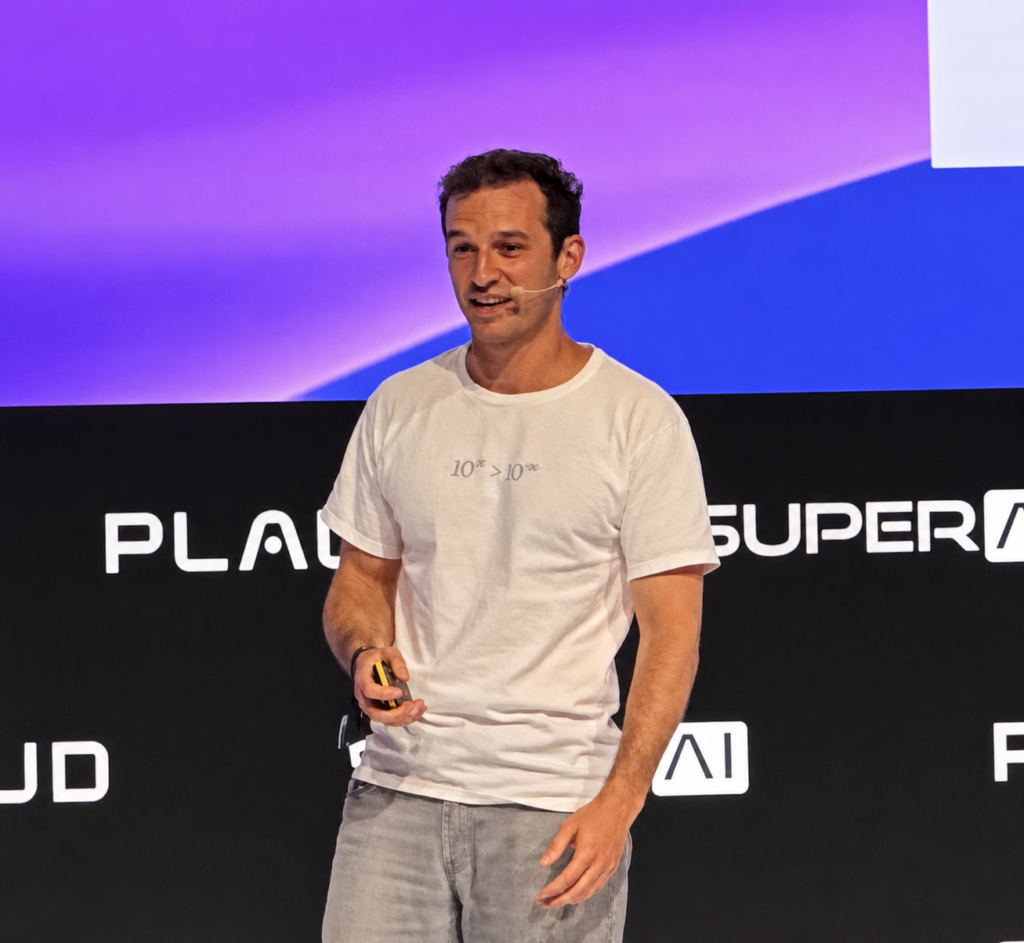

Following the earlier discussion about AI economics, Will Bryk, CEO and co-founder of EXA, shifted the focus to fundamental changes in global search.
“The number of web searches per day by humans and AI systems has changed over the past 30 years. Now in 2026, humans search on average around 15 billion times a day, and AI systems are searching almost as much as humans. By the end of 2026, AIs will search the web more than humans. It’s just going to exponentially grow beyond that. In a few years, AIs are going to search a thousand times more than humans,” said Will.
EXA is well-positioned for this shift, although it was not the company’s original goal. When the company launched in 2021, its mission was simply “to build perfect search.” To address that problem, EXA invested heavily in developing its own retrieval technology from the ground up, including spending a large portion of its early funding on GPU infrastructure and research. As a result, that decision aligned perfectly with the rise of AI agents.
EXA is designed to support both deep research and real-time applications.
“We have already been building for years to build a perfect search, which is exactly what these AIs wanted. It’s a very lucky thing that what we were building for ourselves, for nerds like ourselves, was actually perfect for all these AIs. We have the fastest search in the world, where we have searches at sub-200 milliseconds,” said Will.
If AI systems become the dominant users of search, the underlying infrastructure will need to evolve alongside them. EXA’s approach is built around that assumption. By focusing on search designed for machines as well as humans, the company is positioning itself to support a growing generation of AI applications, including many emerging from the APAC region.
ALSO READ: Money 20/20 Asia 2026: Bangkok Becomes the Stage Where TradFi and DeFi Unite
MIT Perspective Pro-Human Future of AI
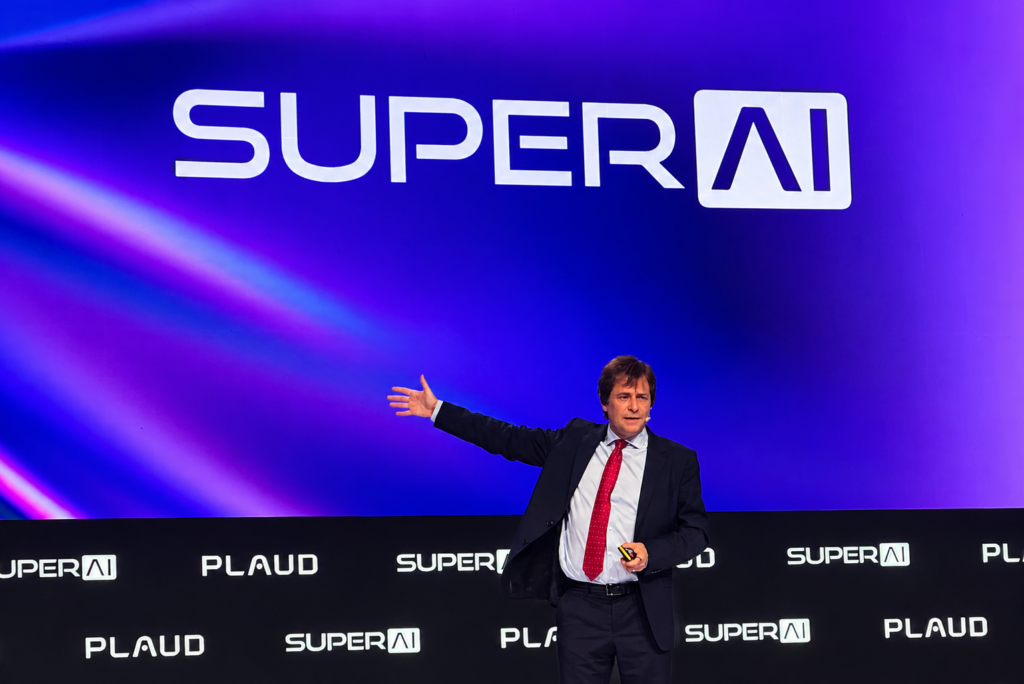
Max Tegmark, MIT Professor of Physics and AI Research at MIT, said in his speech that the future of AI depends on the choices humans make today. He highlighted that people still have an important role to play and have three human “superpowers”: domain intelligence, generality, and autonomy. Rather than viewing AI as an inevitable replacement for human workers, AI that has only one or two of these superpowers can never wholesale replace you on the job market. His advice was to avoid competing in the middle ground, where AI is strongest.
“There are many examples in history of things that people chose not to build,” said Max. As AI advances, the exportable fraction of intelligence approaches 100%. If true, that could reduce the need for black-box systems. Treat the AI industry like any other industry, with common-sense safety standards,” said Max.
Max Tegmark believes the future of AI is pro-human within reach if society focuses on building AI that remains understandable, useful, and under human control.
“What will help us win and get this great future is to treat the AI industry like any other industry, with common-sense safety standards, which will incentivize companies to build controllable tools if that’s what we really want,” said Max.
The Imperative for Faster Inference
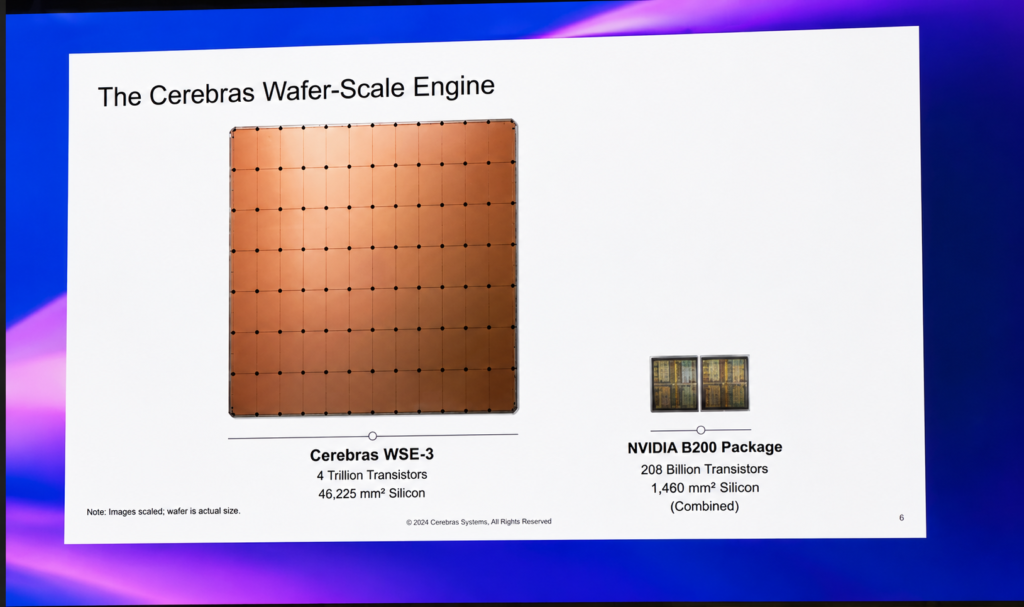
Andy Hock of Cerebras argued that hardware has become a major bottleneck for the next wave of AI applications.
“Our ability to innovate… is speed-limited by legacy computing systems and legacy chip architectures,” he said, adding that existing chips “can’t keep up with AI.”
At the center of his presentation was the company’s Wafer-Scale Engine, which he described as “the largest computer chip in history” — “more than 50 times bigger than any chip built before.” The latest version contains 900,000 cores connected across a single piece of silicon and paired with ultra-fast memory.
Hock emphasized that the resulting performance gains come from architectural design rather than shortcuts:
“It’s not magic. It’s not numerics… What it is, is the power of the right architecture under the hood.”
He also linked inference speed directly to adoption and engagement, citing OpenAI CEO Sam Altman: “When AI responds in real time, users do more with it. They stay longer.”
Real-time, agentic AI depends on fast inference, and achieving that performance requires hardware designed specifically for modern AI workloads.
The Infrastructure Era of AI Has Arrived
SuperAI Singapore 2026 clearly showed us that the AI industry is entering a new phase of maturity. The economic realities behind the AI boom warn that even the largest companies remain subject to financial gravity. The growing importance of infrastructure built specifically for AI agents and the new generation of hardware will also be the key factors guaranteeing success in AI.
The new era of AI will not be determined solely by the largest models. It will depend on who can create the supporting economics, infrastructure, safety practices, and user experiences needed to make the technology useful and sustainable. The message from Singapore was clear: APAC, along with North America, intends to play a major role in shaping that future.
Editorial Note: This article has been written by a contributor to Crypto India Magazine (CIM). The views, opinions, and claims expressed in this article are solely those of the author and do not necessarily reflect the views of Crypto India Magazine. CIM does not assume responsibility for the accuracy, completeness, or reliability of the information, opinions, or statements presented in this article.

Vitalik Buterin Warns AI Could Weaken Crypto Security in Two Years
Ethereum co-founder Vitalik Buterin warns AI-accelerated math research has a "good chance" of seriously weakening lattice-based cryptography within two years. He also flagged added ECDSA risk and said Ethereum's Lean roadmap is shifting toward hash-based signatures.

Crypto.com’s AI Agent Is Still in Stealth Mode, Eight Months After Its Super Bowl Debut
Eight months after a Super Bowl ad and a record $70 million domain, Crypto.com's ai.com personal AI agent is still in stealth mode. We look at why it is taking so long, and test the theory that the AI industry's new safety slowdown is behind the delay. It is not.

BlackRock Says AI Agents Will Drive the Next Stablecoin Boom
BlackRock's new paper, The Machine-Native Economy, argues autonomous AI agents will become a major source of stablecoin demand, settling machine to machine payments for data, APIs, and compute. It also floats tokenized compute as a new asset class, while conceding the market is early.

The $4.5 Billion Crypto VCs Raised in A Bear Market Came with A Different Pitch, and the New One Is Spelled “AI”
Crypto startup funding hit a 12-month low in April 2026, yet a16z crypto, Haun Ventures, Dragonfly, and Framework Ventures closed billions in new funds. Polina examines why LPs kept writing checks and how stablecoins, tokenization, and AI agents became the pitch that worked.