Now Reading: Saudi Arabia Installs Its First Quantum Computer, Raising Questions Over Future Crypto Security
-
01
Saudi Arabia Installs Its First Quantum Computer, Raising Questions Over Future Crypto Security

Saudi Arabia Installs Its First Quantum Computer, Raising Questions Over Future Crypto Security

Estimated reading time: 3 minutes
- Saudi Aramco has deployed the Middle East’s first industrial quantum computer, a 200-qubit system built by Pasqal.
- The installation advances Saudi Arabia’s quantum ambitions and renews debate over long-term risks to Bitcoin and blockchain security.
- Experts say current systems cannot break modern cryptography, though rapid progress has intensified concern over a future quantum threat.
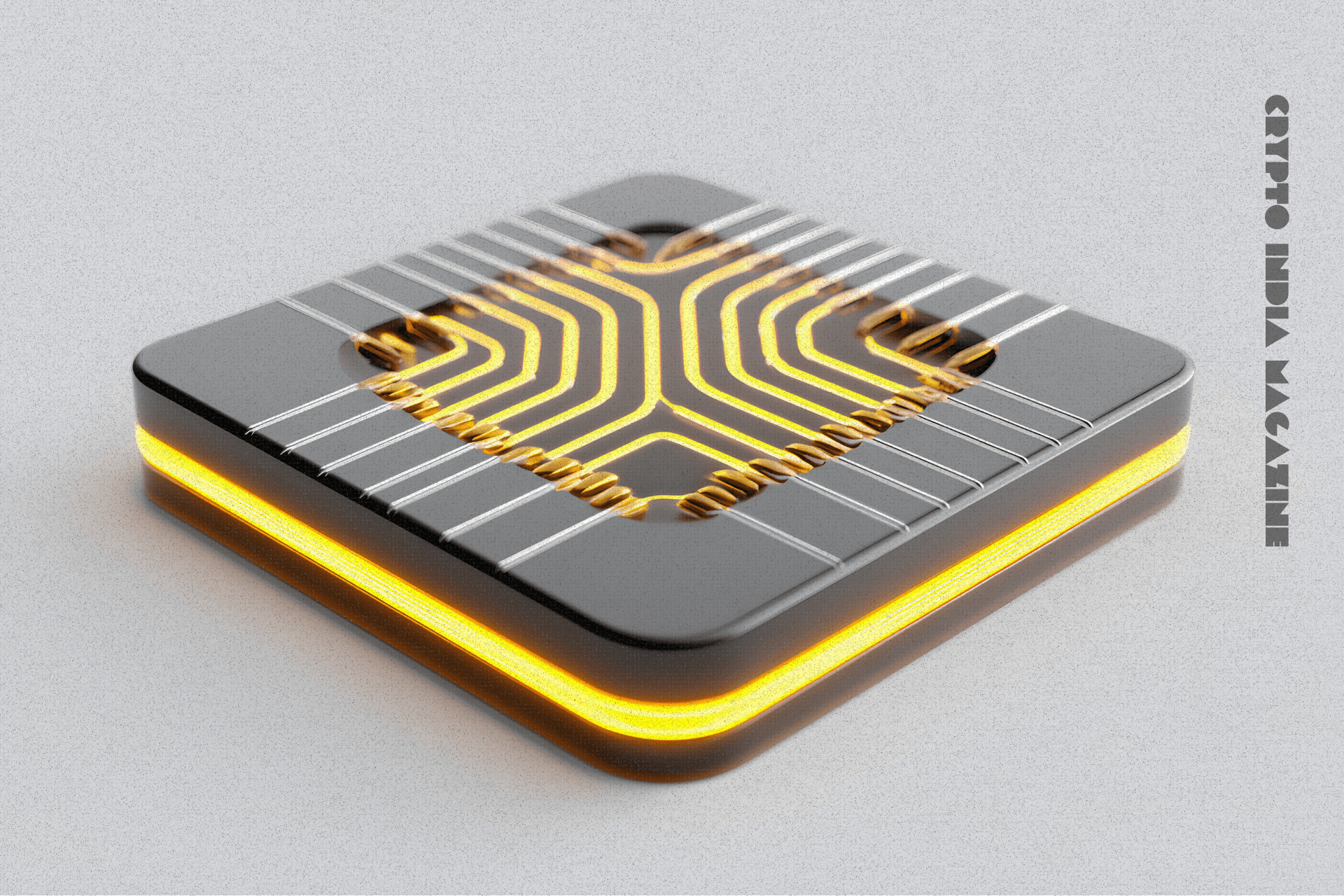
Saudi Arabia has officially entered the global quantum computing race with the deployment of its first quantum computer, a 200-qubit system developed by French neutral-atom specialist Pasqal. Installed at Saudi Aramco’s Dhahran data center, the machine marks both a regional technological milestone and a renewed moment of scrutiny for long-term blockchain security.
The installation, the first quantum computer in the Saudi Arabia (in fact, in the Middle East) dedicated to industrial applications, is intended to support energy modeling, materials research, and other computationally intensive tasks. Pasqal described the system as its most advanced to date.
“This is a historic milestone with Aramco,” Pasqal CEO Loïc Henriet said. “The deployment of our most powerful quantum computer yet is a piece of history and a landmark for the Middle East’s quantum future. Pasqal continues its expansion, delivering practical quantum power to industry.”
Aramco Positions Quantum Tech at the Center of Industrial Innovation
Aramco said the deployment aligns with its broader strategy of adopting advanced digital systems to enhance operational efficiency and unlock new opportunities. The company emphasized that the partnership with Pasqal reflects a long-term commitment to integrate next-generation computing into the Kingdom’s industrial sectors.
“Aramco is an established technology leader, which continues to innovate through the development and deployment of advanced digital solutions that have tangible benefits,” said Ahmad O. Al-Khowaiter, Aramco’s EVP of Technology & Innovation. “Our partnership with Pasqal is a natural progression and we are thrilled to pioneer next-generation quantum capabilities, harnessing significant opportunities presented by this new frontier in computing.”
As part of the collaboration, Pasqal will provide training programs and joint research efforts for Saudi engineers and scientists, contributing to the development of a regional quantum computing ecosystem.
Quantum Progress Rekindles Debate Over Bitcoin Vulnerability
Although the Pasqal system is designed for industrial research, the deployment has revived recurring questions about whether advancing quantum hardware could eventually undermine the cryptographic foundations of cryptocurrencies like Bitcoin and blockchain technologies.
Experts say today’s machines remain far below the threshold required to compromise modern cryptography. But the pace of development is prompting growing attention to a long-term scenario known as Q-Day — the moment when a quantum computer might be able to derive private keys from public keys or forge digital signatures.
Yoon Auh, founder of Bolts Technologies, said recent rapid advances have changed how security researchers view the threat.
“With so much effort and money going into this, breakthroughs are inevitable,” Auh told a media. “Nobody knows when, but the threat is no longer theoretical. It still can’t break ECC or RSA today, but progress is steady.”
Auh added that national interest in quantum computing extends far beyond cryptocurrency concerns.
“Quantum computing is the first technology that could become a global digital weapon not controlled by any political system,” he said.
Scientists note that current quantum machines face major limitations, including noise and short coherence times. Researcher Ian MacCormack said the size of the Aramco-Pasqal system remains small in practical terms.
“200 qubits is enough to do some interesting experiments and demonstrations, assuming the qubits are high quality, which is hard to do with even that few of them, but nowhere near enough to do error corrected computing of the sort you would need to run Shor’s Algorithm,” he said.
Long-Term Threat Still Distant, Researchers Say
Even researchers at Caltech now use their recently unveiled 6,000-qubit neutral-atom system mainly for simulations and algorithm development. Caltech graduate student Elie Bataille said the gap between today’s systems and cryptographically threatening machines remains considerable.
“What you need is a very long coherence time compared to the duration of your operations,” he said.
Q-Day, if it arrives, would represent a systemic risk not only to cryptocurrencies but to digital security worldwide.
Justin Thaler, research partner at Andreessen Horowitz and a Georgetown University associate professor, summarized the concern.
“What a quantum computer could do, and this is what’s relevant to Bitcoin, is forge the digital signatures Bitcoin uses today,” he said. “Someone with a quantum computer could authorize a transaction, taking all the Bitcoin out of your accounts when you did not authorize it. That’s the worry.”
Researchers estimate that quantum processors are years away from achieving the vast numbers of high-quality, error-corrected qubits needed to pose such a threat.
University of Michigan professor, Christopher Peikert, said quantum computing represents a meaningful long-term challenge but not an immediate one.
“Quantum computation has a reasonable probability, more than 5%, of being a major, even existential, long-term risk to Bitcoin and other cryptocurrencies,” he said. “But it’s not a real risk in the next few years; quantum-computing technology still has too far to go before it can threaten modern cryptography.”
Editorial Note: This news article has been written with assistance from AI. Edited & fact-checked by the Editorial Team.
Interested in advertising with CIM? Talk to us!