


Estimated reading time: 3 minutes
- Global crypto derivatives trading surged to nearly $86 trillion in 2025, averaging about $265 billion in daily volume, according to CoinGlass data.
- Binance led the market with roughly $25 trillion in derivatives volume, accounting for about 29% of global activity, followed by OKX, Bybit, and Bitget.
- Institutional participation expanded through ETFs, options, and regulated futures, strengthening the role of CME in crypto derivatives markets.
- Total crypto derivatives open interest hit a record $235.9 billion in October before a sharp deleveraging event erased over $70 billion in positions.
- CoinGlass estimated total forced liquidations at around $150 billion in 2025, with October’s selloff linked to renewed global risk-off sentiment.
Crypto derivatives trading surged to record levels in 2025, reaching nearly $86 trillion in total volume as institutional participation expanded and major exchanges consolidated market share, according to data from CoinGlass.
The report shows that cryptocurrency derivatives trading totaled approximately $85.7 trillion for the year, averaging around $264.5 billion in daily volume. The growth underscores the increasing role of derivatives in crypto markets. And it has evolved beyond its earlier reputation as predominantly retail-driven, high-leverage trading venues.
Binance led the global market, recording about $25.09 trillion in cumulative derivatives volume. This represented roughly 29.3% of total global activity, meaning nearly $30 of every $100 traded in crypto derivatives passed through the exchange.
Other major platforms, including OKX, Bybit, and Bitget, each reported between $8.2 trillion and $10.8 trillion in annual derivatives volume. Together, the four exchanges accounted for more than 62% of global derivatives trading.
ALSO READ: India’s Crypto Transactions Cross ₹51,000 Cr in FY25
CoinGlass noted that institutional access points expanded significantly during the year. It was driven by the growth of spot Bitcoin exchange-traded funds, options markets, and compliant futures products. This shift helped strengthen the position of the Chicago-based Chicago Mercantile Exchange, which had already surpassed Binance in Bitcoin futures open interest in 2024 and further consolidated its presence in 2025.
Alongside rising volumes, the derivatives market also grew more complex. CoinGlass said trading activity increasingly reflected institutional hedging strategies, basis trading, and ETF-related positioning, rather than purely speculative retail flows. However, this structural evolution also introduced new risks. This was because deeper leverage chains and interconnected positions increased what the firm described as tail risk across platforms.
Crypto derivatives open interest experienced sharp swings throughout the year. After falling to a yearly low of roughly $87 billion following widespread deleveraging in the first quarter, open interest climbed steadily and reached a record $235.9 billion on October 7. A reset followed this in early fourth-quarter trading, during which over $70 billion in positions were wiped out. Despite the correction, year-end open interest stood at $145.1 billion, marking a 17% increase from the start of the year.
The most severe stress test occurred in early October, when forced liquidations surged. CoinGlass estimated total liquidations across 2025 at approximately $150 billion. A significant portion concentrated on October 10 and 11, when liquidations exceeded $19 billion. Long positions tied the majority of those losses, accounting for between 85% and 90% of liquidated trades.
CoinGlass linked the October selloff to a broader shift toward risk-off sentiment following an announcement by U.S. President Donald Trump regarding 100% tariffs on imports from China. The policy development triggered a sharp reaction across global markets, amplifying volatility in leveraged crypto positions.
The report concluded that institutional participation has brought greater liquidity and market depth. The events of 2025 highlighted vulnerabilities in margin systems, liquidation mechanisms, and the transmission of cross-platform risk.
Editorial Note: This news article has been written with assistance from AI. Edited & fact-checked by the Editorial Team.
Interested in advertising with CIM? Talk to us!


China Seeks 61,800 Bitcoin Seized in UK Over $5.7B Fraud
Chinese prosecutors have applied to confiscate more than 61,800 bitcoin and other assets tied to a 40.378 billion yuan ($5.7 billion) fraud led by Qian Zhimin. A Tianjin court accepted the request, days after a UK court ruled Chinese law governs victims’ claims to the seized coins.

Indian Finance Minister Flags 2027 Risk as Stocks Slide and Jio Hits Crypto Rails
Indian Finance Minister Nirmala Sitharaman named capital outflows as a top 2027 risk, speaking in Bangkok as Indian stocks fell over 12% and foreign investors pulled $33 billion. The warning lands as Jio’s record IPO is already priced through Bitget’s JIOUSDT pre-IPO crypto futures.

Capital B Posts €69.5M H1 2026 Loss Despite Buying More Bitcoin
Capital B reported a €69.5 million ($78M) net loss for the first half of 2026, with about 97% of it a non-cash Bitcoin impairment tied to the June 30 price. Revenue rose 3.5%, and the French treasury company kept buying, holding 3,538 BTC by September 30, up 25.3% since January.
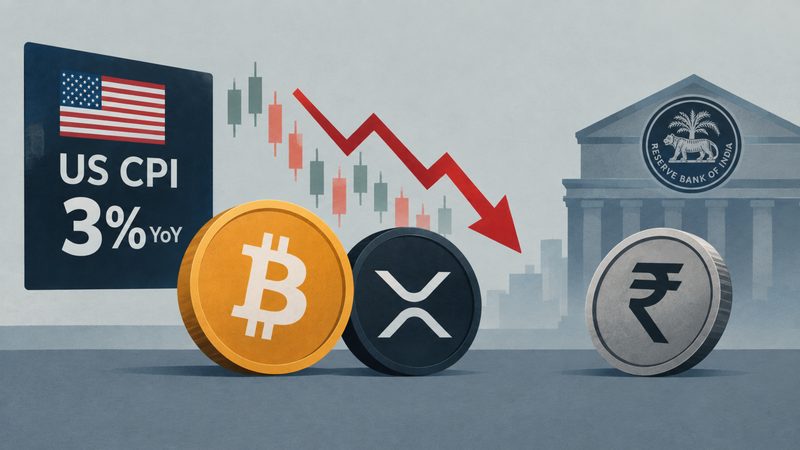
Rupee Near Record Low Splits Bitcoin and XRP Prices in India From the Dollar
The delayed US September CPI came in at 3% and crypto sold off, with Bitcoin below $81,000 and XRP down over 4%. With the rupee near a record low and the RBI intervening, Bitcoin and XRP prices in India can move differently from their US dollar charts. Here is why that happens.
[…] BitMEX celebrates eleven years with a report distilling key lessons from the exchange that introduced perpetual swaps and shaped modern crypto derivatives. […]
[…] ALSO READ: Crypto Derivatives Trading Hits $86 Trillion in 2025 […]