
Key points
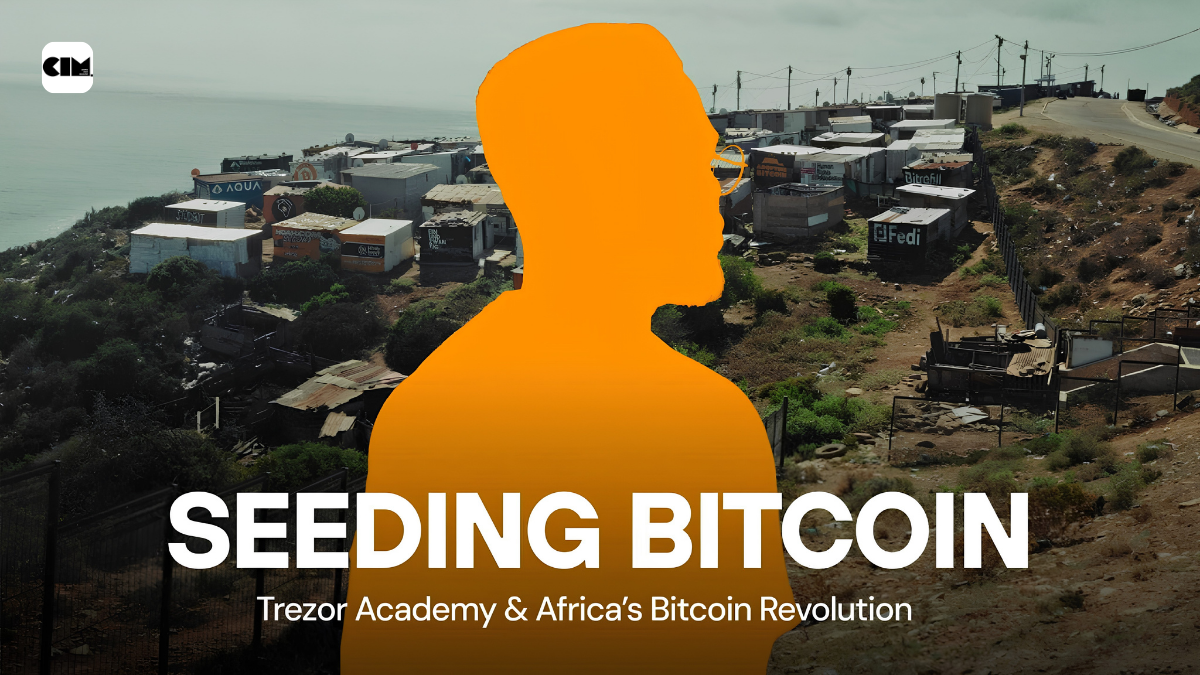
- Trezor Academy released “Seeding Bitcoin: Trezor Academy and Africa’s Bitcoin Revolution” this week, a documentary on how Bitcoin operates as practical money across Sub-Saharan Africa.
- Sub-Saharan Africa received more than $205 billion in on-chain cryptocurrency value between July 2024 and June 2025, a 52 percent year-on-year increase and the third-fastest regional growth rate globally, according to Chainalysis.
- Trezor has added a voluntary donation option to its online store, with 100 percent of proceeds directed to Bitcoin education workshops, meetups, and project sponsorships across the Global South.
Trezor Academy released “Seeding Bitcoin: Trezor Academy and Africa’s Bitcoin Revolution” this week, a documentary on how Bitcoin functions as practical money across the African continent. This comes alongside a new charitable donation option integrated into Trezor’s online checkout.
The release arrives as Western market coverage tracks Bitcoin ($BTC) through a prolonged correction. Bitcoin peaked at $126,198 on October 6, 2025, and trades near $59,600 at the time of writing, a decline of more than 52 percent from its record. U.S. spot Bitcoin ETFs logged 13 consecutive days of net outflows from May 15 to June 3, 2026, draining approximately $4.4 billion in the longest redemption streak since the products launched in January 2024.
Josef Tětek, founder of Trezor Academy, said the documentary was made to surface a story that price-focused coverage consistently overlooks.
“In the West, we argue about Bitcoin’s price. The people in this film aren’t watching the price. They’re using Bitcoin to get paid, to keep their savings from losing value overnight, and to take part in an economy that never asked them for ID they don’t have. That is what a financial system looks like when it finally lets people in. We made this documentary because that story almost never reaches a Western audience, and it should.”
The underlying numbers support that framing. Sub-Saharan Africa received more than $205 billion in on-chain cryptocurrency value between July 2024 and June 2025. And it is a 52 percent year-on-year increase, according to blockchain analytics firm Chainalysis. The region ranked third globally by growth rate, behind only Asia-Pacific and Latin America. Transactions under $10,000 accounted for more than 8 percent of total transferred value in the region, against 6 percent globally, pointing to broad retail and everyday use.
ALSO READ: Interview with Adam Budínský: Trezor’s Head of Hardware on the Safe 7, Open Security, and Self-Custody
The practical case is direct. Sending $200 to Sub-Saharan Africa through traditional channels costs close to 9 percent in fees. This is the highest of any region, according to World Bank remittance data. The same transfer over Bitcoin’s Lightning Network costs a few cents. When Nigeria devalued its currency in March 2025, on-chain volumes across the region spiked, with monthly transaction volume briefly nearing $25 billion as people moved savings into crypto. Traditional banking also routinely requires documentation many cannot provide: a national ID, a credit history, a permanent address. Refugees, displaced communities, and rural residents without formal identification are frequently excluded from the start. Bitcoin requires none of those.
Alongside the documentary, Trezor said this week it has added a voluntary donation field to its online store. Customers can now contribute at checkout or donate directly without placing an order. Trezor says 100 percent of donated funds go toward workshops, local meetups, and project sponsorships in the Global South.
Trezor Academy is a non-profit educational initiative that delivers in-person Bitcoin training through local educators. According to Trezor Academy, the program has expanded to more than 30 countries, completed more than 300 meetups, and graduated more than 2,000 participants since launching in Africa in 2023.
Editorial Note: Reported and edited by the Crypto India Magazine editorial team. We use AI tools to assist with research and drafting; every article is reviewed and fact-checked by our editors.
Interested in advertising with CIM? Talk to us!

Binance to Shut Down Binance Pool and Related Mining Services on November 10
Binance is closing Binance Pool and related mining services on November 10, 2026, at 07:00 UTC. The shutdown ends Cloud Mining, Pool Savings, the Transaction Accelerator, hashrate alerts, and the pool API. Miners must switch pools, redeem Pool Savings, and verify accounts before the cutoff.

“Your Computer Is Hacked”: CBI Busts India-Based Bitcoin ATM Scam Targeting US Seniors
India’s CBI has arrested four people over an alleged India-based Bitcoin ATM scam that impersonated Microsoft and pushed elderly US citizens into crypto payments. A Florida victim lost about $440,000 and a New Jersey victim about $130,000, as India tightens rules on crypto-enabled crime.

Vitalik Buterin Warns AI Could Weaken Crypto Security in Two Years
Ethereum co-founder Vitalik Buterin warns AI-accelerated math research has a "good chance" of seriously weakening lattice-based cryptography within two years. He also flagged added ECDSA risk and said Ethereum's Lean roadmap is shifting toward hash-based signatures.

Bitget Loses $351.6 Million in Hack, CEO Points to North Korea
Crypto exchange Bitget lost roughly $351.6 million after attackers spoofed transfers from its hot and warm wallets. CEO Gracy Chen ties the breach to a North Korea linked group, suspends withdrawals, and says the User Protection Fund covers the loss.