

Key points
- MENA crypto volume reached an estimated $350 billion in on-chain transactions by 2025-2026, up from roughly $100 billion in 2022, according to a Bitcoin Policy Institute report published on September 4.
- Turkey leads the region by transaction value at close to $200 billion a year, the United Arab Emirates processed about $150 billion in 2025, and Saudi Arabia grew fastest at 154% year-on-year, followed by Qatar at 120%.
- The institute ties the expansion to two forces working at once: hedge demand in economies facing currency and conflict pressure, and regulated institutional buildout across the Gulf.
Annual on-chain MENA crypto volume reached an estimated $350 billion by 2025-2026, up from roughly $100 billion in 2022, according to a Bitcoin Policy Institute report. The Washington-based research group placed the region among the fastest-expanding crypto markets tracked by major blockchain analytics firms.
The report, authored by Zaid M. Belbagi for the institute’s State of Play series, framed the surge around the June 2025 Israel-Iran conflict, when a growing share of regional capital shifted into digital assets during the disruption. CIM has followed the region’s institutional pull through events such as Bitcoin MENA’s return to Abu Dhabi, where custody, mining, and regulated trading have anchored Gulf ambitions.
Belbagi wrote that the fighting exposed a split inside the region, noting that the episode “highlighted the growing divergence within MENA.” Stephen Coltman, vice president and head of macro at 21shares, told the institute that Gulf crypto exchanges kept operating through the conflict even as local stock markets closed, which he read as evidence of the market’s growing maturity.
Two Tracks Behind MENA Crypto Volume
Turkey remained the largest market by transaction value, receiving close to $200 billion a year, while the United Arab Emirates (UAE) processed about $150 billion in 2025 on the strength of institutional flows. Inside the UAE, Bitcoin accounted for 38% of trading activity, Ethereum for 22%, and the dollar-backed stablecoins USDT and USDC together for 30%, according to the institute’s figures.
Saudi Arabia posted the sharpest expansion at 154% year-on-year, supported by a population of 35 million, smartphone penetration near 97%, and a citizenry more than 60% under the age of 35, alongside state spending on blockchain systems, central bank digital currency research, gaming, and fintech. Qatar followed at 120%, backed by a broadening digital-asset framework and continued investment in payments infrastructure.
Away from the Gulf, currency stress has driven a different kind of adoption. Egypt, Turkey, Lebanon, and Iran have absorbed heavy depreciation in recent years, and peer-to-peer Bitcoin trading in Egypt rose more than 300% after successive devaluations of the pound. During the first strikes in June 2025, the global digital asset market shed about 3.7% to roughly $3.26 trillion, Bitcoin fell around 2.3% to near $105,200, and Ethereum dropped 7.5%, before capital rotated back into Bitcoin and lifted its dominance to 64.8%.
Regulatory scaffolding has hardened alongside the trading numbers. The UAE and Bahrain built federal licensing regimes for virtual asset service providers, Dubai’s Virtual Assets Regulatory Authority revised its rules on tokenization and virtual asset activity, and Bahrain introduced a Stablecoin Issuance and Offering module setting reserve, redemption, and disclosure standards for regulated issuers.
What the $350 Billion Figure Leaves Out
The headline total carries measurement caveats worth reading closely. Chainalysis had earlier pegged MENA on-chain value at $338.7 billion for July 2023 through June 2024 and later reported regional volume above $500 billion for the year ending June 2025, figures drawn from different methodologies and reporting windows. The 154% and 120% growth rates also trace to that earlier Chainalysis study rather than freshly measured 2026 data, so the regional total and the growth rates should be treated as directional rather than a single comparable series.
Belbagi argued that the next geopolitical shock is likely to deepen the region’s split, with the Gulf pulling global allocators into regulated venues while constrained economies lean further on Bitcoin and dollar stablecoins to preserve and move wealth. The trajectory places MENA among the more consequential regional stories in digital assets heading into the second half of the decade.
Editorial Note: Reported and edited by the Crypto India Magazine editorial team. We use AI tools to assist with research and drafting; every article is reviewed and fact-checked by our editors.
Interested in advertising with CIM? Talk to us!

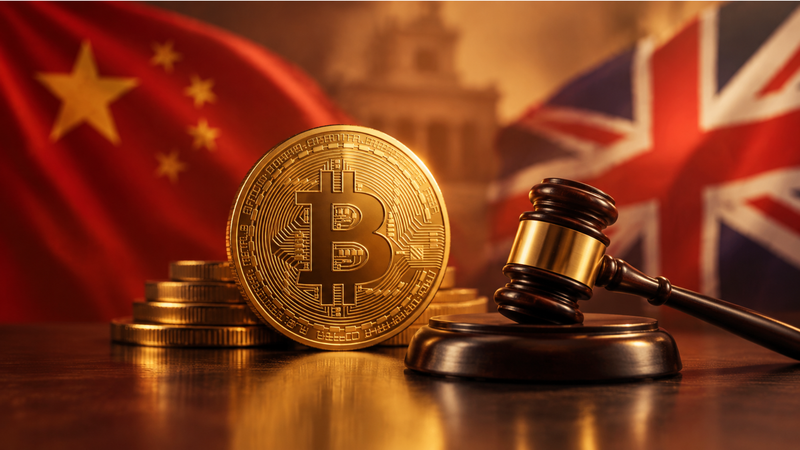
China Seeks 61,800 Bitcoin Seized in UK Over $5.7B Fraud
Chinese prosecutors have applied to confiscate more than 61,800 bitcoin and other assets tied to a 40.378 billion yuan ($5.7 billion) fraud led by Qian Zhimin. A Tianjin court accepted the request, days after a UK court ruled Chinese law governs victims’ claims to the seized coins.

JPMorgan Brings JPM Coin Dollar Deposit Token to Ethereum
JPMorgan Chase is bringing JPM Coin (JPMD), its US dollar deposit token, to Ethereum for institutional clients, moving beyond Base where it launched in November 2025. Kinexys cited Ethereum’s onchain liquidity. The token stays restricted to approved, vetted counterparties.

Indian Finance Minister Flags 2027 Risk as Stocks Slide and Jio Hits Crypto Rails
Indian Finance Minister Nirmala Sitharaman named capital outflows as a top 2027 risk, speaking in Bangkok as Indian stocks fell over 12% and foreign investors pulled $33 billion. The warning lands as Jio’s record IPO is already priced through Bitget’s JIOUSDT pre-IPO crypto futures.
Capital B Posts €69.5M H1 2026 Loss Despite Buying More Bitcoin
Capital B reported a €69.5 million ($78M) net loss for the first half of 2026, with about 97% of it a non-cash Bitcoin impairment tied to the June 30 price. Revenue rose 3.5%, and the French treasury company kept buying, holding 3,538 BTC by September 30, up 25.3% since January.