


Spring 2026 was in a gloomy mood. Bitcoin traded more than 40% below its October high. CryptoRank’s April report put startup funding at $662 million across 64 rounds, down 74%, and it was the thinnest month since May 2025.
There was one noticeable trend: mega-rounds disappeared. M&A accounted for close to half of all disclosed capital, which is usually what happens when founders stop believing they can raise again.
Then look at what the funds themselves were doing over the same stretch. More than $4.5 billion closed:
- a16z crypto – $2.2 billion (Crypto Fund 5, May)
- Haun Ventures – $1 billion (May)
- Dragonfly – $650 million (Fund IV, February)
- Framework Ventures – $400 million (FVIV, June)
- ParaFi Capital – $125 million (Venture Fund III, March), plus $325 million across other vehicles
- CMT Digital — $136 million (Fund IV)
LPs did not stop writing checks to crypto managers during a drawdown. They wrote them against a different pitch. The shift between the 2021 decks and the 2026 ones is not subtle, and these new trends might stay in the game for the next couple of years.
The Tell Is Framework

Framework Ventures built its reputation on Aave and Chainlink. Its fourth fund came in oversubscribed at $400 million with funds of funds and an Ivy League endowment on the cap table and a mandate that reads crypto, AI, robotics, energy. The first flagship deal out of that vehicle wasn’t a DeFi protocol. Framework led a $60 million round for Mecka AI, a robotics company.
Co-founder Michael Anderson has been making a version of the same argument in interviews since June: the largest opportunity in blockchain may not be crypto itself anymore but using tokenization and stablecoins as a financing layer for industries that eat capital: AI compute, robotics, and energy infrastructure. Framework Ventures is pitching blockchain as plumbing for the AI buildout.
Haun raised its $1 billion partly on the “agentic economy”. The argument is that AI agents will need crypto-native rails for payments, identity, and reputation. a16z’s Fund 5 announcement described software agents that decide, act, and transact for users, buying compute and data as they go.
Paradigm is reportedly out for as much as $1.5 billion across crypto, AI, and robotics. Dragonfly closed $650 million in February with “AI + crypto convergence” listed among its focus areas, then in July led a $65 million Series A for Venice AI at a $1 billion valuation. That last one is worth sitting with: a crypto fund beat Sand Hill Road to an AI deal.
The Exception that Isn’t
ParaFi’s $125 million Venture Fund III, backed by KKR co-founder Henry Kravis, reads at first like the counter-example. Its focus is stablecoins, tokenization, and institutional on-chain finance. No GPUs anywhere.
Read founder Ben Forman’s announcement, though, and the stated themes include institutional DeFi, prediction markets, and agentic finance. The most TradFi-flavored crypto fund of the cycle still carved out room for autonomous agents moving money.
Forman’s broader point explains the LP behavior better than anything else I’ve seen this year: sophisticated investors have learned to separate short-term token volatility from long-term adoption of blockchain financial infrastructure. That separation is why allocations kept coming while the market gave back a third of its value.
Across all six raises, the surviving narratives are the same two. Crypto as financial infrastructure: stablecoins, tokenization, real-world assets. And crypto as the transaction layer for AI agents, plus the financing layer for AI’s physical buildout. Nobody raised a new fund on speculative token cycles.
ALSO READ: Can You Trust AI With Your Crypto?
Why the Story Pivoted when It Did
Because AI is outrunning its own forecasts, and Asia is where that’s most legible right now. In one July week, SK Hynix raised $26.5 billion on Nasdaq. That is the largest US IPO ever by a foreign company, past Alibaba’s $25 billion in 2014, behind only SpaceX among all US listings.

The book was more than seven times covered, roughly $171 billion in orders, on high-bandwidth memory demand alone. Washington didn’t wait for the confetti: the Commerce Secretary said he was already talking to SK Hynix and Samsung about US fabs, and Micron countered with a $250 billion domestic manufacturing pledge. SK Hynix shares had run about 680% in the twelve months before listing, enough to push South Korea’s market past Canada’s to seventh-largest in the world.
The same week, Malaysia’s Prime Minister Anwar Ibrahim introduced PMX AI — an agentic avatar built by Zetrix AI and trained on his speeches and policy positions, meant to help citizens renew licenses, make payments, and find their way through government services in English, Malay, and regional dialects. Whether it works as advertised is a separate question, and I’d want to see usage numbers in six months.
But when chipmakers set listing records and heads of state deploy digital versions of themselves, “AI narrative” stops being VC marketing language. It becomes the field every pool of capital bends toward. Crypto is not exempt.
What the Rest of Tech Should Take from This
The recovery is narrow. Fewer deals, larger checks, and LPs backing only managers who can articulate a convergence thesis they believe. If you’re raising for a pure-crypto consumer app, this is the worst market in years. If you’re building stablecoin rails, tokenized financing for compute, or agent-payment infrastructure, it may be the best one.
The two capital stacks are also merging faster than the labels suggest. Crypto funds are leading AI rounds. AI infrastructure is being financed through tokenization experiments. “Agentic finance” is now appearing in fund theses from Haun to ParaFi. In practice, the distinction between a crypto VC and an AI VC is dissolving, and I doubt the terms survive this cycle in any useful form.
Here’s the part I find harder to be comfortable with. The same firms, in several cases the same partners, raised billions in a bear market largely by re-describing what they do. That is, repositioning is ordinary venture behavior, and the underlying theses may well be correct. But it does mean the honest way to judge this cycle is by what gets built with the $4.5 billion, not by how well the announcement posts read. The 2021 vintage taught that lesson at real expense, and not everyone was in the room for it.
The money never left. What it’s being asked to fund did.
Editorial Note: This article has been written by a contributor to Crypto India Magazine (CIM). The views, opinions, and claims expressed in this article are solely those of the author and do not necessarily reflect the views of Crypto India Magazine. CIM does not assume responsibility for the accuracy, completeness, or reliability of the information, opinions, or statements presented in this article.

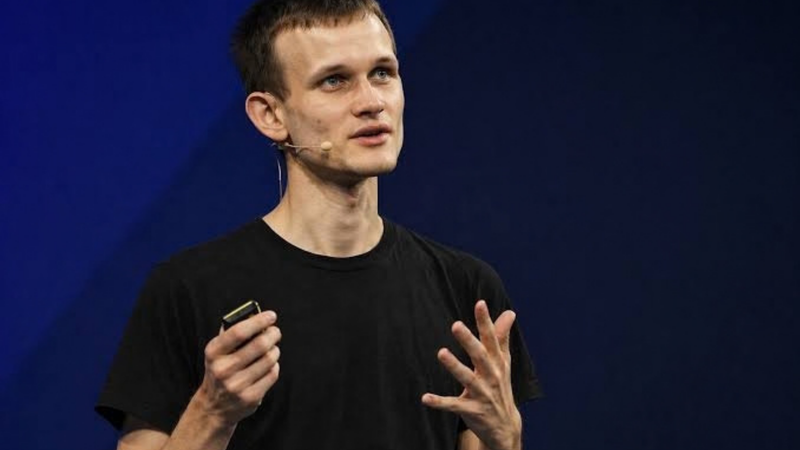
Vitalik Buterin Warns AI Could Weaken Crypto Security in Two Years
Ethereum co-founder Vitalik Buterin warns AI-accelerated math research has a "good chance" of seriously weakening lattice-based cryptography within two years. He also flagged added ECDSA risk and said Ethereum's Lean roadmap is shifting toward hash-based signatures.
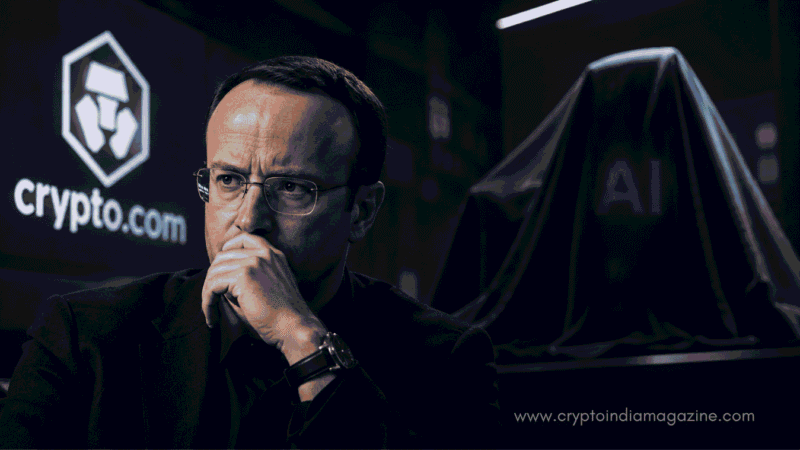
Crypto.com’s AI Agent Is Still in Stealth Mode, Eight Months After Its Super Bowl Debut
Eight months after a Super Bowl ad and a record $70 million domain, Crypto.com's ai.com personal AI agent is still in stealth mode. We look at why it is taking so long, and test the theory that the AI industry's new safety slowdown is behind the delay. It is not.

BlackRock Says AI Agents Will Drive the Next Stablecoin Boom
BlackRock's new paper, The Machine-Native Economy, argues autonomous AI agents will become a major source of stablecoin demand, settling machine to machine payments for data, APIs, and compute. It also floats tokenized compute as a new asset class, while conceding the market is early.
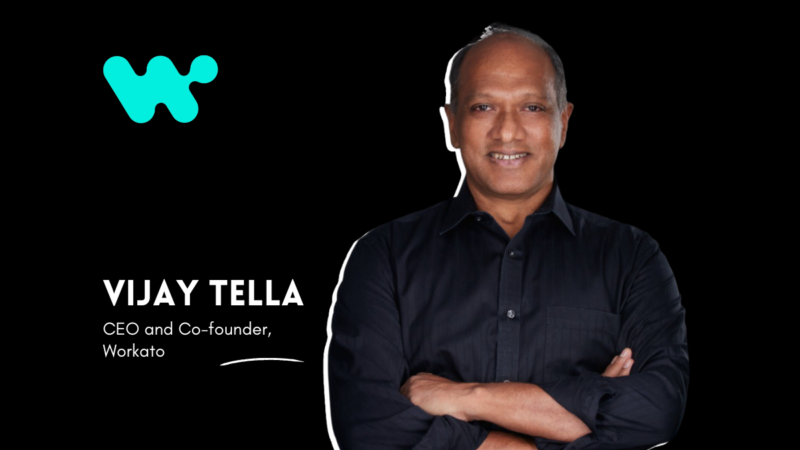
Workato Opens Hyderabad AI Hub to Co-Build Agentic AI With Customers
Workato has opened its third AI Collaboration Hub in Hyderabad, after San Francisco and Singapore. The site at Aurobindo Orbit puts customers, GSI partners, and Workato engineers in one room to co-build agentic AI against live enterprise systems. Workato India employs more than 200 people.