

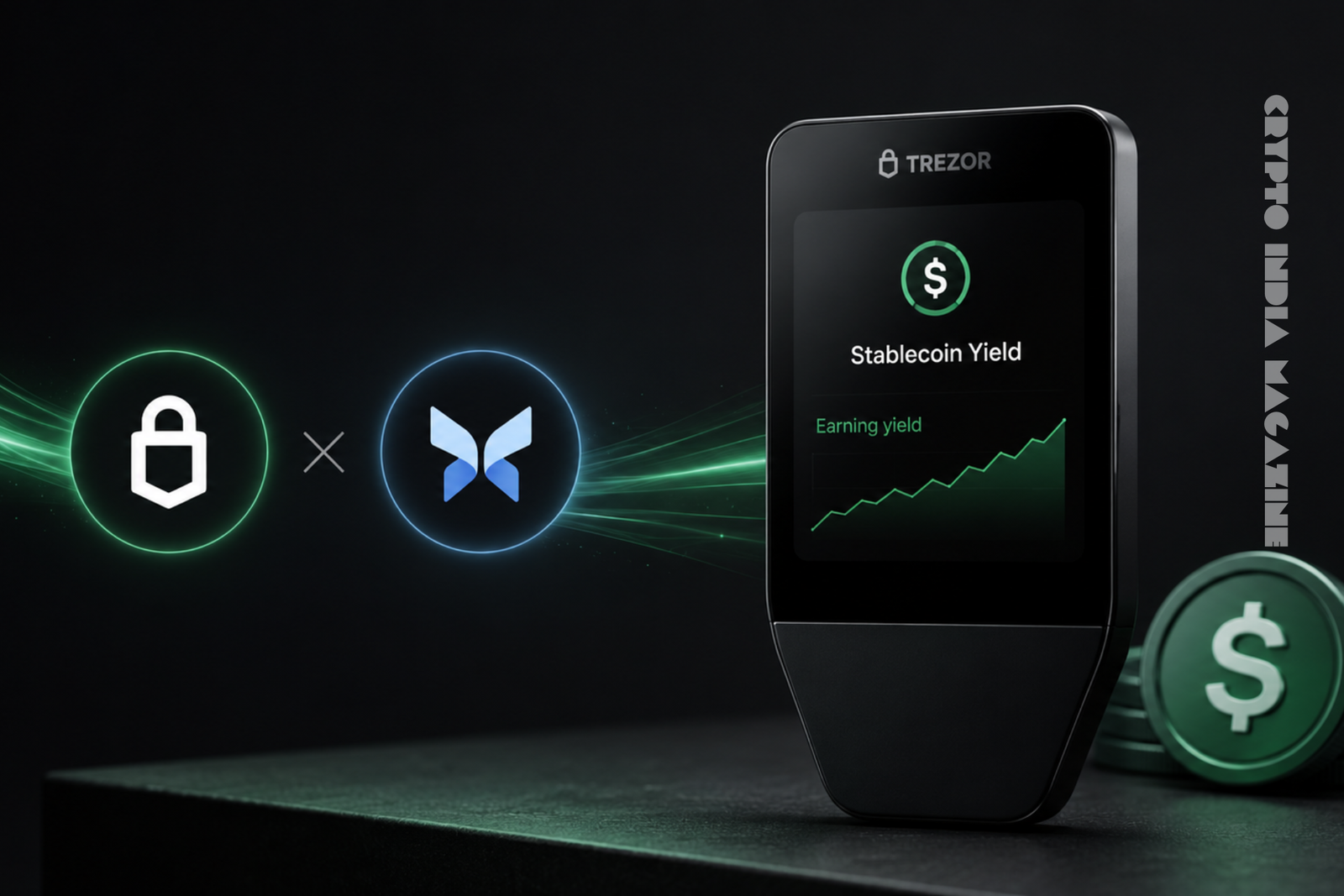
- Trezor launched native stablecoin yield inside Trezor Suite on Thursday, May 28, letting users earn on USDC and USDT through an integration with the Morpho lending protocol.
- Deposits, withdrawals, and reward claims are signed on the user’s Trezor device using clear-signing, and the yield comes from real borrowing demand rather than token emissions.
- The feature is live now on desktop and mobile for users who update to Suite version 26.5.2, with the full mobile experience due later this year.
Trezor launched native stablecoin yield within the Trezor Suite on Thursday, May 28. This gives users a way to earn yield on USDC and USDT on Ethereum without leaving the wallet’s interface or connecting an external application. The feature comes through an integration with Morpho, a decentralized lending protocol built on Ethereum, and lets users deposit into pre-selected vaults straight from the app.
The launch reflects a broader push by hardware wallet makers to fold DeFi yield into custody products. Rival Ledger already offers native stablecoin yield through Ledger Live using Kiln-powered integrations with protocols including Morpho, Aave, and Compound, and Trezor is widely considered the second-largest player in the hardware wallet market behind Ledger. The Czech company is positioning the feature as a way to close the gap between cold-storage security and on-chain returns.
Tomáš Sušánka, chief technology officer at Trezor, framed the release as removing a trade-off that has long forced users to pick a side.
“The point of building this yield feature inside Trezor Suite was to remove the trade-offs. Users have had to choose between the security of their hardware wallet and access to DeFi yield, because getting yield meant connecting to something else. We have brought yield into the Suite environment, with every step signed on the device and translated into plain language before the user approves it. The same security people already trust now covers their stablecoin position,” Sušánka said.
ALSO READ: Moonpay Acquires Iron in $100M Stablecoin Payment Deal
At launch, Trezor selected two Morpho vaults curated by Steakhouse Financial, USDC Prime and USDT Prime. Users do not research protocols or choose from a list, since Trezor evaluates the options up front based on security and liquidity criteria. The vault tokens are standard ERC-20 assets, which means a position remains withdrawable through any compatible interface even if Trezor Suite were ever unavailable.
Security sits at the center of the pitch. Deposits, withdrawals, and reward claims are signed directly on the user’s hardware wallet via clear signing, which displays transaction details in a human-readable format on the device screen before approval. Clear-signing works on all Trezor devices except the Trezor Model One. Private keys never leave the hardware at any step.
The returns track on-chain activity. Trezor said yield is generated from borrowing demand on Morpho rather than token incentive programs, so rates rise when borrowing climbs and fall when it cools. There are no lockups, unbonding queues, or exit delays, and withdrawals settle on-chain once signed. Morpho has operated on Ethereum since 2022 and ranks among the largest DeFi lending protocols by deposits.
ALSO READ: Trezor’s Head of Hardware Talks About the Safe 7, Open Security, and Self-Custody
Paul Frambot, chief executive and co-founder of Morpho, said the integration widens the protocol’s reach to people who have never touched DeFi.
“Morpho’s integration with Trezor brings yield to a much broader audience, including many who have never interacted with decentralized finance before,” Frambot said. “Over two million Trezor users can now earn yield on their stablecoin balances with the same device they already trust for custody, without changing their habits or learning a new interface. This is how DeFi scales: by becoming invisible to users, easily accessible inside the interfaces and apps they already use,” said Frambot.
The feature is available now on desktop and mobile. However, Trezor said the full mobile feature set arrives later this year. Users must update to Suite version 26.5.2, and those on Bitcoin-only firmware will not see the Earn option. The launch lands amid regulatory attention on stablecoin yield, as the U.S. GENIUS Act bars stablecoin issuers from paying interest directly to holders, while lending a stablecoin through a third party is treated as a separate activity that falls outside that restriction.
Editorial Note: Reported and edited by the Crypto India Magazine editorial team. We use AI tools to assist with research and drafting; every article is reviewed and fact-checked by our editors.
Interested in advertising with CIM? Talk to us!

BitMEX to Shut Down Exchange Operations on September 23 After Strategic Review
Crypto derivatives exchange BitMEX will shut down on September 23, 2026, following a strategic review by parent company HDR Global Trading. Users have been asked to close open positions and withdraw their assets ahead of the closure as the platform begins an orderly wind down.

Oxygen7 Secures Full Payment Licence in Bhutan’s Gelephu Mindfulness City
OxPay Financial's subsidiary Oxygen7 received a full Financial Services Licence from Bhutan's Gelephu Financial Services Office on April 29, 2026, clearing the way for a regulated crypto payments and stablecoin remittance platform targeting GMC's tourism and B2B sectors.

Money 20/20 Asia 2026: Bangkok Becomes the Stage Where TradFi and DeFi Unite
At Money20/20 Asia 2026 in Bangkok, the lines between traditional finance and DeFi continued to blur. From J.P. Morgan’s blockchain scale to EMURGO’s self custody push, the event revealed a clear shift toward interoperable, user controlled financial systems.
[…] Senate version also addressed whether crypto platforms can offer rewards on stablecoin holdings. While the GENIUS Act already bars stablecoin issuers from paying interest, the Senate Banking […]