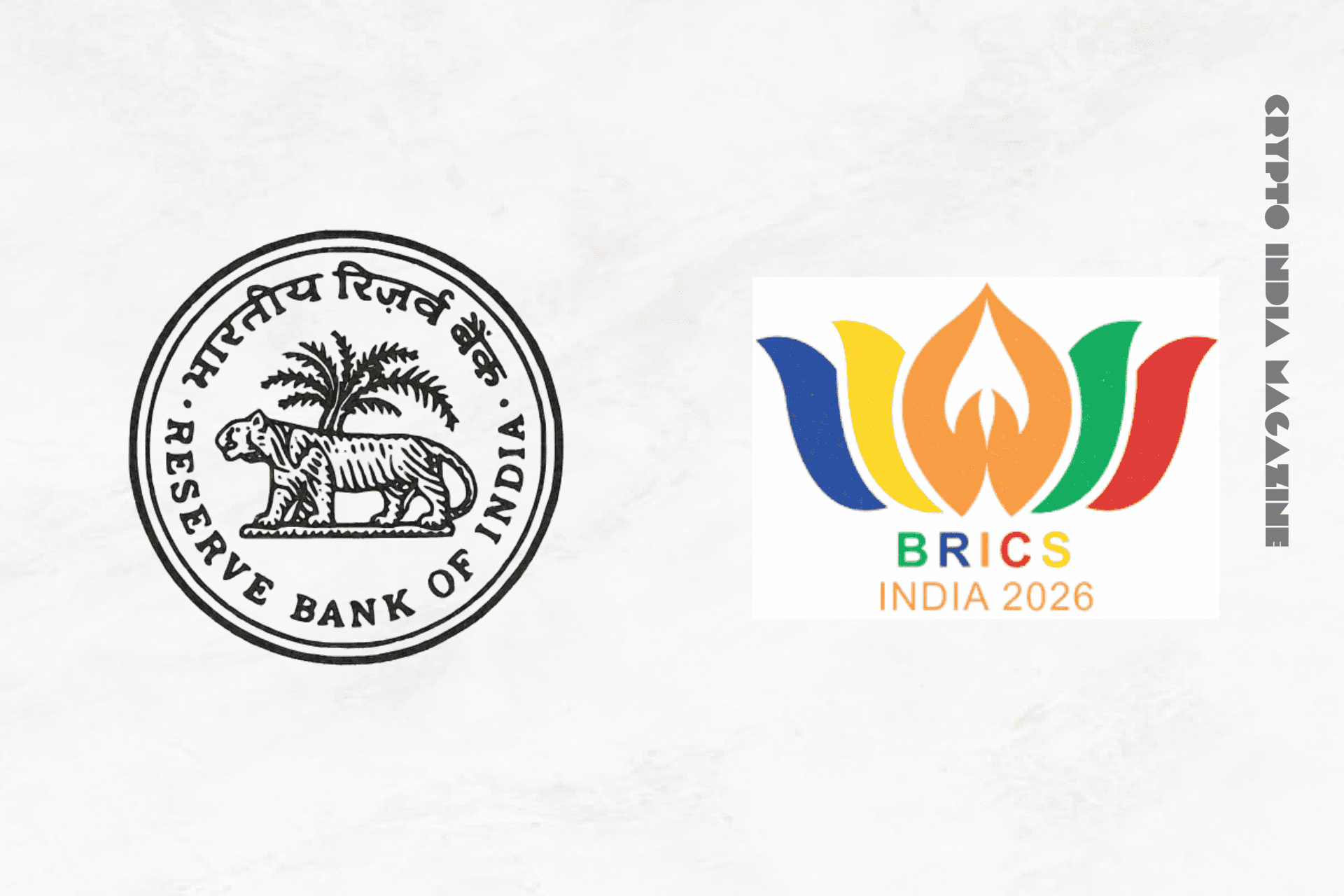
- The Reserve Bank of India (RBI) has recommended linking the Central Bank Digital Currencies (CBDCs) of BRICS nations as a primary agenda item for the 2026 BRICS Summit.
- The initiative aims to build “digital bridges” for faster, cheaper cross-border trade and tourism payments, bypassing the delays of traditional correspondent banking.
- While India frames the move as an efficiency upgrade, it marks a significant step toward de-dollarisation by reducing reliance on U.S. dollar payment rails.
- All five core BRICS members currently have active CBDC pilot programs, with India’s e-rupee already serving millions of users.
India’s central bank has quietly put forward a large-scale idea with potentially wide implications for global payments and geopolitics. Officials from the Reserve Bank of India (RBI) have recommended that the country propose linking the central bank digital currencies (CBDCs) of BRICS nations as a key agenda item for the 2026 BRICS Summit in India.
If accepted by member states, this would mark the first formal effort by the bloc to explore interoperable digital currency systems for cross-border trade and tourism payments, according to a Reuters report.
The proposal comes at a pivotal moment as sovereign digital money projects transition from pilots to policy priorities. While none of the core BRICS members (Brazil, Russia, India, China, or South Africa) have fully launched their CBDCs yet, all five have active pilot programs.
India’s own e-rupee, launched in late 2022, has already attracted millions of retail users. It serves as a robust testing ground for offline use and programmable features.
Reducing Friction in Cross-Border Trade
At its core, the RBI’s recommendation aims to slash the friction and costs inherent in cross-border transactions. Traditional correspondent banking routes are notoriously slow and expensive for developing economies.
By building “digital bridges” between CBDCs, BRICS nations could settle trade invoices and tourism receipts directly in sovereign digital assets. This would allow them to bypass U.S. dollar rails and legacy correspondent systems, offering a faster, cheaper alternative for settlement.
Challenges: Governance and Trade Imbalances
However, progress will not be frictionless. Sources familiar with the discussions note that any workable linkage requires consensus on:
- Interoperable technology standards
- Shared governance structures
- Mechanisms to manage trade imbalances
One potential solution under consideration is a system of bilateral foreign exchange swaps to offset the imbalances that accumulate when one country exports significantly more than it imports.
The Geopolitical Angle: Efficiency vs. De-dollarisation
Politically, the proposal lands amidst rising tensions. The United States has previously warned against efforts to sidestep the U.S. dollar’s dominance in international markets. They framed parts of the BRICS agenda as a challenge to Western financial influence.
New Delhi, however, has carefully framed this move not as de-dollarisation, but as a push for efficiency and stability. Indian officials emphasize that linking CBDCs aims to support small and medium trade flows without explicitly undermining existing global currency norms.
Strategic Timing for India
For India, the timing is strategic. Hosting the 2026 BRICS summit offers a leadership platform to pitch digital finance cooperation while aligning with domestic goals to internationalise the e-rupee. Even with regulatory hurdles ahead, the RBI’s move suggests early momentum toward a future where digital currencies become practical tools for economic integration.
As the summit approaches, the world will watch to see if this proposal moves from quiet policy discussions to formal commitments, potentially reshaping the future of sovereign money.
Editorial Note: Reported and edited by the Crypto India Magazine editorial team. We use AI tools to assist with research and drafting; every article is reviewed and fact-checked by our editors.
Interested in advertising with CIM? Talk to us!


Hong Kong Hands Its First Stablecoin Licenses to HSBC and Standard Chartered
Hong Kong just handed its first stablecoin licences to the same banks that print its banknotes. The HKMA chose HSBC and Standard Chartered's Anchorpoint venture from 36 applicants — a deliberate bet that trusted institutions make the safest foundation for digital money.

Larry Fink Thinks Tokenization Could Fix What’s Broken About Finance
Larry Fink says tokenization could do for finance what the internet did to mail — and BlackRock isn't waiting around. With $150B already in digital markets, the world's largest asset manager is building the future it's describing.
Stablecoin Payments Surge as Fintechs Lag: BVNK Utility Report 2026
The data suggests that stablecoins are evolving into practical financial tools rather than speculative assets. Respondents reported using stablecoins to get paid, make purchases, and transfer money internationally, particularly in cases where traditional financial systems are perceived as slow, costly, or unreliable.
India Budget 2026: No Tax Relief, Tighter Compliance, and New Jail Provisions for Defaulters
Crypto investors in India hoped the 2026 Union Budget would offer a lifeline. Instead, the government tightened the screws. The…