

Estimated reading time: 3 minutes
- Affluent Chinese investors are reassessing luxury real estate as prices fall and liquidity risks rise.
- High-end properties are now being compared directly with Bitcoin and global equities as competing assets.
- Regulatory scrutiny and difficulty exiting large property positions are key concerns.
- Crypto is increasingly viewed as a liquid tool for capital preservation and mobility rather than pure speculation.
Affluent investors in China are increasingly questioning whether luxury real estate still serves as a reliable store of value, as falling prices, weak liquidity, and regulatory risks prompt comparisons with Bitcoin and global equities.
Online discussions circulating on Chinese social media platforms show high-end homes in Shenzhen Bay, once considered among the most resilient property markets in mainland China, being weighed directly against assets such as Bitcoin, Nvidia shares, and BNB. The comparison reflects a shift from viewing property as a status symbol to assessing it as one component within a broader global portfolio.
Several widely shared posts describe sharp price declines in Shenzhen Bay, with some investors warning that properties valued at ¥60–66 million could lose a substantial portion of their value over the next few years. One post claimed prices in the area have already fallen by nearly half, raising concerns about further downside if economic or financial conditions worsen.
The debate has also highlighted growing unease around leverage. Some homeowners expressed uncertainty after taking on large mortgages, while others joked about becoming “house slaves,” reflecting the psychological burden of long-term debt tied to a single illiquid asset.
Beyond pricing, investors pointed to liquidity and political exposure as key risks. High-value property purchases can attract regulatory scrutiny, tax attention, and difficulties in exiting positions quickly during periods of policy tightening. In contrast, digital assets and overseas equities are increasingly viewed as easier to trade, hedge, and move across borders.
Comparisons have also extended to Hong Kong and overseas real estate. While Hong Kong property continues to command a premium, some investors argue that its appeal lies more in legal protections and personal freedom than in expected returns. European real estate was similarly cited as offering residency or mobility benefits rather than pure financial upside.
The reassessment of property mirrors broader concerns about domestic assets, which some investors say tend to underperform during periods of geopolitical stress and fail to recover fully during global market rallies. Luxury housing, particularly in Shenzhen Bay, is increasingly seen as exposed during downturns but stagnant during risk-on phases.
As a result, crypto assets are being reframed by some Chinese investors not primarily as speculative instruments, but as tools for capital preservation, liquidity, and flexibility. Younger investors, many of whom are priced out of high-end property markets, appear more willing to allocate toward digital assets and international equities instead of pursuing home ownership.
The shift suggests a structural change in how wealth is managed in China, as capital mobility and risk diversification gain importance. How regulators respond, and whether property markets stabilize, may influence both domestic investment patterns and the future role of crypto assets in the country.
Editorial Note: This news article has been written with assistance from AI. Edited & fact-checked by the Editorial Team.
Interested in advertising with CIM? Talk to us!

Binance to Shut Down Binance Pool and Related Mining Services on November 10
Binance is closing Binance Pool and related mining services on November 10, 2026, at 07:00 UTC. The shutdown ends Cloud Mining, Pool Savings, the Transaction Accelerator, hashrate alerts, and the pool API. Miners must switch pools, redeem Pool Savings, and verify accounts before the cutoff.

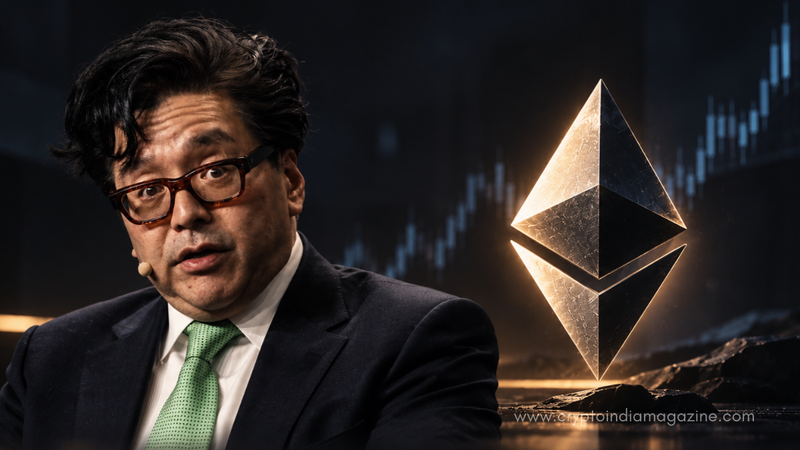
Tom Lee Sees $2 Trillion Wealth Transfer Fueling Crypto Demand as BitMine Buys More Ether
BitMine chairman Tom Lee says a $1.5 trillion to $2 trillion generational wealth transfer between 2026 and 2028 could drive crypto demand, as the firm buys another 12,532 ether and moves within about 76,000 tokens of owning 5% of the ether supply.
BitMine Stakes $13.8 Billion in ETH as Its Treasury Tops 6 Million Tokens
BitMine's ether treasury has crossed 6 million tokens, about 4.9% of all ETH, and it has staked 5.07 million of them, worth roughly $13.8 billion. With treasury stocks no longer trading at a premium, the real story is why staking yield has become the center of the strategy.

What Is the CLARITY Act? Inside the Crypto Bill the US Senate Refused to Advance
The US Senate blocked the CLARITY Act in a 49-50 procedural vote on September 15, 2026. This explainer covers what the crypto market structure bill would do, who introduced it, how it passed the House, and why ethics, banks, and Democrats stalled it in the Senate.