

Key points
- Web3 funding rounds in early June 2026 concentrated on onchain credit, settlement, and trading rails built for institutions, with Morpho’s $175 million raise and Digital Asset’s $355 million round leading the period.
- Traditional finance names, including Apollo, VanEck, HSBC, BNP Paribas, and Citadel Securities, appeared alongside crypto-native funds on the same cap tables.
- A small number of later-stage deals absorbed most of the capital, extending a 2026 pattern of fewer but larger checks into revenue-generating companies.
Crypto venture capital spent the first two weeks of June 2026 repeating one argument: onchain finance is turning into institutional infrastructure. Between June 1 and June 13, the largest disclosed checks went to lending networks, settlement layers, and trading rails built for banks and asset managers, with retail speculation nowhere near the headline numbers.
This roundup ranks the web3 funding rounds announced in that window by deal size, from the largest down. Each entry covers who led, who joined, what the company is building, and the risk worth weighing.
1. Digital Asset (Canton Network): $355 Million
Digital Asset, the company behind the Canton blockchain for capital markets, secured $355 million in one of the month’s largest crypto raises, confirmed on June 11. a16z crypto led the round, joined by a syndicate that read like a Wall Street roll call: the Abu Dhabi Investment Authority, Apollo Global Management, BNP Paribas, Citadel Securities, CME Ventures, Coinbase Ventures, HSBC, Polychain Capital, S&P Global Ratings, SBI Holdings, SoFi, and Tradeweb, among others.
Canton lets banks and asset managers trade tokenized bonds, equities, and other regulated assets on a ledger built with privacy controls at the protocol level. The fresh capital is aimed at expanding those workflows as institutions move settlement onchain.
The risk is competition and timing. Tokenized capital markets remain early, and Canton sits in a crowded race against rival institutional ledgers and incumbent market infrastructure that may prefer to build in-house.
It is also worth noting that several of the same names on this cap table, a16z and Coinbase among them, are also spending to shape US policy, most visibly through the $78M crypto PAC aimed at the 2026 midterms.
2. Morpho: $175 Million
Onchain lending protocol Morpho raised $175 million in a round co-led by Paradigm, a16z crypto, and Ribbit Capital, announced on Tuesday, June 9. Strategic participants included Apollo Funds, Circle Ventures, VanEck, Ledger Cathay, Variant, Wintermute Ventures, IOSG, HashKey, SBI Group, and Bpifrance. Fortune first reported that the deal valued the protocol at up to $2 billion.
Morpho described the financing as among the largest in DeFi to date, its fourth institutional fundraise since 2021. The protocol reports more than $11 billion in deposits and counts Coinbase, Kraken, Binance, and Société Générale among its users.
“We’re building the open credit network for the world, connecting those with excess capital to those who need financing, globally,” cofounder Paul Frambot said in the announcement.
The presence of a16z crypto, which led Story’s $80M raise last year for an IP blockchain, and even Apollo and VanEck, is the signal. Their backing pushes Morpho toward a regulated credit infrastructure, though heavy DeFi exploit activity through 2026 remains the sector’s overhang.
3. Edge Markets: $29.2 Million
New York’s Edge Markets locked in a $29.2 million Series A led by CoinFund, with participation from Indicator Ventures, Mantis VC, StepStone, and Bullpen, disclosed in the June 9 funding cycle. The startup builds trading and compliance tools for emerging financial markets.
Its product line pairs an institutional crypto futures platform with an off-chain prediction markets engine, targeting hedge funds and asset managers moving into digital assets. The capital will fund product expansion and regulatory work. Beyond the US-institutional core, emerging-market infrastructure has drawn its own checks this cycle, as with Yellow Card’s $33M round to scale stablecoin rails for African businesses.
The caveat is the field it has chosen. Edge enters a competitive lane against established institutional venues, and prediction-market regulation in the United States remains unsettled, which could complicate the off-chain engine’s rollout.
4. MNX: $6.4 Million
MNX, a decentralized futures exchange built for the AI economy, raised $6.4 million in a pre-seed round at a $40 million valuation. Village Global led, joined by Cambrian, North Island Ventures, Finality Capital, Relay Digital, and angels including Augur and Gnosis cofounder Matt Liston and Gitcoin’s Scott Moore, per a report on the raise.
Built on the Ethereum layer-2 network MegaETH, MNX plans futures and perpetuals tied to AI-related assets such as company valuations and compute prices. Its founders, Stephen Grugett and Ian Philips, previously cofounded the prediction market Manifold Markets, and a public mainnet is planned for later this summer.
“Excited to announce we’ve raised $6.4M to build MNX, the AI exchange,” the project wrote on X.
The main risk is straightforward because a pre-seed product with no live mainnet faces execution and liquidity questions before it can prove the AI-trading thesis.
5. TVL Capital: $5 Million
Zug-based TVL Capital closed a $5 million seed round led by Framework Ventures, with Amsterdam liquidity provider Flow Traders and strategic investors joining, the firm announced on June 9. The company is building Chain-Traded Products, structured derivatives issued, traded, and settled entirely on blockchain rails.
The founding team comes from traditional finance. CEO Andrew Peel previously ran digital asset markets at Morgan Stanley, and COO Penny Tunbridge was global COO of the UBS Group Integration Office. TVL Capital has also joined the inaugural cohort of Obex, the Sky-backed program with a $1 billion deployment mandate for real-world yield.
The main hurdle here is adoption. Institutional appetite for fully onchain structured products is still nascent, and converting pilot conversations with banks into live products is a separate challenge.
Also On The Radar
Three June deals fell outside the core web3 funding list, but matter to the same readers. German robotics company NEURA Robotics raised up to $1.4 billion in a Series C co-led by stablecoin issuer Tether and Qualcomm Ventures on June 10, a sign of crypto balance sheets funding physical AI. On Solana, Helius acquired zero-knowledge infrastructure project Light Protocol in an undisclosed deal. Japanese treasury company Metaplanet, meanwhile, moved on Siiibo Securities in a roughly $13 million acquisition.
Editorial Note: Reported and edited by the Crypto India Magazine editorial team. We use AI tools to assist with research and drafting; every article is reviewed and fact-checked by our editors.
Interested in advertising with CIM? Talk to us!

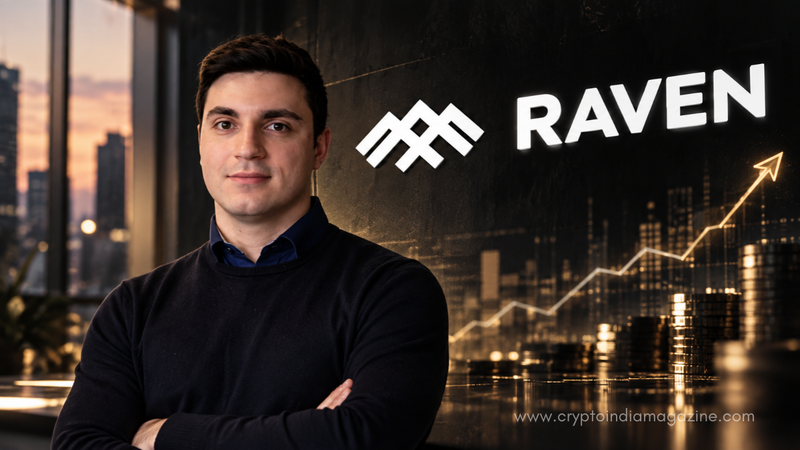
Raven Raises Funding Round at $90 Million Valuation, Backed by Coinbase Ventures
Coinbase Ventures and CMCC Global closed a strategic round with Raven, a crypto trading firm, at a $90 million valuation. The size of the raise was undisclosed. Raven provides market making liquidity for prediction markets like Kalshi and Polymarket as the sector draws heavy capital.

Canadia Impact Fund Invests in Cambodian AI Startup Newwave in Seed Round
Canadia Impact Fund has invested in the seed round of Newwave, a Cambodian AI and software firm with most of its clients overseas. The deal is the Canadia Group venture arm's second, following Jalat Logistics in 2025.

Fundly.ai Raises $4M to Expand India Pharma Supply-Chain Platform
Fundly.ai raised $4 million in an early-stage round led by existing backers Accel and Multiply, with former RBL Bank executive Rajeev Ahuja and angels joining, plus $0.9 million in venture debt. The Mumbai startup is scaling B2B commerce, payments, and embedded credit in pharma distribution.
Alpaca Raises $135 Million Led by Peak XV to Scale Tokenized Markets Infrastructure
Alpaca has raised $135 million led by Peak XV, with participation from Elefund, Opera Tech Ventures, and Unbound. Total new financing hits $435 million with debt from Kraken parent Payward and BMO, as the broker scales infrastructure for tokenized markets and AI-native finance.