Musician Earned $3M From NFTs, Lost It All to Taxes and the Crypto Crash
The root of the issue wasn’t just the volatility of crypto, it was also tax timing. Mann received the ETH in January 2022, just before the broader crypto market began to plummet amid the Terra ecosystem collapse.
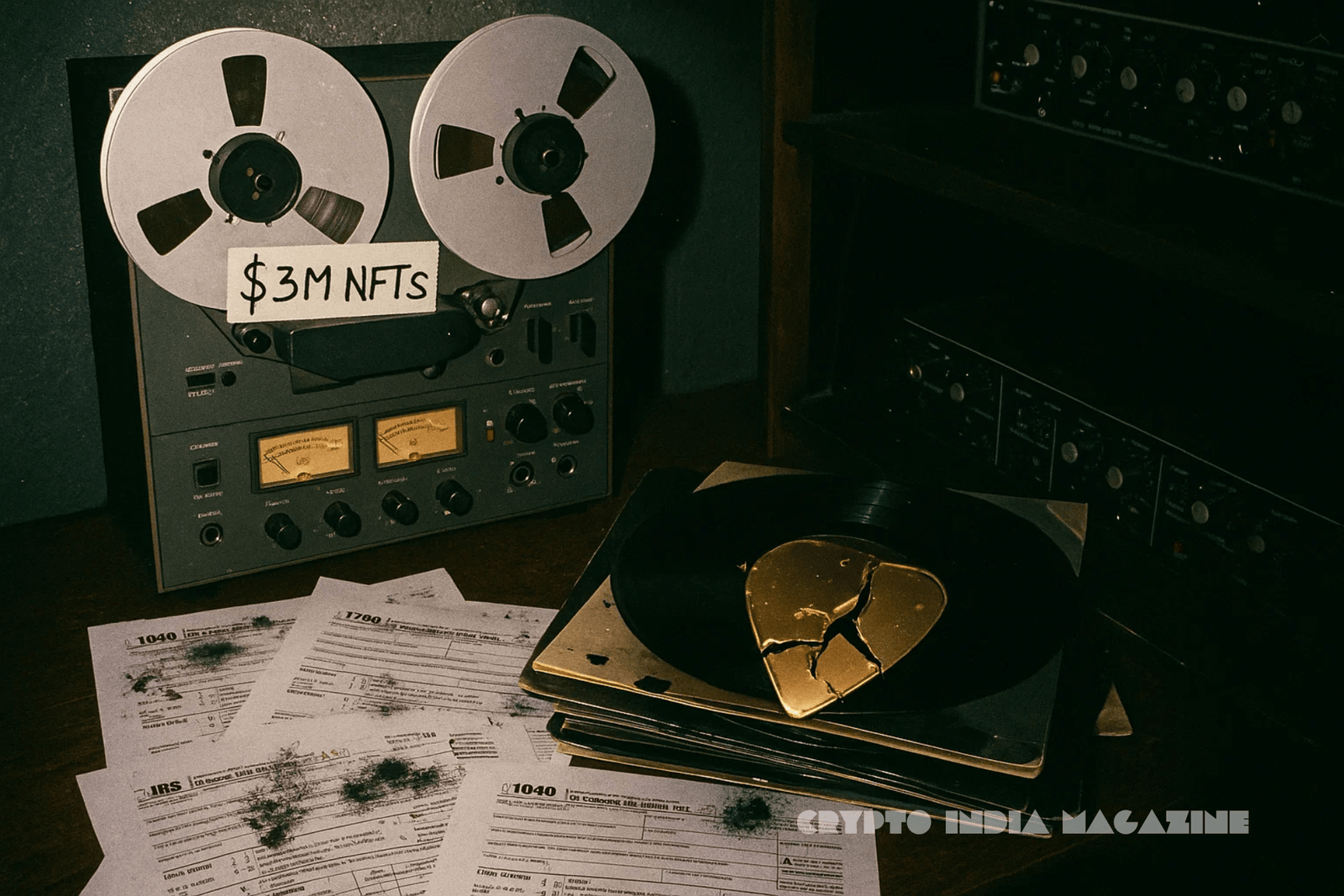
Jonathan Mann, the musician behind the long-running “Song A Day” project, turned one of the biggest moments of his career, and one of the hardest, into music. After earning $3 million in Ether (ETH) from selling his entire back catalog as NFTs in early 2022, Mann watched the value of his holdings evaporate due to a market crash, all while facing a crushing $1.1 million tax bill from the U.S. government.
In a candid song shared on X, Mann recounts his emotional rollercoaster: from the excitement of selling 3,700 songs at $800 apiece, to the despair of seeing it all vanish.
“This is the story of how I made three million dollars and lost it,” he sings, adding, “and how I owed the IRS more money than I made in 10 previous years.”
6000 days. 6000 songs.
A story that almost broke me:
The $3 million I made and lost. My $1.1 million tax bill. The Autoglyph that saved me
— 17 years of song a day (@songadaymann) June 5, 2025
The root of the issue wasn’t just the volatility of crypto, it was also tax timing. Mann received the ETH in January 2022, just before the broader crypto market began to plummet amid the Terra ecosystem collapse. However, U.S. tax law treats NFT sales as income based on the value of crypto at the time it’s received—not when it’s sold or converted. This meant Mann owed taxes on a $3 million windfall, even though the ETH’s value quickly dropped.
Instead of cashing out immediately, Mann and his wife chose to hold the ETH, hoping the market would rebound. To avoid triggering losses, they took out a loan using Aave, using ETH as collateral. But as ETH fell further, their position was liquidated. “A lifetime of work erased in a moment,” he laments in his song. Over 300 ETH disappeared overnight.
Months later, after combing through every transaction with an accountant, they calculated their IRS liability: $1,095,171.79.
With potential liens on their home and his wife’s retirement fund at stake, Mann had one last card to play—a rare Autoglyph NFT he had purchased early in his crypto journey. After failed attempts to sell it on X, a broker connected him with a buyer who paid $1.1 million—just enough to cover the tax bill.
Due to the prior liquidation losses, Mann avoided capital gains tax on the Autoglyph sale.
“It felt so bittersweet to be done,” he sings.
Despite everything, Mann continues to write and sell songs as NFTs, staying true to his craft, but far wiser about the tax pitfalls of crypto earnings.
Editorial Note:This news article has been written with assistance from AI. Edited & fact-checked by the Editorial Team.
Harshajit Sarmah is the Founder and Editor of Crypto India Magazine (CIM) and Editor-in-Chief of NARRATIVE, India’s first Web3 and crypto magazine in print and digital. A reputed Web3 and crypto journalist, he covers blockchain, cryptocurrency, and AI, interviewing industry leaders and key decision-makers shaping the technology landscape.
Binance is closing Binance Pool and related mining services on November 10, 2026, at 07:00 UTC. The shutdown ends Cloud Mining, Pool Savings, the Transaction Accelerator, hashrate alerts, and the pool API. Miners must switch pools, redeem Pool Savings, and verify accounts before the cutoff.
BitMine chairman Tom Lee says a $1.5 trillion to $2 trillion generational wealth transfer between 2026 and 2028 could drive crypto demand, as the firm buys another 12,532 ether and moves within about 76,000 tokens of owning 5% of the ether supply.
India’s CBI has arrested four people over an alleged India-based Bitcoin ATM scam that impersonated Microsoft and pushed elderly US citizens into crypto payments. A Florida victim lost about $440,000 and a New Jersey victim about $130,000, as India tightens rules on crypto-enabled crime.
Tokenized commodities are moving beyond gold. Oil tokens, silver, copper, and a tokenized oil and gas fund with secured lending point to a wider market, even as Tether Gold and Paxos Gold still account for more than 90% of the roughly $5 billion sector, according to Token Terminal.