Brian Armstrong Unveils 2025 Coinbase Roadmap: USDC Payments, Derivatives, AmEx-Backed Card, and a Business Suite
Unveiled during Coinbase’s State of Crypto Summit, Armstrong shared key pillars of the company’s 2025 product strategy in a detailed thread on X (formerly Twitter), positioning Coinbase as not just an exchange but the infrastructure layer for the next era of finance.
Coinbase CEO Brian Armstrong has announced a sweeping suite of products aimed at turning the crypto giant into a full-stack financial services provider—one that could potentially rival traditional fintech players across payments, commerce, and credit.
Unveiled during Coinbase’s State of Crypto Summit, Armstrong shared key pillars of the company’s 2025 product strategy in a detailed thread on X (formerly Twitter), positioning Coinbase as not just an exchange but the infrastructure layer for the next era of finance.
The world needs crypto, now more than ever.
– Debt is growing exponentially – Inflation is crippling entire nations – Economic freedom is declining
It’s time to increase economic freedom globally, with crypto.
“There are major problems with the current financial system. And they are getting worse. Crypto is eating the financial services industry. Coinbase is leading the charge,” wrote Armstrong
Coinbase Business: All-in-One Finance for Startups
Coinbase’s new Business platform targets startups and mid-sized enterprises, enabling them to send and receive payments, manage crypto assets, and automate financial workflows—all from a single dashboard. The product is aimed at modern companies operating across jurisdictions and payment rails, with crypto acting as a unifying layer.
1) Coinbase Business, for startups and medium-sized businesses.
Send & receive payments, manage crypto assets, and automate financial workflows in one place.
To bridge Web3 and e-commerce, Coinbase also revealed a proof-of-concept with Shopify, bringing USDC payments to over 1 million stores. Through its new payment APIs, Coinbase offers seamless settlement in local currency with zero FX fees. And it has the potential to remove a major friction point in global commerce.
“Stablecoins are a powerful tool for real-world payments,” Armstrong wrote. “This unlocks a whole new class of merchants.”
2) A powerful set of payment APIs that bridge stablecoins and fiat currencies across different countries
Proof-of-concept with @Shopify: bringing USDC payments to >1 million stores. Seamless settlement to local currency with 0 FX fees (huge unlock)
Coinbase is also expanding its trading stack by integrating options trading, following its acquisition of Deribit. With this addition, Coinbase will offer spot, futures, and options under one unified interface.
In parallel, the exchange is integrating DEX trading into its platforms. It has plans to scale from “hundreds to thousands” of tokens, indicating a broader embrace of DeFi infrastructure.
3) Expanding our core trading business
→ We're adding options trading, with our recent acquisition of @DeribitOfficial, to spot and futures. Trade all three on one unified platform.
→ Seamlessly integrating DEX trading into our products, expanding from hundreds to ultimately…
Among the announcements generating the most buzz is the launch of the Coinbase One Credit Card, in partnership with American Express. The card offers up to 4% cashback paid in Bitcoin, giving users direct crypto exposure from everyday purchases.
“This is the announcement that I’ve got the most messages about,” Armstrong said, noting the strong user interest in Bitcoin-denominated rewards.
4) Coinbase One Credit Card, powered by @AmericanExpress with up to 4% cashback paid in bitcoin
This is the announcement that I’ve got the most messages about – glad to hear people love it!
While the traditional financial system struggles with inefficiencies and legacy rails, Coinbase is building what CEO Brian Armstrong called a “crypto-native financial operating system”.
This playbook reflects Coinbase’s shift from being “just” an exchange to a fully-integrated financial platform built on crypto rails. With stablecoins, trading, and token rewards at its core, the firm is placing a strong bet on composability, interoperability, and most importantly, usability.
Editorial Note:This news article has been written with assistance from AI. Edited & fact-checked by the Editorial Team.
Harshajit Sarmah is the Founder and Editor of Crypto India Magazine (CIM) and Editor-in-Chief of NARRATIVE, India’s first Web3 and crypto magazine in print and digital. A reputed Web3 and crypto journalist, he covers blockchain, cryptocurrency, and AI, interviewing industry leaders and key decision-makers shaping the technology landscape.
Indian investors are applying a familiar discipline, regular and systematic SIPs, to crypto’s volatile swings. Crypto SIPs change the timing of each purchase and reduce reliance on market timing. They do not lower risk or replace the harder decision: how much crypto belongs in a portfolio.
An attacker drained about $6.3 billion from Binance hot wallets in roughly 20 minutes on October 29, 2026, the largest crypto theft on record. Inside the EIP-7702 mechanism, the TraderTraitor attribution, Richard Teng’s response, expert guidance for retail users, and the Lazarus Group’s trail.
Zcash co-founder Sean Bowe has published a draft proposal to end the Zcash grants funding stream, arguing the Zcash Community Grants treasury of about $125 million can run for years without fresh inflows. The redirected 8% share would move to the Network Sustainability Mechanism.
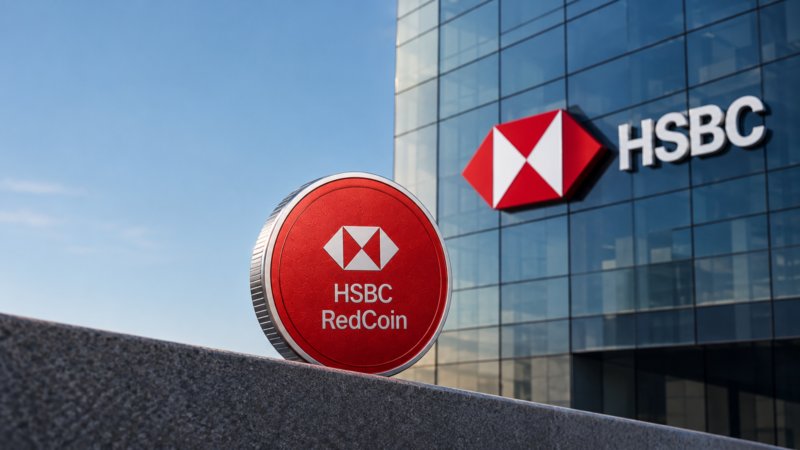
HSBC has begun a phased rollout of HSBC RedCoin, its Hong Kong dollar-backed stablecoin, to more than 3.3 million PayMe users and about 100,000 merchants. The bank plans to add tokenized money market fund subscriptions from HK$100 to its mobile banking app before the end of 2026.