


Crypto investing has historically been closely associated with market timing. Investors have had to decide when to enter, whether a correction has further to run or whether a rally has already gone too far. In an asset class where prices can move significantly within hours, consistently making the right entry decision is difficult.
The growing interest in crypto SIPs represents a different approach. Instead of making each investment decision based on prevailing market conditions, investors determine an amount and frequency in advance and invest systematically over time.
The significance of this shift goes beyond the product itself. It reflects an established Indian investment behaviour, regular, disciplined investing being applied to a newer and significantly more volatile asset class.
SIPs have become a familiar part of Indian investing, particularly through mutual funds. They have helped make investing a regular financial habit rather than an occasional decision. That behavioural principle is now finding relevance in crypto, even though the underlying asset class remains fundamentally different.
Table of Contents
From market timing to systematic participation
Crypto prices can respond rapidly to global liquidity, macroeconomic developments, regulatory changes, institutional activity and market sentiment. For retail investors, consistently identifying the most attractive entry point is therefore challenging.
A systematic investment approach addresses one specific part of this problem: the timing of individual purchases.
By investing a fixed amount at predetermined intervals, an investor buys across different market conditions. The same amount purchases fewer units when prices are higher and more when prices are lower, creating multiple entry points over time rather than concentrating the investment at a single price.
A SIP does not make crypto less volatile. It makes the investment process less dependent on market timing.
That is an important distinction. Systematic investing can create discipline around the purchase process, but it cannot change the risk or return characteristics of the asset being purchased.
The shift is ultimately behavioural
The more interesting development is what crypto SIPs indicate about the evolution of the Indian investor.
The early phase of crypto adoption was characterised largely by curiosity, experimentation and trading activity. As participation matures, the conversation is increasingly moving towards a more fundamental question: what role can crypto play within an overall portfolio?
That is a more constructive way to evaluate any asset class.
A regular allocation can provide a structured way to gain exposure across different market cycles, rather than basing each investment decision on short-term market sentiment. But systematic investing should not be confused with lower risk.
A SIP does not prevent losses, guarantee returns or make crypto a conservative investment. Nor does investing regularly in one asset constitute diversification.
The quality of the investment decision therefore depends not only on how consistently someone invests, but also on how much they invest and what they are investing in.
The real question is allocation
The more relevant question is not simply whether someone should invest in crypto, but how much exposure is appropriate within their overall portfolio.
A ₹2,000 monthly crypto allocation represents a very different level of exposure for someone earning ₹40,000 a month compared with someone earning ₹2 lakh. It also depends on existing investments across equities, mutual funds, gold, fixed income and other assets.
The investment process can be automated. The underlying allocation still requires judgement.
The same principle applies within crypto. Bitcoin, Ether and other crypto assets can have different designs, use cases, liquidity characteristics and risk profiles. Treating them as a single category can obscure important differences.
Investors therefore need to understand what they are buying, why they are buying it, what their investment horizon is and how much volatility they are prepared to accept.
A systematic investment plan can create consistency. It cannot replace due diligence or portfolio-level decision-making.
What a SIP changes and what it does not
The benefits of systematic investing need to be understood precisely.
A SIP changes the distribution of entry points; it does not provide protection against market declines.
If an asset continues to fall, a systematic investor may accumulate more units at lower prices, but the value of the portfolio can still decline significantly. Conversely, if prices rise sharply after the investment programme begins, a recurring investor may accumulate fewer units than someone who invested a larger amount earlier.
The value of a SIP therefore lies in the process rather than in any promise about the outcome.
It reduces the need to make a fresh timing decision each time capital is deployed and can help limit the influence of short-term market sentiment. For a volatile asset class, that consistency can be valuable.
But it should never be presented as a substitute for understanding risk.
From timing to discipline
The significance of crypto SIPs ultimately lies in the behaviour they represent.
They apply a familiar investment discipline to an asset class that has historically been dominated by short-term price movements and market timing. An investor using a systematic approach is acknowledging a basic reality: predicting the next market move is difficult, but establishing a disciplined investment process is possible.
That does not make crypto predictable. It does not reduce its volatility. It does not remove the need for appropriate allocation or due diligence.
It changes the way investors participate.
As crypto becomes more established within India’s broader financial ecosystem, the conversation should increasingly move beyond the next price movement and towards portfolio role, risk, time horizon and investment discipline. Crypto SIPs do not make an unpredictable asset predictable. They make the investment process more systematic. That behavioural shift could be one of the more important developments in the evolution of crypto investing in India.
Editorial Note: This article has been written by a contributor to Crypto India Magazine (CIM). The views, opinions, and claims expressed in this article are solely those of the author and do not necessarily reflect the views of Crypto India Magazine. CIM does not assume responsibility for the accuracy, completeness, or reliability of the information, opinions, or statements presented in this article.


Binance Hack Explained: How $6.3 Billion Vanished in 20 Minutes
An attacker drained about $6.3 billion from Binance hot wallets in roughly 20 minutes on October 29, 2026, the largest crypto theft on record. Inside the EIP-7702 mechanism, the TraderTraitor attribution, Richard Teng’s response, expert guidance for retail users, and the Lazarus Group’s trail.

Zcash Co-Founder Sean Bowe Proposes Ending ZCG Grants Funding
Zcash co-founder Sean Bowe has published a draft proposal to end the Zcash grants funding stream, arguing the Zcash Community Grants treasury of about $125 million can run for years without fresh inflows. The redirected 8% share would move to the Network Sustainability Mechanism.
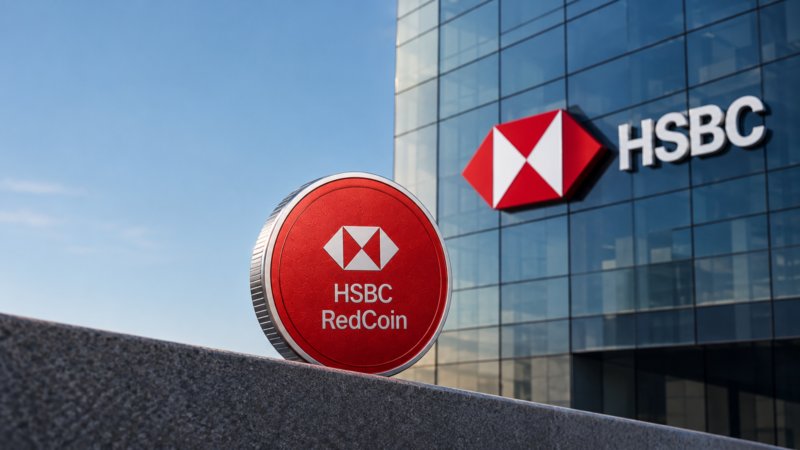
HSBC Launches RedCoin Stablecoin, Plans HK$100 Tokenized Funds
HSBC has begun a phased rollout of HSBC RedCoin, its Hong Kong dollar-backed stablecoin, to more than 3.3 million PayMe users and about 100,000 merchants. The bank plans to add tokenized money market fund subscriptions from HK$100 to its mobile banking app before the end of 2026.

China Seeks 61,800 Bitcoin Seized in UK Over $5.7B Fraud
Chinese prosecutors have applied to confiscate more than 61,800 bitcoin and other assets tied to a 40.378 billion yuan ($5.7 billion) fraud led by Qian Zhimin. A Tianjin court accepted the request, days after a UK court ruled Chinese law governs victims’ claims to the seized coins.